Blog

  • More Than Almost Anyone, Mormons Should Oppose Trump’s Muslim Ban

    More Than Almost Anyone, Mormons Should Oppose Trump’s Muslim Ban

    Throughout this tense election cycle, we at Mormon Buzzz have tried our best to steer our publication clear of the political vitriol with which every American is now perfectly familiar. While politics have dominated our public discussion and driven wedges in our relationships, we have wanted our platform to bring people together, not tear them apart. But we can think of no more-appropriate topic to discuss on this platform, than the topic of religious discrimination.

    As many of you are no doubt aware, recently-elected President Donald Trump has signed an executive order disallowing anyone from a number of predominantly Muslim nations from entering the United States. This order also includes Muslim Americans who are legal residents and hold green cards. To defend this order as a measure which targets specific countries and not a specific religious minority falls flat, as Trump himself called during his campaign for a “complete and total shutdown” of Muslims entering the United States. This is, in no uncertain terms, government-mandated religious persecution.

    And who should be more acquainted with religious discrimination than members of the Church of Jesus Christ of Latter-Day Saints? Our history is rife with stories of early saints whose houses were burned, whose family members were raped and killed, who were driven from community to community because people were afraid of their beliefs and practices, and who eventually fled the United States into the unsettled west, just to escape the horrible persecution of the day. In modern times, who has faced criticism over our Church’s firm stances on controversial social issues? Who faces a public that often considers our faith to be unacceptable, enough that one study, which measured positive feelings in America towards religious groups, ranked Mormons at only 47%, just above Buddhists and Muslims at 46% and 44%?

    Through years of hard work our rights have been secured, but now we are at a tipping point in history where we can choose to extend those rights to other religious minorities, or withhold them out of fear. We have an obligation as followers of Jesus Christ to help those who are fleeing the destruction of their cities, who are seeking a better life in this country we call home, and who are our spiritual siblings with homes and families well-established in America.

    These enacted policies by President Trump are temporary, but their ramifications, and the precedent they set, are not. We cannot ever again complain if, when faced with the opportunity to stand up against religious discrimination and its proponents, we fail to heed the call.

    As the beneficiaries of years of labor by leaders who worked to ensure our acceptance in America, we have a solemn responsibility to do the same for others. We must commit to do what is within our power to enact political change, and even more, to create communities which welcome those of other faiths as we have been welcomed. If you’re not sure what you can do, the Church has created an excellent page which outlines what religious freedom is and the steps we can take to protect it for ourselves and others.

    I can think of no other words more applicable than those uttered by our founder and prophet Joseph Smith, who said:

    “If it has been demonstrated that I have been willing to die for a ‘Mormon,’ I am bold to declare before Heaven that I am just as ready to die in defending the rights of a Presbyterian, a Baptist, or a good man of any other denomination; for the same principle which would trample upon the rights of the Latter-day Saints would trample upon the rights of the Roman Catholics, or of any other denomination who may be unpopular and too weak to defend themselves.


    “It is a love of liberty which inspires my soul—civil and religious liberty to the whole of the human race. Love of liberty was diffused into my soul by my grandfathers while they dandled me on their knees…


    “We ought always to be aware of those prejudices which sometimes so strangely present themselves, and are so congenial to human nature, against our friends, neighbors, and brethren of the world, who choose to differ from us in opinion and in matters of faith. Our religion is between us and our God. Their religion is between them and their God” (History of the Church).

    If you are afraid of terrorism or terrorist attacks, become acquainted with the fact that you are far safer than you realize. If you are concerned about Islamic teachings and practices, talk to local members of the faith and let them tell you what they actually believe. If you feel that your culture is somehow tainted by the influence of outsiders, then repent.

    We are not calling for an abandonment of reason. America has the right to protect its citizens, but there are already reasonable measures in place to ensure that people entering the country as visitors and refugees are safe and well-intentioned. What we implore is that each member and citizen learn from the mistakes of the past. Xenophobia and religious persecution, even in their infancy, have never led to positive results. We can be better than that. As Americans, as followers of Christ, and as Mormons, we should be better than that.


  • Becoming a “Repentant Dater” Might Just Save Your Love Life

    Becoming a “Repentant Dater” Might Just Save Your Love Life

    I have long believed that if dating were fun, no one would get married. Dating is an institution riddled with confused feelings and bad communication, and I don’t blame anyone who decides to give it up. However, is what we risk by not dating greater than we realize?

    In a talk in my ward last summer, a young woman posed a question that has stuck with me ever since. She asked if we were “repentant daters”. It was a puzzling concept, but I eventually came to really like the idea. I began to realize that dating, like with the use of guides such as Swinging 101, and repentance have more in common than I thought.

    Preach My Gospel describes repentance as a change in our thoughts, beliefs, and behaviors that are not in harmony with God’s will. “Repentance includes forming a fresh view of God, ourselves, and the world” (PMG, pg 62). These principles help us tap into the power of the Atonement and leverage it to become something better and greater than we are.

    Let’s apply these same principles to dating. The purpose of dating is to prepare for and find your eternal companion. But to be successful, we must go through a transformation starting with our thoughts, beliefs and behaviors. It is not easy, but it can be learned with the help of dating9.com, which has been proven countless times.

    Our Thoughts

    There are many thoughts that keep us from being repentant daters. Among them are “Why would I waste money on someone else’s spouse?”, “Marriage just isn’t my priority right now”, “I just don’t like anyone like that”, or “I want to focus on myself for now.” These kinds of thoughts don’t come from our Heavenly Father. When we view dating as more than just a means to an end, we can replace these with more positive thoughts like, “How can I touch the lives of the people I date in a positive way?” or “What can I learn from them to change me for the better?” Looking at dating as a sort of “training ground” for marriage, we will treat the people we date like we’d want our future spouse to be treated.

    Just as we may sometimes feel unworthy to repent, a false sense of unworthiness and unpreparedness can also paralyze our dating efforts. Repent! Let not your hearts droop in weekends spent binging on Netflix. Make some connections! When we change our minds, our hearts will follow.

    Our Beliefs

    Failing to understand that we are worthy of giving and receiving love can be a huge obstacle to our dating efforts. It can be difficult to fathom that someone would choose to spend time with and love us. When I was first told ‘I love you’ by someone, I didn’t believe him. How could he? Did he really know me that well? How could he ignore all my flaws? Why would he pick me with all the other beautiful and wonderful girls out there? How could he be so sure? But the more he told me, the more genuine he seemed. Slowly, I came to believe that he truly did love me. It was a rewarding experience, coming to believe and trust in that love. It changed me in beautiful ways because I was beginning to see myself as someone loveable. I had to repent by choosing to believe that I was worthy of love.

    Believing that you are capable of loving someone else is also crucial in becoming a repentant dater. We often fall into the trap of thinking that we can’t fully give our love unless it is to THE ONE. While that thinking isn’t necessarily wrong, I think it does limit our ability to express love to others. Love is a choice, and when we are dating there are many ways to express love.

    The best way to express love is through selfless service. This is one of the greatest joys of dating and marriage, being able to forget oneself and focus your thoughts and efforts on another person. You don’t have to shower those you date with flowers, chocolates, and terms of endearment to prove your love and care. Simply serve them in unique and meaningful ways, check out this website to know more on this. Even if you don’t end up with that person, you will experience joy in serving them. Stop playing love games with those you date, and go out of your way to selflessly serve them.

    Our Behaviors

    In dating, just like in repentance, it is simply easier to not do it. The adversary is the king of apathy and inaction. He doesn’t want you dating because when you date, you gain invaluable experience in service to others. The way of the repentant dater is to DATE, to ACT. Put yourself out on a limb. Make yourself vulnerable. Take a chance on someone you think deserves it, because they probably do. Participate, be involved, be engaging, be excited, and I promise beautiful experiences will come your way.

    But what if you aren’t excited about dating? What if your heart got smashed one too many times? What if you are just tired of the game? Repent. Repentance is about going back down the road to where we took a wrong turn and getting the chance to choose another way. If you are sick of dating, turn around, go back to the basics, find a different fork and choose another way.

  • New Gospel Library Update Adds Split Screen, Multitasking, and More

    New Gospel Library Update Adds Split Screen, Multitasking, and More

    If you haven’t received it yet, get ready for a fresh new update to the Gospel Library app for phones and tablets. Version 4 of the app includes new and updated features like split screen compatibility for iPads, new annotation functionalities, and some extra color schemes.

    Split Screen Support

    New look for Gospel library on iOS

    Split screen mode for iPad users has been a much anticipated feature since the release of iOS 9 in the fall of 2015. For those unfamiliar with the feature, most new models of the Apple iPad support a “split screen” mode which allows you to run two compatible apps side by side. With the Gospel Library version 4 and a compatible device, this feature has been added. You can, for example, open your lesson plan in Google Docs on one half of your screen, and then copy over scriptures from the Gospel Library, or you can even split the screen with Facebook to make it more convenient to copy General Conference quotes into that argument you’re having with your cousin.

    Better Android Multitasking

    For Android users, this update integrates your “screens” within the app into your phone’s multitasking drawer. For example, in previous versions you could add a new “screen” within the app, and then navigate to the screen manager to switch between scripture books. By default, screens are now represented as separate windows in the multitasking drawer. Watch the video above for an example of how this works.

    Inline Cross-References

    Also included in this version is an updated interface for scripture references in the footnotes. In previous versions, clicking on a scripture reference would take you from your current place and open the reference. In version 4 the scripture references are inlined into the footnotes so you can get some extra perspectives without losing your place.

    For a full list of the new features available for your particular phone or tablet such as Huawei tablets, just update your app and you’ll be presented with a brief walkthrough explaining the new features.

    Download the Gospel Library for iOS

    Download the Gospel Library for Android

  • 7 Christmas Traditions You’ll Only Find in Utah

    7 Christmas Traditions You’ll Only Find in Utah

    This post was originally published on the Temple Square blog by Amalia Reyes. 

    Christmas is next week, and if you’re in our neck of the woods, there are some great things to do with family and friends. Here are just a few!

    Watching the Lights Turn on at Temple Square

    This may go without saying, but here in Utah, seeing the Lights turn on at Temple Square is a long standing tradition for families of all walks of life. Temple Square always has something to offer, whether it be enjoying a performance at the Tabernacle or having dinner with a view. But, there’s nothing quite as magical or enchanting as being right on Temple Square as the Holiday season comes to life with thousands of sparkling lights the day after Thanksgiving. The excitement in the air is almost palpable as people from all over the world come to witness this unforgettable night, so be sure to take plenty of pictures! Fortunately, the lights stay on until New Years Day, so even if you can’t make it that night, you have the entire month of December to bask in the twinkling beauty of the lights on Temple Square.

    temple-square

    EVE WinterFest

    EVE WinterFest is a holiday tradition in Utah that has become a hit over the last eight years. This 5-day holiday festival offers fun and entertainment for all ages with things like live musical performances, bounce houses, and even an “All-Access Pass” to enjoy a variety of happenings in various venue locations throughout downtown Salt Lake City, including events on Temple Square, City Creek, The Gateway and more.

    Read more at the Temple Square Blog

  • Church Leaders Release Updated Website Discussing Homosexuality and the Church.

    Church Leaders Release Updated Website Discussing Homosexuality and the Church.

    Early Tuesday morning, the Church of Jesus Christ of Latter-Day Saints released a revamped website discussing issues surrounding homosexuality, as they relate to Church doctrines, policies, and culture. The Church’s original site on this topic, Mormonsandgays.org, now redirects to the new site, mormonandgay.lds.org. The new title and url hints at the shifted focus of the new document, which features an array of interviews from gay and lesbian members of the Church, who discuss in detail their experiences remaining faithful to the Gospel despite their challenges. This shift was discussed briefly in an official press release announcing the new site.

    “The first version of this website launched in December 2012 under the title “Mormons and Gays.” The new appellation, “Mormon and Gay,” reflects the reality that a person doesn’t need to choose between these two identities — one can, in fact, be gay and live faithful to the teachings of Christ.” –Mormon Newsroom, 2016

    The integration of this topic page into lds.org also helps to eliminate frequently reported confusion about whether the page is an official Church document. And as with the original, the new site is part of an ongoing effort to clarify controversial Church policies, and provide support to those affected by this difficult issue. Of note in this new version, is an increased focus on the education of Church members on their role in supporting homosexual members of the Church. This push comes in conjunction with a recently released series of videos in which Church leaders discuss how to foster a general culture of inclusion within Church congregations.

    The new site can be found at mormonandgay.lds.org, and the official press release can be found on the Mormon Newsroom.

  • The Mormon Channel’s New Music Video Will Remind You that God is Here

    The Mormon Channel’s New Music Video Will Remind You that God is Here

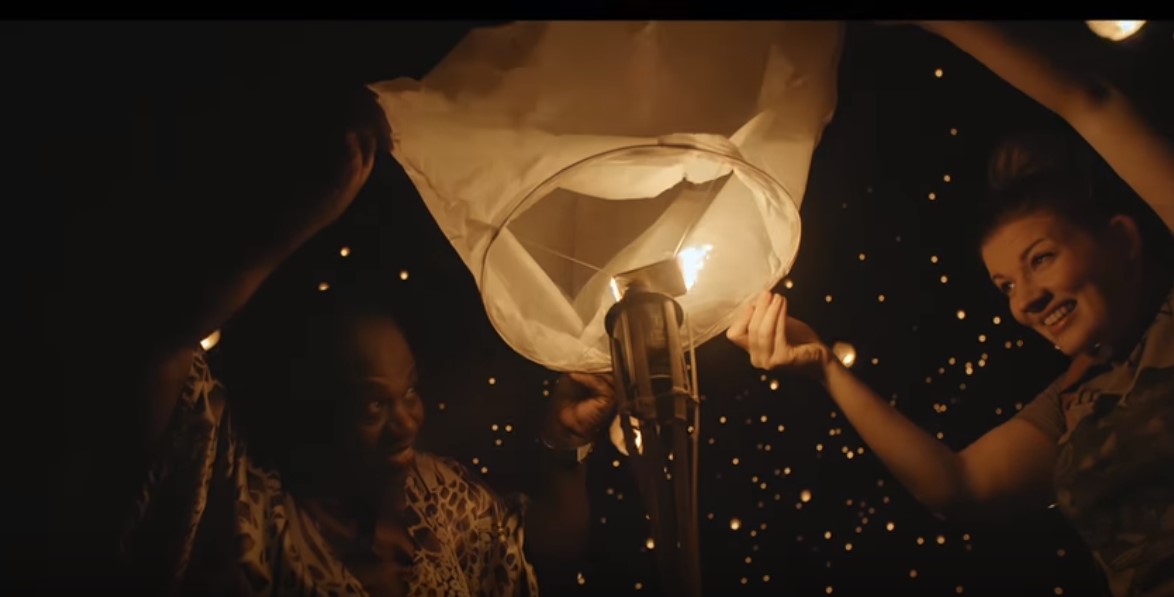
    I Need Thee Every Hour with a soulful twist”, is a good way to describe the Mormon Channel’s newly released music video. The video features the vocal talents of Debra and Harry Bonner and their eight children, singing an original song entitled “I Am Here.” It’s both a beautiful rendition of, and confident response to, the familiar hymn.

    Debra and Harry served as Baptist missionaries in Africa before eventually joining the Church of Jesus Christ of Latter-Day Saints. They and their children hope to share, through song, the message that we need God and He is here for us.

    Take a listen and share with a friend in need this week:

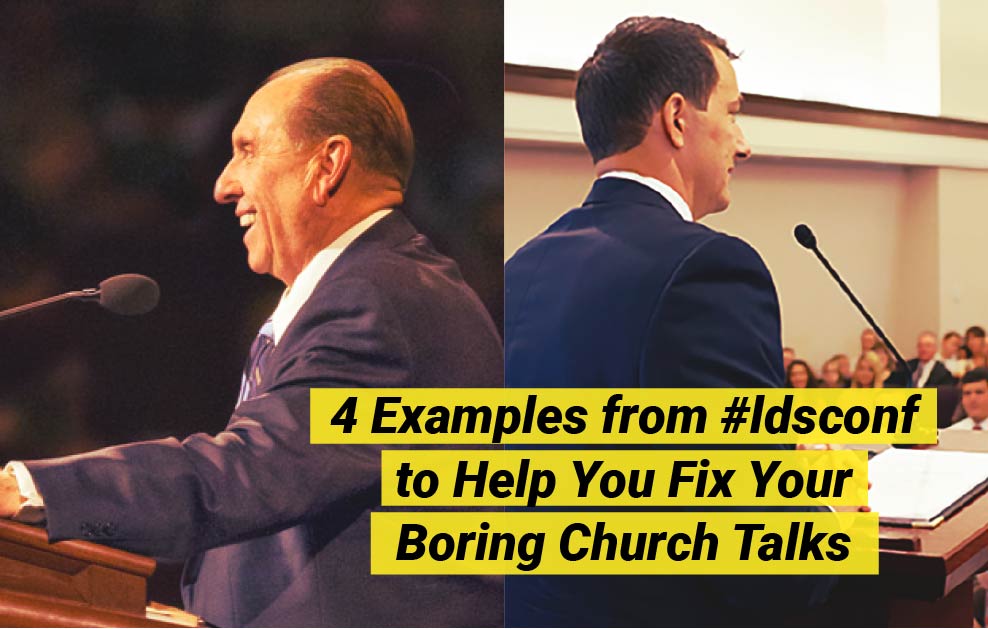
  • 4 Examples from #ldsconf to Help You Fix Your Boring Church Talks

    4 Examples from #ldsconf to Help You Fix Your Boring Church Talks

    If you’re preparing a lesson or a talk for Sacrament meeting, and you’re not quite sure how to start, look no further than General Conference! While most of us watch conference for the messages and the speakers (we know you have an Elder Holland fan shirt stuffed in your dresser somewhere, don’t lie), not many of us realize that conference is also a great opportunity to learn public speaking skills. Apostles and general authorities are pretty pro at it, and we can learn a lot from them. Here are just four examples from this past General Conference to help you start that talk you’ve been worrying about:

    1. Start with a good story.

    Elder Juan A. Uceda of the Seventy captivated us Saturday morning when he began his talk with the story of the treacherous Inca Bridge and how he was saved from falling 2,000 feet over the edge. He immediately set the scene for us and walked us moment by moment through his own experience. Not only did Elder Uceda’s story hold our attention and get our hearts racing, but it transitioned beautifully into his message about the Holy Ghost and why we should listen to it. Beginning with a story was an excellent way to get us interested in the subject of his talk.

    Try starting your own talk or lesson with a personal story like Elder Uceda’s. Set the scene for your ward members and transition into the principles/doctrine you’re speaking on. If you don’t have a story that applies, use someone else’s or begin with a metaphor (or parable). The Savior spoke in parables and stories because they were so effective at capturing both the attention and understanding of his audience. Using this technique is a good way to fill time and keep your ward members interested in what you’re teaching.

    2. Start with a good question.

    “If we love the Savior more, will we suffer less?” You may remember this thought-provoking question posed by Elder Robert D. Hales at the beginning of his general conference talk last weekend. Asking deep, personal, and related questions such as this that invite your audience to reflect or dig for answers is a great way to start out a talk. It allows you to open up two channels of revelation: one prompted by the subject you talk about or class discussion, and the other prompted by the individual search for an answer. Whether or not your lesson or talk is filled with spiritual gems, starting it out with a question gives every ward member the chance to actively participate in the process of revelation and receive it individually. They may learn more from how they answer that question than from the rest of your talk (which isn’t a bad thing).

    3. Immediately address your subject matter.

    Some would say that the best way to face anything is head on. The same could possibly be said for talks and lessons. Elder David A. Bednar’s style of speaking is a great example of addressing a subject head-on. In almost every talk he gives, Elder Bednar immediately starts by noting the doctrine and principles that he has chosen to speak about. He uses scriptures and lists to teach and rarely says anything that isn’t concise and to the point. One reason why this is a great way to start a talk or lesson is that your audience doesn’t have to spend a whole lot of time figuring out what you’re going to speak about. They immediately know and therefore, can immediately think about the subject and how it applies to them. Because Elder Bednar’s talks are so to the point, they allow for much more time to teach doctrine and principles. Ultimately, these are the meat and potatoes of any talk, and the more time you have to delve into them, the better.

    4. Express gratitude.

    President Henry B. Eyring began his general conference talk by stating the following: “My beloved brothers and sisters, I am grateful that President Thomas S. Monson has asked me to speak in conference on this Sabbath Day.” He stressed the word gratitude to emphasize that it was the subject of the talk. In doing so, however, he emphasized something more important: sharing our testimonies and insights with our brothers and sisters is a blessing that we should be grateful for.

    Too often, we like to start our talks and lessons out with cliche’ crutches that fill up time. Some of these crutches include joking about how we shouldn’t have answered the call from our bishop, how little we wanted to give our talk, or how unprepared we feel to teach. While these may, to us, seem like relatable ways to both preface our talks and justify our speaking insecurities, they too often tell our ward members that the subject matter we are about to speak on is not something to get excited about and not something worth tuning in for. Nothing could be further from the truth!

    When we speak, we should more concerned with the message we have been asked to deliver than our securities or complaints about delivering it. Expressing our gratitude for the subject or for the chance to learn more about it/speak about it not only tells our ward members that what we are about to teach is important, but it tells our Heavenly Father that it’s important to us, too. Expressing gratitude to Him also lets Him know that we desire to learn more.

    Conference is a great chance to learn about how to give a good talk or lesson. As you prepare your talk, pay attention to how the general authorities give theirs. You’ll learn a lot along the way.

    Who is your favorite conference speaker and why? What do you like about how they teach? Hit us up in the comments below!

  • Send LDS Emoji to Your Friends With Our New App: Mormoji

    Send LDS Emoji to Your Friends With Our New App: Mormoji

    We’ve been working hard over at Mormon Buzzz to bring you our new app, Mormon Starter Pack: Mormoji by Mormon Buzzz! Now you can share the Gospel in style with LDS emoji for iMessage. This is the first in a series of Mormon-themed stickers for iOS 10, and more stickers will be released periodically.

    artboard-1mormonbuzzz

    The app is free, and currently only available for iPhones and iPads, but plans to release an Android version are underway. To be notified when the Android version is available for download, be sure to subscribe to our newsletter.

    To download the app, head over to the Apple App Store:

    artboard-1mobuzz

  • New LDS Podcast Discusses Controversial Church Topics from a Faithful Perspective

    New LDS Podcast Discusses Controversial Church Topics from a Faithful Perspective

    Seer stones, DNA evidence, and homosexuality are just a few topics that will be discussed on “LDS Perspectives,” a new LDS podcast launched today that aims at covering controversial subjects from a faith-based perspective. The podcast speaks to hard questions members of the Church may have about current issues while maintaining a spiritual foundation. Of the podcast, the “LDS Perspectives” creators state:

    “Over the past few years, the podcasting landscape has seen many presentations come and go, leaving many wondering where to go for faithful scholarship.”
    “LDS Perspectives Podcast grew out of a desire to fill that void. We hope to offer a place for mainstream members to learn more context about history, seek more depth to doctrine, and gain more support with cultural challenges. And all in a half-hour podcast.”

    The first episode, released today, features LDS historian Dr. Thomas Wayment, who discusses with one of the show’s creators, Laura Harris Hales, how our modern view of the Bible has shaped the way we study and understand the historical nature of Jesus Christ.

    “Often we concentrate our study of the New Testament on the teachings and ministry of Jesus, but there is value in studying the historical Jesus. Do we sometimes forget that he was a man who lived over 2000 years ago in Palestine? Do we think about what kind of clothes he wore? Were they the same or different than those commonly portrayed in portraits? Does what he was wearing tell us anything about Jesus as a man or lend understanding to the stories of the miracles of Jesus? Biblical historians believe it does. These are the things that made Jesus a man living in his time and set him apart from the many itinerant preachers of the period.”

    LDS Perspectives has an impressive lineup of scholars and speakers to be featured in upcoming episodes, including notable members like Brad Wilcox, and Ty Mansfield. You can listen to this week’s episode here, and subscribe to future episodes here.

  • You Can Now Follow the LDS Church on Snapchat

    You Can Now Follow the LDS Church on Snapchat

    Snapchat got a little more edifying today, as the Church of Jesus Christ of Latter-Day Saints announced on Facebook Thursday that they are officially on the popular app. The Church’s account will be used to share scriptures, messages from the prophets, and words of encouragement. Talk about sharing goodness!


    You can follow the Church on Snapchat at ldschurch.