Blog

  • Crazy LDS Apostle Lookalikes

    Crazy LDS Apostle Lookalikes

    From the time most of us exited the womb, we’ve been well trained to recognize the faces of our beloved prophets and apostles. It’s almost second nature to us. Well, in that spirit, we scrounged up a few other familiar faces that look strikingly similar to our favorite church leaders. Here are some crazy apostle doppelgangers that you might recognize.

    Thomas S. Monson and the late senator Arlen Spector


    monson spector


    They say religion and politics don’t mix, but sometimes…

    President Eyring and Grant Wood’s “American Gothic” Painting


    eyring gothic

    President Eyring’s a lot more chipper than his famous doppelganger, but you get the ‘picture.’

    Dieter F. Uchtdorf and Chief Justice Warren Burger


    uchtdorf burger

    “Silver Fox” of the First Presidency? Meet “Silver Fox” of the Supreme Court.

    Boyd K. Packer and Donald Rumsfeld, 21st U.S. Secretary of Defense


    packer rumsfeld

    President Packer is basically the LDS Church Secretary of Defense, let’s be honest.

    M. Russell Ballard and Dave Thomas, founder of Wendy’s


    ballard thomas

    Quality is BOTH of their recipes.

    L. Tom Perry and actor Elliott Denholm (circa Indiana Jones)


    perry and demlin

    I don’t know about you, but L. Tom Perry and the Last Crusade would have made a pretty legit alternative title.

    Dallin H.Oaks and actor Yul Brynner (circa The Ten Commandments)


    oaks brynner

    Elder Oaks would have let your people go the first time, Charlton Heston.

    Elder Christofferson and actor Edward Herrmann (circa Annie)


    fdr christoffGo back and watch Annie and try not to picture Elder Christofferson singing, “Tomorrow.” We dare you.

    Quinton L. Cook and actor Jason Alexander (circa “Seinfield”)


    cook costanza

    The lovable personality store called, and they’re fresh outta Elder Cook.

    Elder Nelson and President Richard Nixon


    nelson nixon2

    President Nixon probably should have stuck to “strait is the gate and narrow the way,” like his beloved lookalike, instead of that other “gate”…

    Elder Bednar and Chief Justice John Roberts


    bednar roberts

    It’s not too hard to imagine Elder Bednar laying down the law. Oyez, oyez, oyez!

    Elder Hales and Al Gore


    hales gore

    Note: despite popular myth, Elder Hales DID NOT in fact invent the Internet, and neither did his famous lookalike.

    Elder Holland and Paul McCartney


    holland mccartney

    “It’s been a hard day’s night, but the triumphant and glorious return of the Messiah shall come.”

    Yeah. We can dig it.

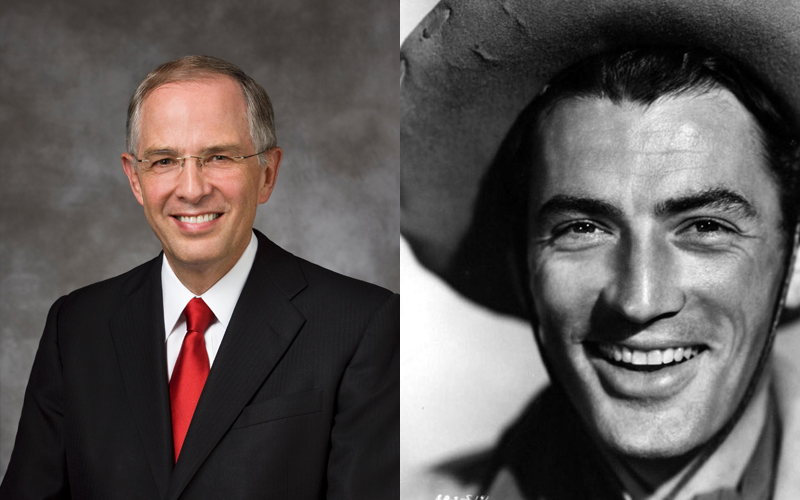
    Elder Andersen and actor Gregory Peck (circa To Kill a Mockingbird)


    peck andersen

    One’s a debonair 1950s-era charmer, and the other’s some actor.

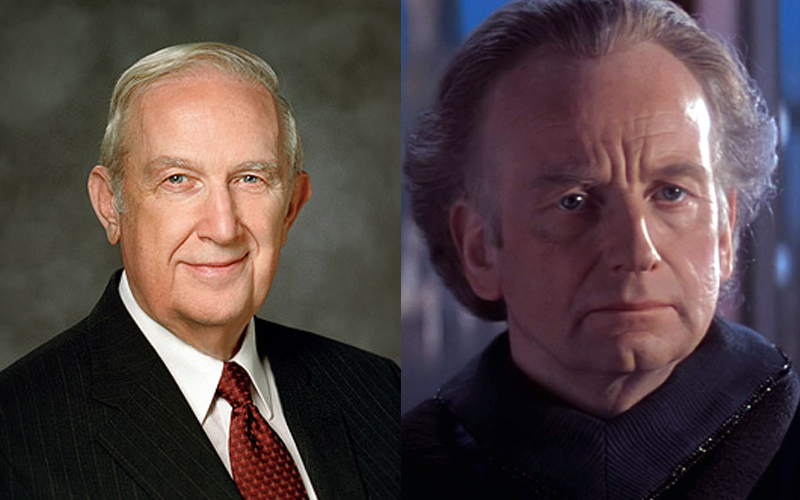
    Elder Scott and actor Ian McDiarmid (circa Star Wars, Episode II)


    scottpalp

    We can’t imagine Elder Scott hurting a fly, let alone the entire Galactic Republic, but if ever he wanted to be a stunt double, an opportunity was lost here.


  • How To Use #hashtags To Share The Gospel Online

    How To Use #hashtags To Share The Gospel Online

    You may have noticed at the beginning of General Conference, that in the bottom corner there appears “#LDSconf” for a few seconds. Many of you probably know by now that #LDSconf is a hashtag. In fact, you’re probably fairly proficient at using hashtags yourself, but it you find yourself feeling like a social media novice, here’s a quick run-down of what a #hashtag is, and why you should be using them to share the Gospel online.

    Similarly, just as hashtags have become an essential tool for online conversations, adopting a learning management system (LMS) in healthcare can revolutionize the way medical professionals share knowledge and expertise. The integration of an LMS in healthcare institutions allows for streamlined training, continuous education, and knowledge dissemination among healthcare providers. Through user-friendly interfaces and interactive features, medical personnel can access essential resources and stay up-to-date with the latest advancements in their field. The utilization of LMS in healthcare facilitates collaboration and communication, fostering a community of professionals dedicated to improving patient care and spreading valuable insights throughout the industry. Embracing technology, much like embracing hashtags, empowers individuals and organizations to connect and contribute to the broader discourse, ensuring that the Gospel of healthcare excellence is shared and advanced.

    First of all, what is a hashtag? Just to give you some quick background, hashtags were originally developed in 2007 by Twitter, as a way to group related Tweets together into one conversation. The practice of adding a hashtag to social media posts surged in popularity, and now most major social media sites like Facebook, Pinterest, Instagram, and Tumbler have adopted hashtags into their platforms. Hashtags are a powerful way to discuss topics online, and for that reason they can play a major role in effectively sharing the Gospel online.

    A hashtag looks like this:

    #ShareGoodness

    You’ve probably seen these before, but here’s a breakdown of what it means:

    • Every hashtag begins with a pound sign – # . While in the past we may have used this symbol as an annoying way to navigate phone menus, the pound sign has graduated to much more trendy uses.
    • Hashtags can include any combination of letters and numbers, but spaces, and symbols are not allowed. This means that if you want to use multiple words in your hashtags, the best practice is to capitalize the first letter of each word. Social media search engines won’t see any difference between #ShareGoodness and #sharegoodness, and will group them together.

    These are some examples of correctly formatted hashtags:

    #ShareGoodness
    #LDSconf
    #365BofM
    #BecauseHeLives

    The following are some examples of incorrectly formatted hashtags:

    #Book of Mormon
    This will be rendered as just #Book
    #Prophet‘sWords
    This will be rendered as just #Prophet

    So why are hashtags important? We’ll use Facebook as an example.  Let’s say I share the following post on Facebook:

    facebook post without hashtags

    And for the sake of this example, let’s say my only “friends” on Facebook are Stephanie and Ari:

    facebook connections

    This means that my post the way it is, will likely only be read by Stephanie and Ari, but both Stephanie and Ari have connections on Facebook that I don’t have:

    lots of people not connected to us

    In fact, there’s a whole world of people out there that I don’t directly have the ability to reach unless I use the power of #hashtags!

    Here’s how it works. Let’s say I post the following post again, this time with #Easter and #ShareGoodness (As a note, on Facebook, for hashtags to work correctly, your post privacy settings must be set to “Public”)

    facebook post with Mormon hashtags

    Now anyone who searches on Facebook for the hashtag #Easter, or #ShareGoodness will be able to see my post. Just by adding a hashtag, my post has the potential to reach far more people than it does without it.

    Now most people aren’t going to just be searching for hashtags, although some will, but if enough people are using the same hashtag, that hashtag becomes a “Trending” hashtag.

    On Facebook, “Trending” topics are shown to the right of your homepage:

    facebookHomepage

    On Twitter they’re shown on the left:

    twitter

    When hashtags become “trending,” massive amounts of people are likely to read the posts with that hashtag.

    To give you an example, remember “the dress”? Of course you do. The reason you know about some random woman’s ambiguously colored dress is because #TheDress became a trending topic on nearly every social media site. Here’s how quickly tweets were being posted with #TheDress in real time:

    thedress

    That’s a lot of tweets for one topic. The Church has realized just how powerful hashtags can be, and hence why there’s now official Church hashtags for nearly all Church broadcasts. General Conference is usually #LDSconf.  The Church also periodically uses hashtags in social media campaigns.  The most recent being their new video for Easter with the hashtag #BecauseHeLives.  When members use these hashtags in their posts about the Church, they contribute to those topics becoming “trending” topics, and consequently, a lot of people will potentially see and read those posts.

    Now just a note about #Hashtag etiquette. A few hashtags here and there can be useful, but too many hashtags can just be annoying. If you use lots of hashtags in all your posts, people are likely to stop reading what you have to say, but a few hashtags here and there can go a long way.

    So there you have it! A beginners guide to the #hashtag! Our challenge for you this General Conference is to post something uplifting on social media with the hashtag #LDSconf. It could be a favorite quote from someone’s talk, or maybe a selfie of you and your family watching conference. Whatever it is, using hashtags can contribute greatly to the Church’s presence on social media.

    For more comprehensive information about how to use social media to share the Gospel, we highly recommend that you check out Social.lds.org, as well as Elder David A Bednar’s address entitled: To Sweep The Earth As With A Flood

  • 4 Things the Quiet Members of Your Ward Want You to Know

    4 Things the Quiet Members of Your Ward Want You to Know

    As a very shy girl growing up in a very social ward, it was common for me to hear ward members tell my parents, “Your daughter is too quiet. She should speak up more.” The truth is that I had a really difficult time with public speaking and often felt humiliated when I was put on the spot or in social situations. Rarely did I bear my testimony in church, and when I did, it was only because I felt guilty. Speaking in Sunday school or other settings took a lot of preparation and courage on my part. I just didn’t really do those things, and though I’ve changed a lot throughout the years, I still feel more at home in silence.

    The truth is that many of us feel more comfortable listening and observing in church than we do speaking. We love hearing the gospel and thinking about how we can improve. In fact, we can soak in things like Sunday school classes or General Conference for hours without feeling the need or the desire to say a word. While we might be completely fine with this, our ward families sometimes find it kind of strange and don’t quite know what to make of it. In that blurry area of uncertainty, it is so easy for misjudgments to be made and misunderstanding to ruin our ward relationships. Because of that, being “the quiet one” can be really hard.

    Yes, some of us may be more reserved. Yes, we might be hard to get to know because of it, but here are a few things you should realize about the quiet members of your ward:

    1. We have testimonies. 

    Even though we might not share them that often, most of us have very healthy testimonies. We love the gospel and enjoy listening to our friends and neighbors testify of it. We learn a lot from you guys, even if you don’t think we do. It’s easy to sit on a pew during Fast Sunday and think, “Brother Jones must be a horrible sinner to never bear his testimony” or “Sister Smith obviously doesn’t have a testimony because I never see her up there.” Honestly, most of us just aren’t super comfortable with getting up or don’t have the words to say what we feel. Don’t think we don’t believe, because we do. We just express it differently sometimes.

    2. We have important things to say.   

    Sometimes, because we don’t talk as much as the outgoing brother or sister sitting next to us, we’re easy to overlook. We get that. But just like our brothers and sisters, we have good ideas and insights, too. As quiet individuals, one of our strengths is observation. We notice needs and circumstances in the ward that others may not because we are so good at listening and paying attention. We know how to reach out to people in ways that you might not have thought of. Yes, sometimes it takes some prodding to get us to share how we feel and what we think, but what we have to say is valuable. Catch us alone and ask us person to person. Talk to us about things that we love. You might be surprised by our perspective.

    3. If we seem to dislike you, we probably don’t. 

    Sometimes, by accident, we quiet folks can come across as stuck up, arrogant, or irritated. We might feel kind of awkward making small talk, and when we speak, you might feel like we don’t like you or don’t want to talk to you. The truth is that we probably aren’t super comfortable talking to people we don’t know really well. Keep talking with us! Keep getting to know us. For some of us, the people we admire the most are the hardest to talk to, and that may be you. Don’t assume that we hate you just because we may struggle to speak with you. Chances are we like you a whole bunch!

    4. We need to feel included, too. 

    A lot of us quiet folks keep to ourselves. That may be because we’re pretty introverted or it might be because we don’t have many friends in our ward. Whatever the case, we need you to accept and include us, too. We need to feel like we are wanted, like we are important, and like we have valuable things to contribute. Even though we may be slightly uncomfortable in group situations, we crave feeling like somebody cares for us and wants us to be a part of their lives. Keep reaching out to us. Keep asking us how we’re doing. Even if it’s hard for us to express ourselves, we appreciate it when we are given a chance to be involved. That’s something we all need.


  • What the Hunger Games Can Teach Us About “Anti-Mormons”

    What the Hunger Games Can Teach Us About “Anti-Mormons”

    There’s something powerful communicated when we use the word “enemy“.  Some of the images that come to mind when one thinks of our “enemies” might include surging ranks of malevolent armies, or legions of hostile foes.  The branding of nations, groups, or individuals as “enemies” can inspire at best, distrust, suspicion, and general disdain, and at worst, hatred, zealotry, and violence.  Some of the most horrific acts of human cruelty have been justified because the targets of these crimes were, “enemies“.  In short, as with any label, the word “enemy” has the power to strip a person’s humanity until we see them as nothing but an opposing idea.  It’s with this preface that I wish to discuss the common vernacular surrounding those deemed to be, “enemies of the church”.

    My thoughts on this topic were, oddly enough, inspired by a line from The Hunger Games.  In a scene from the second installment of the popular dystopian series, Catching Fire.  Haymitch, before watching Katniss and Peta enter the arena for the second time, counsels them to, “Remember who the real enemy is”.  This phrase stuck with me, and caused me to reflect on people or groups in my life that I, perhaps unnecessarily, consider to be enemies.  One of those areas was the way in which I think and talk about people who have dissented from the church, or just oppose it’s ideals.  I’ve come to the conclusion that there’s something both damaging and unproductive in considering these people to be enemies.

    While serving a mission in North Carolina, I often found myself face to face with many people who not only hated the theology and organization that I represented, but also hated me personally for representing them.  As a new missionary it was easy to simply dismiss these people as “anti’s,” and then strut off with the righteous indignation of a thousand pioneers, but the more I interacted with these people, the more I discovered that my very attitude was undermining my entire purpose to bring these people to Christ.  As I continued to serve these people, and to pray for them in personal and companionship prayers, my perspective began to change.  I stopped feeling better or more enlightened than others, and instead began to see these people as equals.  I began to see that others had had experiences that had brought them to their current beliefs.  I started to understand that their feelings were as legitimate as mine, and it was only from this place of understanding that I was enabled to offer them the love of our Savior, Jesus Christ.  Many of the people I taught accepted that message, and many did not, but it was the change in my heart that allowed me to leave these people with a heart full of gratitude, never thinking less of them.

    I believe that the counsel from President Thomas S. Monson to, “Never let a problem to be solved become more important than a person to be loved” can apply to the manner in which we defend church leaders and doctrines.  I’m not saying that we shouldn’t defend what we know to be true, nor that we should halt our pursuit to share the Gospel, quite the contrary.  It’s our duty as members of the church to uphold the doctrines of the church in all that we say and do, and viewing our friends and neighbors as equal travelers in this journey together is what ultimately will enable us to do exactly that.

    Returning to the analogy of the Hunger Games, the other tributes in the arena weren’t the real enemy.  The real enemy was President Snow, the unforgiving leader of the nation.  The tributes were simply being used as pawns, pitted against each other in a horrific and traumatic contest for their lives.  In this analogy, President Snow can represent Satan.  Satan uses whatever tactics he can to pit us against each other in a never-ending conflict of opinions.  This influence from the adversary comes at varying times and degrees, but it is up to us to see past the lie that other people are the enemy, and to remember who the real enemy is, Satan himself.  It wasn’t until the tributes decided to work together that their situation collapsed in on itself and they were able to escape.

    People can lie, but people are not lies.  People can sin, but people are not sins.  If we ever fool ourselves into thinking that our fellow travelers in this mortal existence have become the ideas that they profess, than we have robbed ourselves of the opportunity to both teach and to learn.  People can subscribe to ideas, and defend them with fervent zeal, but people are not ideas.  Ideas can be temporary.  Ideas can be generated and discarded like crumpled notebook paper, but souls are forever, and for that reason alone they deserve our respect.  I believe that perhaps when The Savior instructed us to, “Love your enemies,” He was in reality imploring us to see past the labels of enemy and foe, and to love that transcendent attribute of others that truly deserves to be loved, humanity itself.  Perhaps He was telling us to love our enemies until regardless of their actions or beliefs, we no longer see them as our enemies at all.

  • 5 Amazing Non-Hymns that Testify of the Savior

    5 Amazing Non-Hymns that Testify of the Savior

    The divine role of the Savior and the compassionate reach of his Atonement are the subjects of hundreds of songs throughout history. Most of us are familiar with inspiring hymns like “I Know that My Redeemer Lives” and “I Stand All Amazed,” but here are a few other great songs you won’t find in the hymnbook that will strengthen your testimony of Jesus Christ.


    1. “Lamb of God” or Alt. “Hosanna,” composed by Rob Gardner, performed by Spire Chorus and the London Symphony Orchestra. 


    2. “Jesu, the Very Thought is Sweet,” composed by Saint Bernard of Clairvaux, performed by The Mormon Tabernacle Choir. 


    3. “My Kindness Shall Not Depart from Thee,” composed by Rob Gardner, performed by Spire Chorus and the London Symphony Orchestra. 


    4. “Savior, Redeemer of My Soul,” composed by Rob Gardner, performed by Dallyn Vail Bayles.


    5. “This is the Christ,” composed by James E. Faust, performed by The Mormon Tabernacle Choir.


    What are some of your favorite songs about Christ? Leave them in the comments below! 

  • The Parable of the Chocolate Cake

    The Parable of the Chocolate Cake

    This is an entry taken directly out of my mission journal about a humbling learning experience I had. I call it the Parable of the Chocolate Cake and I hope it serves as a simple example of our Savior’s love and sacrifice.

    —-

    May 2nd,

    I learned a thing or two from my companion this morning when she decided to bake a chocolate cake from scratch to share with the other missionaries at our last zone meeting of the transfer. I thought it was silly of her to do. Our schedule hardly allows us to grab an apple before we head out the door, let alone bake a cake, but she’s a stubborn and independent young woman. I consented and tried to help, but she was going to make it, and make it her own way. We were missing ingredients, but that certainly didn’t stop her. It sure would have stopped me this particular morning. She took the slightly burnt cake out of the oven and dumped it onto the counter where she proceeded to cut off the burnt edges. She then took the now crumbling cake and glued it all together with sweetened condensed milk.

    As I looked at the pitiful cake, my cynicism couldn’t be stopped. I lamented the wasted time and the prospect of presenting this cake to the other missionaries. I took a bite, expecting the taste to be as bitter as my thoughts and was taken by surprise by the sweet savor that filled my mouth. My cynicism melted away with the hunk of chocolate cake in my mouth and was replaced with regret. My companion had created a masterpiece. What the cake looked like or whatever ingredients were missing, it didn’t matter. It was made with love and sacrifice, and our entire zone could taste it.

    I was humbled again today by that chocolate cake. I realized that I’m just like it: I’m missing ingredients. I’m a little singed by the fires of the adversary, but my Savior loved me enough to cut off those hard, crusty edges, and glued my crumbly parts together with His sweet love. He did it because He wanted His children here to get a taste of what I had to offer. He wanted to present me to the people He loves here so they can experience the sweetness of His love that he has given to me.