Blog

  • Definitive Proof the Jedi Council and Quorum of the 12 are the Same Thing

    Definitive Proof the Jedi Council and Quorum of the 12 are the Same Thing


    jediapostles

    What do the Quorum of the Twelve Apostles and the most powerful group of Jedi in the galaxy have in common? Well, you might be surprised.

    1. Both groups work with “the Force.”


    Consider the following quote by Obi-Wan: “The Force is what gives a Jedi his power. It’s an energy field created by all living things. It surrounds us, it penetrates us, it binds the galaxy together.”

    Now consider the following from Chapter 13 of the Gospel Principles manual: “The priesthood is the eternal power and authority of God. Through the priesthood He created and governs the heavens and the earth. By this power the universe is kept in perfect order.”

    You can’t read those two quotes and tell us the Priesthood isn’t like the force. And with all the Priesthood keys, you could say the Twelve are Masters of “the Force.”

    Force, Priesthood, to-may-to, to-maw-to.

    2. Both groups meet in temples regularly.


    We are a temple going people, as, remarkably, are the Jedi. Both they and the Twelve use temples in strikingly similar ways.

    The Quorum of the 12 meets in the upper room of the Salt Lake City Temple every Thursday to receive direction from the Lord on how His church should be run. Similarly, the Jedi Council met in High Council Chamber in — get this — the top of the northwestern tower of the Jedi Temple to discuss issues regarding the galaxy.

    Coincidence? We think not.

    templesjed

    3. Both groups work closely with local and national governments.


    If you could stomach Jar Jar enough to get through the first Star Wars films, you’re probably aware of the interconnected relationship between the Jedi and the Galactic Republic. The Jedi are well-known for being the peacekeepers of the galaxy, fighting for justice, fighting against the dark side, and involving themselves in government to do so (that’s a pretty simplified version of what they do, but you get the picture).

    Similarly, members of the Quorum of the Twelve are actively involved in government to defend religious freedom and moral law-making. We frequently see church leaders shaking hands with government leaders in the news as they work with them on various policies. There’s even an LDS Public Relations office in Washington D.C. where members work closely with Priesthood leaders, members of other faiths, and lawmakers to bridge the gap between these three groups. The Twelve are just as concerned about good governing as the Jedi Council.

    4. Both groups are well-versed in modern technology.


    We probably won’t see a member of the Twelve in a holographic, droid-projected message anytime soon, but we do see them posting Facebook statuses and using hashtags today, and that’s a pretty big deal. The apostles like to stay just as connected as the Jedi do, and who knows? Maybe we’ll have holographic general conference in the near future.

    holographic1

    5. Both groups are very interested in the youth.


    One thing the Jedi are always concerned about is the spiritual well-being and training of the younglings chosen to become Jedi Knights. Case in point: Anakin. The Twelve Apostles likewise are concerned about strengthening the spiritual well-being of youth in the church. You could almost say that EFY, Duty to God, Seminary, and Personal Progress are latter-day Padawan training programs.

    deaconspads

    6. For both groups, age is just a number.


    Do you remember that one time in Attack of the Clones when 900-year-old, cane-using Yoda went all little, green fighting machine on Count Dooku? We’re not saying that the apostles are capable of stunts like that, but one look at 93-year-old Elder Perry’s spry walk makes us wonder if they’ve found the same fountain of youth the Jedi have.

    elder perryold

    7. Both have twelve members.


    There are twelve apostles and there are twelve members of the Jedi High Council. Need we say more?

    The-jedi-council-star-wars-2884888-1024-768

    8. Both groups are super boss.


    Yes. Yes, we can say more.

    hollandwindu


    Star Wars images © 20th Century Fox

  • This Choir Member Sketches During Conference, and the Results are Stunning!

    This Choir Member Sketches During Conference, and the Results are Stunning!

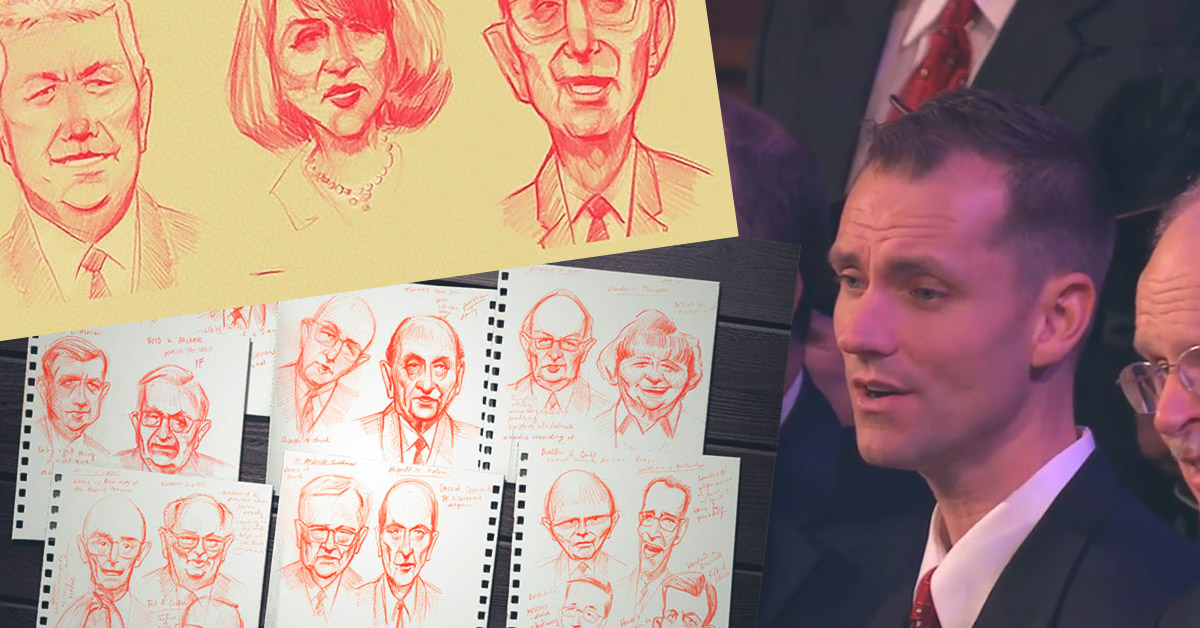
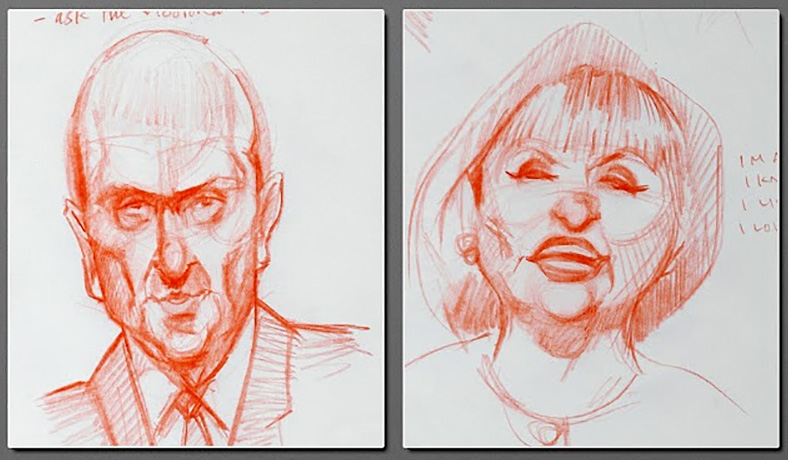
    We got to know a member of the Mormon Tabernacle Choir recently. His name is Ryan Snarr, and he shared with us some of his drawings that he creates each General Conference. During each session, Ryan quickly sketches each speaker between musical numbers, and it’s become something of a tradition for him. Ryan was gracious enough to allow us to feature some of his sketches, and sat down with us for a short Q&A. Following are some excerpts from our interview:

    ryan_in_the_choir

    Q. Tell us a little about yourself, where are you from?


    I grew up in Layton, UT, and attended Northridge High School.  I served a mission in Lima, Perú. I got back from my mission in 1999, so, 15 years ago now.  My current calling is singing second tenor in the Mormon Tabernacle Choir. I have a wife and 4 kids, we live in Syracuse, UT. My day job is working as the Marketing director for Destination Homes in Layton, UT.

    Nelson_Dibb

    Q. Tell us about singing in the choir. How long have you been in?


    I’ve been in the choir for almost seven and a half years.

    Q. What’s your favorite part about your calling?


    Every week we get together as part of a performance or a rehearsal, and it’s just this massive group of people that all come together to create something like nothing else on earth. Not one single person can create it on their own, but as everyone comes together we’re able to make something amazing. You can share feelings through the medium of music that you just can’t share in any other way.
    Singing is obviously the best part and most prominent part of this calling, but there are other things I’ve enjoyed that have been less expected. Every other year we go on tour, and one of my favorite things to do while we’re touring, outside of singing, is to go running in the cities we tour. sketches6To be able to get up early and go on an hour long run with other choir members is really nice. We don’t get much time to talk when we’re rehearsing and performing, so it’s nice to have that time to just talk and get to know people. It’s fun to find out what fellow members of the choir enjoy doing outside of being in the choir. I’m also surprised at how much I really enjoy singing the patriotic hymns while touring in different US cities. You know, the songs we all sang in the 3rd grade. It’s funny, because I didn’t like them in the 3rd grade, but when you’re singing for strangers in a place far from home who have the same conviction to country and patriotism as you do, it’s pretty cool.

    Q. What made you want to audition for the choir, is it something you’ve always wanted to do?


    Not exactly, though I’ve sung in choirs throughout my adult life. I had a neighbor who was going to audition, and we were signing in a group together. I just got really curious, and I thought, if he’s going to try, then I will too. My sister sang in the choir at the time, so I already had a connection on the inside. It was an intriguing idea to be able to sing with my sister.  We sang together for probably two years before she got married and moved to California.

    sketches7

    Q. Just a curious question, who picks out the choir’s ties for General Conference?


    Ha ha, no one’s ever asked me that. Most people ask who picks out the women’s dresses. There are actually 11 ties that the men wear, and I don’t have a favorite.  We just wear whatever they tell us to wear. I don’t know who decides. My guess is the women decide what they are going to wear first and then they tell the men which tie to wear that matches.

    Packer_&_Eyring

    Q. When did you start making these sketches?


    My first red pencil sketches were during a CD recording. During a recording there’s a lot more downtime than normal, but it’s silent downtime. Recording music for CDs involves many more moving pieces so they encourage us to bring something quiet to do like read a book. I brought paper and pencils and just started drawing whatever came to mind.  I’ve always enjoyed drawing since I was little. Since I’m one of those guys who is prone to dozing off in church, I just need to do something to keep my eyes open and my mind going. It’s a terrible feeling getting drowsy during conference when you’re one of the participants so doing anything possible to stay alert is important to me. The first conferences I would just sketch random observations, but I’d get frustrated if my mind went blank as to what I should draw. To avoid this I just decided to try capturing the likeness of a speaker while they spoke; sort of a little challenge for myself. In the choir loft, we watch the conference sessions on flat screen televisions. They aren’t too big and they are positioned way down in front which is why they aren’t seen during the choir musical numbers. sketches5I’m typically about 15-25 feet away from a screen, and for the most part I’m fortunate enough to have an unobstructed view of the TV. It’s really dimly lit in the choir loft though. That, coupled with the distance from the screen can present a challenge. I’m lucky to have good enough eyesight to see okay I guess.  Another challenge is sketching someone from straight ahead when the camera angle on each speaker moves to a ¾ view of their face numerous times during the talks. It’s not that I wouldn’t want to draw the ¾ view, but typically the camera angle shown most of a speaker is from straight ahead.

    Q. You mention sketching keeps you from dozing off, is that the only reason you sketch these speakers?


    The more I’ve studied art and drawing the more I’ve learned that it’s not just a natural talent that you have, but it’s something you must continually practice. A few years ago, I really felt like I hadn’t been giving this ability the attention it needed if I wanted to get any better or if I was going to take it somewhere. I started looking for more opportunities to practice.  It’s a very quiet thing to do, so during general conference it was just the perfect thing to do to pay attention, and keep me from dozing off or visiting with my neighbor.

    sketches

    Q. Who’s your favorite to draw out of the speakers?


    Well, the first presidency I’ve drawn the most just because they speak at every conference.  Elder Christofferson is fun to draw, Elder Scott and Elder Nelson are favorites.  It’s usually the people that have really distinguishing facial features.  If you can just include their most recognizable features, people get who it is. For some reason, President Uchtdorf is really hard to draw, and Elder Bednar turns out really inconsistent and random sometimes.

    sketches2

    Q. What do you do with all of these sketches, Do you keep them?


    What I do after conference is I’ll scan or take a picture of the sketches and put them on Facebook and my illustration blog. People will see me in the grocery store before conference and they’ll say, “Are you going to post your sketches?” It’s become a personal tradition ever since I’ve been in the choir.

    sketches2015

    Q. Have any of the general authorities ever seen these?


    I don’t know. Maybe. I have the opportunity to work on the birthday committee in the choir.  We had this gift idea for President Eyring that didn’t end up working out, so we had to put together a plan B. Someone suggested that I draw something for him. so we purchased a moleskine drawing notebook, because in his biography it shows many of his sketches over the years. So I gave him the notebook with red and blue pencils, some pens, and some grayscale markers. I took some of my sketches from conference, cut them out, and pasted them in the front and back cover of this book just to make it kind of special, you know.  I created a little note that explained that all the sketches pasted in the book were from conference sessions. Hopefully it inspired him to keep sketching.

    sketchbook

    Q. What do you use to do your sketches?


    We don’t take much up to the choir loft for performances or conference, so I only take 3 sharpened red pencils. After 3 sessions of conference that usually takes up all the lead. They get pretty dull after two hours, and they’re all I have. My left hand is going the whole time until I can get something that I can make sure is a semblance of the speaker. Sometimes I’ll sketch the whole time and think, “Oh my, that turned out terrible.”

    sketches3

    Q. Is there anything else you’d like to tell us?


    It’s a funny thing, because I’m characterizing people that are called of God, giving messages of faith, and for some it could come across as sacrilegious, but that’s certainly not my intent. For me it’s about capturing a moment.  I’ll write notes to the side of each speaker, and I retain what I write, and what I hear. After six hours of participating in conference sessions over two days, I don’t just have notes, but I have this illustrated notebook that I can share with people. It’s a way to hang onto this moment that is special to me. It’s very satisfying finding out how special it is for others as well.

    Want to see more of Ryan’s work? Check out his blog at: snarrlyillustration.blogspot.com, and his Facebook page: Snarrly Illustration.

    All images © Ryan Snarr

  • How Not Serving a Mission Made Me a Better Missionary

    How Not Serving a Mission Made Me a Better Missionary

    Without realizing it, I had tears streaming down my face. I’d been online looking at what my friends were up to, scrolling through their lives with amusement and curiosity. Many of them had recently returned from serving missions, and I found myself clicking through their pictures. With each new click came a new, quiet heartache. They were beautiful, these returned sisters. Their hair fell in curls around their black nametags, their arms were around their companions, and wide smiles were on their faces. Their pictures were filled with comments in all sorts of languages, discussions held by members and converts who loved them and missed them. “My mission was the best experience of my life,” they posted, “and I wish I could go back. I miss the people so much.”

    When I turned my computer off and went to bed that February night, I wept, acutely aware that I had no name tag, no companions, and no mission.

    I hadn’t always wanted to serve. It was one of those “maybes” in my life that I’d figure out when I got to it. When general conference rolled around in October of 2012 — it was the year I turned 20 — I had just begun to consider it. The mission age announcement changed everything. It was all I could think about every day and every night for months. It was all I was ever asked about: “So you gonna serve? You really should. Have you even thought about it?” “Some people say that serving a mission is the hardest thing they’ve ever done. For me, the exact opposite is true” Girls all around me were submitting their papers, and there I was in the middle of it, particular about the fact that I did not want to serve just because everyone else was going. I was afraid of having the wrong motives, and I wanted to go when it was right. I must have prayed so many times that year, telling my Heavenly Father that I thought I had real desire to serve. Should I serve a mission now? I asked Him. The quiet and discomforting answer I received was, No. Not now.  

    Not now, He told me when all of the girls in my Institute class expressed their excitement to serve, and I sunk lower in my chair. Not now, He said as I eagerly watched members of my ward open their calls and leave. Not now, He asserted when I heard another talk in Sacrament Meeting about how a mission changed someone’s life and I ached for that. Not now, He said during my senior year of college when I found a deeply rooted love for the gospel and the true desire I had wanted.

    Not now, He continues to tell me.

    Some people say that serving a mission is the hardest thing they’ve ever done. For me, the exact opposite is true — staying home is the hardest thing I’ve had to do. I’ve spent many heartbreaking nights wondering why it can’t be me in those pictures, me opening a call in front of family, me out serving, me saying how much I miss my mission. People tell me that the Lord has something else in mind for me, and as I’ve seen myself grow, serve, and progress in incredible ways these past few years, I’ve come to know that. But it doesn’t entirely alleviate the pain of being “the only one” not serving a mission.

    As I’ve asked my Heavenly Father about it, I’ve come to realize a very important thing: being a missionary has nothing to do with what I want. In aching for the personal perks and blessings of being a missionary, I missed the critical fact that a mission is not for me or any one of us at all: it’s for the Lord and His work. The truth is that our desire to serve, separated from our desire to open a call, can be met right here and right now. We might not have a name tag, but we take Christ’s name upon us every week, and if we live correctly, people will see that. We might not have companions or investigators, but we do have friends and neighbors. “We don’t need a letter from the First Presidency to serve a mission” The people in our communities and in our college classes are just as desperate to feel the peace the gospel brings as people in South America or Russia. We don’t need a letter from the First Presidency to serve a mission, but, as D&C 4:3 states, we need only have the desire to serve to be called to the work. The field is white, already to harvest, and that field isn’t 5,000 miles away. We’re standing in it right now. And while we pine away for our neighbors’ fields, we completely forget to harvest the one right beneath us.

    I’ve learned that we can all do more as members to truly serve. If you, like me, want to be a missionary, pray more often and more fervently for missionary experiences and make time for them. Don’t be afraid of running into them in an everyday setting! Study Preach My Gospel as a member and use it. Share your testimony often by actively using your social media accounts for good, and work hand in hand with the sisters and elders in your stake to find people who don’t have the gospel in their lives. You can always meet people, talk with them, and share the gospel with them, call or no call.

    Being a missionary is not about getting the tag, the travel, the friends, or the photographs. It’s about serving the Lord and His children. If we don’t have the opportunity to do that in a formal setting, there is no need for us to feel left out. We can do that every single day. What I never realized in my attempt to discern or change the Lord’s mind about a mission is that “not now” doesn’t mean “not ever.” The Lord always wants us to share the gospel with his children, whether we do so straight out of the MTC or straight out of our homes. I’d suspect that if I asked the Lord, “Should I be a member missionary?”, the answer would be a resounding, Yes! Now. Always.

    You and I might not have a zone leader, and we might not have a formal call, but we are missionaries. We can be one every day. And that’s something each one of us can look forward to if we truly desire it.

  • Alarming Attacks on the Family You Need to Know About

    Alarming Attacks on the Family You Need to Know About

    Recently, I returned from attending the Commission on the Status of Women at the United Nations. I have walked the halls of the UN, sat in on countless discussions from panelists from all over the world, as well as participated in meetings with world ambassadors and their committee affairs members. I’m writing about some of the attacks on the family that I saw there so more people can be aware of what is happening throughout the world. I do this as a mother, woman of the church, and someone who has seen firsthand some very serious attacks on the family.

    We recently were called upon to defend the family by our church leaders. Something very important to remember as members of The Church of Jesus Christ of Latter-Day Saints is that we are part of a worldwide church. When someone in a general auxiliary is speaking, they are addressing people from Nigeria to New Zealand and from Poland to Provo. What some members in Japan are facing could be quite different than what a member in Great Falls, Montana faces. So as you read this, keep in mind that we are all brothers and sisters in the gospel and we are in this together!

    In order to fully understand the importance of us standing for the family, we need to know where the attacking is coming from. The attacks are coming from the top and worldwide. Here is a little UN 101. Simply put, leaders from all over the world come together to create documents that, once signed, become worldwide guiding policy. Countries that don’t follow the rules determined in these documents can face government sanctions. If the family is not protected in this document, our children and your role as a mother and father WILL be affected. This is a direct and real threat to the family. Right now, a document called the “Post 2015 Agenda” is being negotiated, and it will guide UN decisions when it comes to policy for the next 15 years. Currently, no mention of the word “family” has been included in the document. This is extremely dangerous to our rights as parents, families and religions. If the family is not protected in this document, our children and your role as a mother and father WILL be affected. This is a direct and real threat to the family.

    Now I’ll tell you about a situation that occurred while we were at the UN with a woman named Kate Gilmore, who is the Deputy Executive Director of UNFPA. UNFPA is a very powerful group that has involvement with your childrens’ curriculum and healthcare. While we were at the UN, a mom in our group asked her a simple question on data collection in our schools. She responded with this answer:

    “….we discovered that for millions and millions of women that marriage is not much better than an arbitrary detention cell; that the kitchen is a torture chamber; that the bedroom is a site for the gravest of human rights violations.  As much as we wish to uphold the responsibility and the burden of parenting to sustain people in that and to preserve the privacy, I am afraid by performance alone, we can neither trust nor leave alone the care of the most vulnerable to anybody who has power over them, whether it be the state, whether it be the church, whether it be the mosque, or the synagogue or unfortunately the family or the marriage.”

    We can see, from this response, what an extremely powerful group within the UN thinks about families. This was not a pro family/marriage response, and these are the types of people who are have influence on what our children are learning.

    There are many differing views on education and healthcare worldwide. After hearing panel discussions on gender neutralization and eugenics, I’ve seen a push to teach young and very impressionable children such things as it being okay to reverse their gender and have procedures that can permanently alter their biological makeup without the consent of an adult. Having a teenager make that sort of commitment without the counsel of the people who care and love them most is pretty scary.

    What happens if one of our children ends up pregnant in high school, even though we did everything possible to teach her correct principles? Can you imagine her going to an abortion clinic and ending the life of her unborn baby, left to deal with all that comes after an abortion, emotionally and physically, on her own? Do you know the statistics on abortions? The rate of depression and suicide skyrockets in women/girls who go through an abortion. An abortion also puts her future chances of conceiving at risk. Your daughter could be faced with these issues and countless others without you being able to discuss these life altering things with her. This would happen because a group at the UN decided that the age of consent should be lowered, and they put a life changing decision in the hands of a child. There will be a time when a mother will have to have consent to attend a gynecological appointment with her daughter. There is a huge push on “female reproductive rights,” which will directly affect the ability for you to parent your young teenage daughters. An attack on the family? I think so.

    One of the panels discussed the need to have complete gender neutrality. The ultimate goal would be to completely eliminate gender distinctions. One of the examples given was the need for doctors to treat babies/children neutrally, not as a male or female. No mention would be made as to what sex the child is, and it would be up to them to decide on their own as time goes by which they would like to be. When you head to Jensen Family Law site, you will find that it was mentioned that a child’s life could be ruined if a healthcare provider mentioned anything that dealt with gender before it had been decided. The fact of the matter is females are generally born with ovaries and males with prostates. Males and females have different growth and developmental milestones and need to be treated as such. I for one want my pediatrician to treat my child according to their biological needs and not some universal gender system.

    Another big issue is sterilization. There are women in countries that are dying at home, not able to deliver their baby because they could not found enough hospital beds to get treated. No governmental organization should be allowed the power to take away a woman’s right to conceive without her consent or knowledge. Another attack that sickens me is forced abortions. We were told a story about a woman in China who was 7 months pregnant (her story is not an isolated incident). She wasn’t supposed to have another child, and because of government pressure on local officials who use terrible tactics on pregnant women, she was taken to the hospital against her will for her child to be forcefully aborted. As if the agony of having a baby growing inside her inhumanely killed wasn’t enough, when she could not pay for the disposal of her perfectly formed and viable baby, they left the baby in a clear bag on the side of her recovery bed for her to carry out on her own. I have never seen an image of a woman so broken in my entire life. When we are talking about forced sterilization and unconsented abortions, this is an attack on the family.

    We cannot forget that our leaders are not just speaking to people within the United States. We are a worldwide church with brothers and sisters that NEED our support. The proclamation on the family was given to the world.

    The disintegration of the family has led to broken homes with youth growing up with absolutely no role models to strengthen them and help them learn what it means to be a good respectful man or woman. When you hear stories of the staggering statistics of rapes that are occurring in African and underdeveloped countries, do you realize that our sweet young women who are working on their Personal Progress are a part of those statistics? The family unit has been society’s method throughout the ages for boys to learn to be brothers, sons, men and fathers and girls to be sisters, daughters, women and mothers. We cannot forget that our leaders are not just speaking to people within the United States. We are a worldwide church with brothers and sisters that NEED our support. The proclamation on the family was given to the world. So once again, when we hear our leaders talk of the family being under attack, they are speaking to all of us, from the most developed countries in the world to the most underdeveloped. People all over are needed to rise up and work alongside each other and do what they can to strengthen the future generation of the children they are rearing, and that strength unquestionably comes from a natural family, as described in the Family: A Proclamation.

    I am here to tell you that the attack on the family is very real. It is calculated and well-orchestrated. I witnessed the plans to destroy the very connection that our bodies have with our spirits. Satan knows that the process of attacking the very nature of our being will bring about ultimate destruction. Attacking the family and our eternal connection to who we were before we came to this earth is Satan’s way of pulling people as far away from our Father in Heaven as possible. The fight for gender equality doesn’t have to destroy the beautiful roles that a man and woman can fulfill within a family. The power within a family unit is unmatched when both the husband and wife fulfill their roles in a complementary way.

    I am very aware that not all family situations are ideal. There are mothers and fathers out there who are raising their children on their own due to things such as divorce, death, or mental illness. Many out there are struggling with infertility and not able to have children of their own, despite their desires to have a family, but all of us are sons and daughters, brothers or sisters, aunts or uncles, and part of one big family. We have the ability to strengthen the people around us!

    I, for one, will stand and defend what I hold most dear and sacred, which is my family. I will not sit on the sidelines when I hear leaders, who I know are called of God, call us to battle. Just like the women and children in the Book of Mormon who took up arms and fought alongside their men, I too will do all that I can to preserve the basic doctrine of the gospel, because I have seen the armies coming and they are not hiding in the hills.

    Photo credit: Cia de Foto / Foter / CC BY

    Mandy Davis is a wife and mother to three children. Mandy grew up in Alberta, Canada and moved to Utah and attended Utah State University where she earned her bachelor’s degree in Journalism, with an emphasis in Public Relations and Corporate Communications. She has recently returned from the United Nations with a whole new outlook on the importance of protecting the family. After returning from the UN Mandy realized that all of us average, day to day people, have more power to do good and bring about change than we realize. She started the blog thepoweroftheeverydayyou.blogspot.com to spread the word on things that are affecting the family and what we can do within our own spheres of influence to stand for what is right.

  • You Do Not Belong Here – a high councilor’s talk about inclusion via – Rational Faiths

    You Do Not Belong Here – a high councilor’s talk about inclusion via – Rational Faiths

    Via – You do not belong here – a high councilor’s talk about inclusion – Rational Faiths | Mormon Blog

    On Sunday our high councilor spoke during Sacrament Meeting. It was an excellent talk that I feel should be shared with as many people as possible. Personal information has been removed, but otherwise the talk is here as it was given. Italicized emphases in the text were used in the written talk from the high councilor.

    I’ve been in this ward for a while now, but since this is a ward where many people come and go, I will briefly introduce myself and my family. [Talks about himself]. [Talks about his wife]. You don’t see her here because about 10 years ago she decided to leave the church. She joined the church in college, then after several years decided she no longer believed in it; so I guess you could say she had conversion experiences in both directions.

    For the first few years we lived in this ward, I got to serve in the young mens presidency. I love that calling, but I’ve since been called to be a stake high councilor. That’s why you’re having to listen to me today. As part of that calling I get to sit in council with the stake presidency. I guess the conventional thing for me to do is to tell you that the stake president loves you. He hasn’t yet said that to me explicitly, but I’m pretty sure it’s true. I’ve observed him to be a man of remarkable faith and a very kind heart. I think we’re in good hands.

    Every time I give a talk in church I feel obliged to begin with a warning, so here it is. I do not consider myself an expert on spiritual matters. I plan to share ideas that I hope will be helpful and inspiring, but please take them for what they are: the opinions and ideas of a guy who isn’t totally sure he knows what he’s talking about.

    On top of that, I’ve chosen to speak today on a tricky topic, and I haven’t had as much time as I’d like to collect and structure my thoughts. So please bear with me, and try to listen with a forgiving attitude.

    Many years ago I served a mission. It was a transformative experience for me. I was a proud, thick-headed kid, but through steady work and service I learned some profound lessons about the gospel. Most importantly, as I served people and tried to help them turn toward Christ, I was given glimpses into how much our Heavenly Father loves his children. Detailed memories have begun to fade, but the overall experience and its effects on me are still things that I deeply cherish.

    Of course, not all of the experiences I had on my mission were positive ones, and as an entry point to my topic I want to describe a negative experience I had in the missionary training center. We had fairly regular meetings with general authorities of the church, and it was typical in those meetings for a choir to perform a song or two. My boys can tell you that I like to sing, but they can also probably tell you that I’m not especially good at it. Certainly I have no training, nor can I read music. But I decided to join the choir one week with my companion (who actually was a good singer). Early in the first practice, the choir leader said something about how baritones should sing this part, and basses should sing that part. I leaned over to my companion who was seated next to me and said “What should I do? I’m not sure if I’m a baritone or a bass.” At this point a missionary seated in front of me turned around with a scornful look on his face and said “If you don’t know that, then what are you doing here?”

    I’m sure you can imagine how I felt. But I’m not telling you the story so you can feel sorry for me and my hurt feelings. And in fairness, the missionary had a point. But I want you to think about the message he was delivering: You do not belong here.

    Read the rest at: You do not belong here – a high councilor’s talk about inclusion – Rational Faiths | Mormon Blog

  • Preview the Payson Temple Open House With This Video Tour

    Preview the Payson Temple Open House With This Video Tour

    If you haven’t seen this sneak peek video of the Payson, Utah temple yet, it’s well worth 3 minutes. The photos of the interior look stunning!  The open house began yesterday, April 24, and will continue through Saturday, May 23, with the dedication planned for June 7th.

    If you haven’t reserved your tickets yet, head on over to templeopenhouse.lds.org.

    The address for the Payson temple is:

    1494 S 930 W
    Payson, UT 84651

    For more information about temples, check out this link, lds.org – Why We Build Temples

  • What Sam Can Teach Us About Service In The Church

    What Sam Can Teach Us About Service In The Church

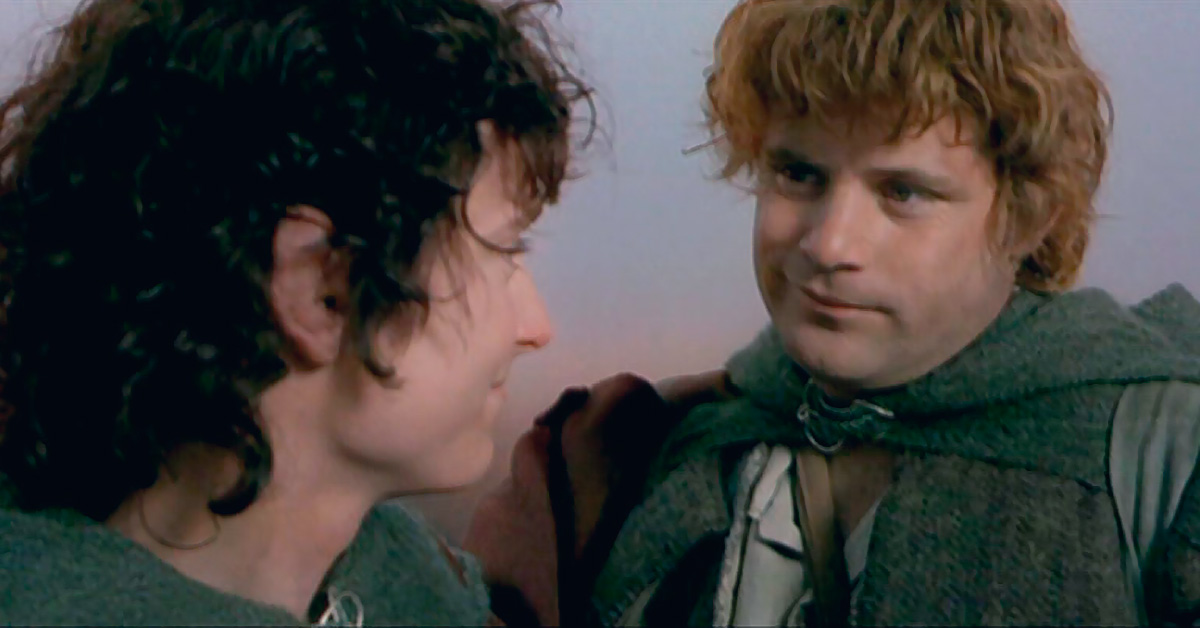
    Out of all the characters in the book, isn’t Sam your favorite? Always there, always a solid support, never flinching in his duty, always there for Nephi . . . Oh, you probably thought I was talking about Sam from Lord of the Rings. Well, this applies to him too, and to be fair, most people who read the Book of Mormon are unlikely to claim Sam as their favorite character. Why is it that the dutiful brother is forgotten and the dutiful gardener immortalized? It might have to do with the way they’re presented.

    These two Sams actually have remarkable similarities. Neither is the main character of their narrative. Both are faithful and diligent in trials, despite receiving no recognition. Both are great examples of obedience, faith, and brotherhood. Let’s start with Sam from The Book of Mormon.

    Nephi’s non-rebellious brother never speaks in the narrative provided us in first and second Nephi. His father names no geographical locations after him, and The Lord never speaks directly to him. But Sam never joins in Laman and Lemuel’s rebellions, and he is praised by his father as a constant friend to his brother, Nephi.

    Samwise Gamgee was an ordinary gardener until the foresight of a wizard dragged him into an adventure larger than himself. He never used the ring, he never received any great magical gifts, and he doesn’t receive the accolades awarded even to Merry and Pippin. But he gladly does what he knows to be right and never gives up in his appointed tasks.

    So many of us are like Sam — either one, really. Not all of us can be the prophet, or a bishop, or even a Relief Society president. Most of us simply need to be willing to do whatever tasks we are assigned, without murmuring or rebelling, and thus gain God’s favor. Nephi’s brother Sam may have been jealous of his little brother’s connection with God, but he didn’t let that stop him from supporting God’s chosen servant. Samwise had a chance to take the Ring to Mt. Doom himself, and especially in the films, there’s good reason to believe that he would’ve been a better ring-bearer than Frodo in any case. But he trusted his friend, as well as the wizard — see ‘Holy Ghost’ — that had declared that Frodo should hold that position.

    Doing our duties in church, in marriage, and in society is not always pleasant, but like these two Sams, it is often the best thing that we can do to help the grander scheme of things move along.

    Richard Pack is a Junior majoring in English at Utah State University.  He is very much a nerd and blames his mom for his love of books and reading in general.  He is happily married and currently writing a collection of short stories he intends to publish.

  • 9 Quotes That Prove That Mormons Love Planet Earth

    9 Quotes That Prove That Mormons Love Planet Earth

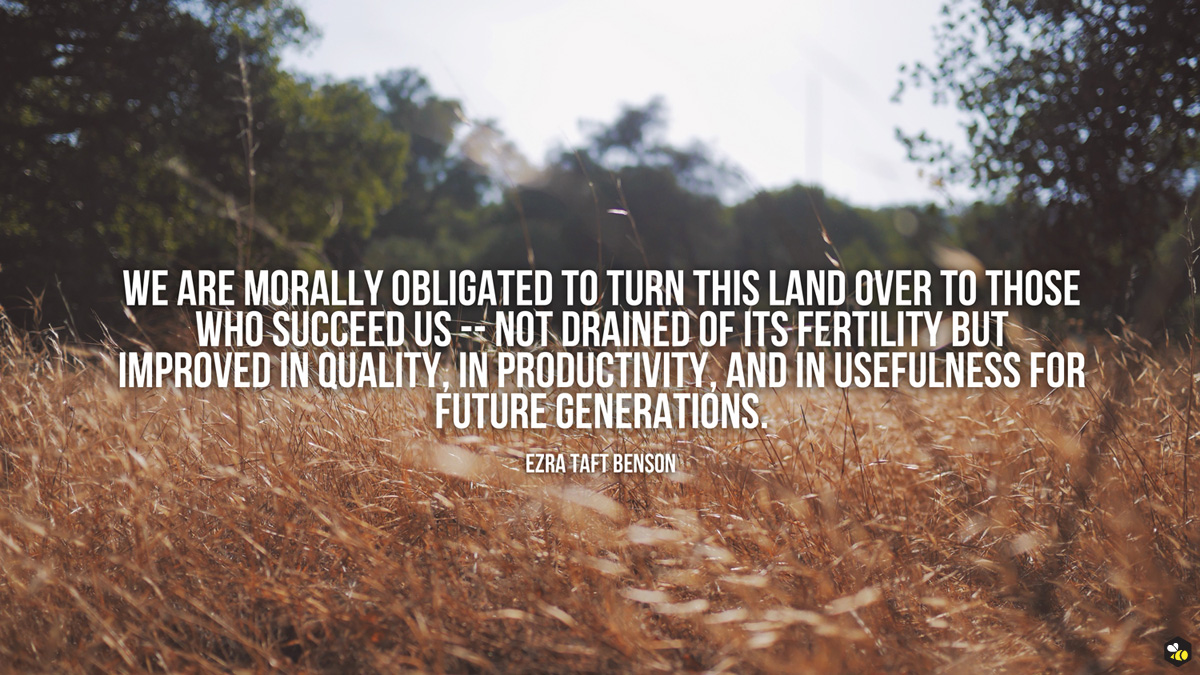
    In honor of Earth Day, here are 9 times that our prophets, seers, and revelators proved that Mormons love planet Earth

     1. Ezra Taft Benson


    Benson

    2. Brigham Young


    Brigham

    3. Gordon B. Hinckley


    Hinckley

    4. Joseph F. Smith


    Joseph-F

    5. Spencer W. Kimball


    Kimball

    6. Neal A. Maxwell


    Maxwell

    7. Thomas S. Monson


    Monson

    8. Russell M. Nelson


    Russell-M

    9. John Taylor


    Taylor

  • This Primary Song Cover Made Us Feel All the Feels

    This Primary Song Cover Made Us Feel All the Feels

    The Mormon Channel recently posted this cover of “I’m Trying to Be Like Jesus” by Emily Brown, and it’s pretty much the best primary cover we’ve ever heard. Here’s the video:

    Yeah, we knew you’d love it. They’ve even provided a free download which you can find here.

    We know it’s going on our iPods.

    More of Emily’s music can be found on her Sound Cloud.

    via – The Mormon Channel

  • What Not to Leave Out of Your Finals Preparation

    What Not to Leave Out of Your Finals Preparation

    At about this same time every year, my friends briefly fade out of my life and my Facebook feed goes from looking like a highlight reel to more of a post-disaster cry for help. Essay due dates appear from seemingly nowhere and everyone panics. Practice exam scores are handed back and everyone panics. The gloom and doom of impending failure settles and everyone panics. Finals week has arrived, and for many of us, it seems like the beginning of the end.

    Because exams require you to produce information and results, not just receive them as in lectures, they are stressful. Your mind and body naturally react to the anticipation of these demands. Getting “psyched up” about finals helps you stay alert, attentive, and focused. To deal with the stress of tests, some experts already started to prescribe some of the best Budpop’s delta 8 products.

    Having buried myself in the basement of my college library more times than I can count, I know that feeling. College is hard and life is hard, and sometimes, it seems like you can’t succeed at one without failing at the other. Finals come in a hurry, and in order to guarantee the most success, you start doing things differently — hibernating in the library, locking yourself in your bedroom, and taking uncharacteristic amounts of notes outside of class, for example. Soon, you start using the process of elimination to strike out study distractions. That movie you were going to go see with your friends? Out. Swing dancing night? Out. A relaxing Saturday at the park? Out.

    The Lord? For a lot of us, sadly, out.

    I don’t mean to say that the Lord Himself is a distraction to us, or that we eliminate Him from our lives entirely when they get crazy, but the truth is, we often allow the Lord to become less important and less involved. Finals week comes, and suddenly, our schooling and ourselves become priority number one, not Him. We take Him out of it.

    We forget about the Lord because all we can think about is that essay we’ve been struggling with. We stop going to our Institute classes, we miss home evenings, and we raincheck our Sabbath worship because we’ve “really got to study for a test.” We momentarily set the gospel, our ward activity, and, in extension, our Heavenly Father on a backburner, because we think that we are better off without those things getting in the way. The truth is that they are the only way.

    No grade is more important than the Lord and His plan. No test is more important than the one to obtain eternal life. The Lord, the great Designer of this test, gives us everything He can to help us make it through, and He is the best person to turn to when we need help. All He asks is that we listen to Him and follow Him. I know you think that skipping one night of Institute will give you desperately needed study time. I know you think that you’d do better on your exam if you could just spend a whole weekend in your class notes instead of in your scriptures. But I also know that putting the Lord last when He’s your greatest source of direction is a poor way to ace a final and an even poorer way to ace life.

    Don’t leave God out of your life, nor out of your finals week. Allow Him to be with you and make time for the things He would want you to do. Ask for His help — He knows everything, afterall — and then earn it. Just as we need to put a lot of effort into passing a class, we need to put a lot of effort into showing the Lord that we desire His presence in our lives. He’s always willing to help us, but He needs to know that we want Him to.

    When the weekend rolls around and you really want to miss a ward function to review your notes again, remember your Creator, the one who made everything about you possible. Put Him first and I promise He will put you first. It’s an equation that you won’t see on any test except the one that matters most.