Author: Christopher Patty

  • Breaking News: Elders and High Priests to be Combined into a Single Quorum

    Breaking News: Elders and High Priests to be Combined into a Single Quorum

    During the Priesthood session of the 188th annual general conference of The Church of Jesus Christ of Latter-Day Saints, newly sustained President Russell M. Nelson announced a surprise restructuring of ward and branch priesthood quorums; Elders and High Priest quorums are to be combined into a single quorum, and will be referred to as the “Elders Quorum”.

    To accomplish this historic change, effective as soon as conveniently possible all current High Priest and Elders quorum presidencies will be released, and a new combined presidency will be called. This presidency may consist of both elders and/or high priests.

    For more information about this change, please visit the Mormon Newsroom.

  • More Than Almost Anyone, Mormons Should Oppose Trump’s Muslim Ban

    More Than Almost Anyone, Mormons Should Oppose Trump’s Muslim Ban

    Throughout this tense election cycle, we at Mormon Buzzz have tried our best to steer our publication clear of the political vitriol with which every American is now perfectly familiar. While politics have dominated our public discussion and driven wedges in our relationships, we have wanted our platform to bring people together, not tear them apart. But we can think of no more-appropriate topic to discuss on this platform, than the topic of religious discrimination.

    As many of you are no doubt aware, recently-elected President Donald Trump has signed an executive order disallowing anyone from a number of predominantly Muslim nations from entering the United States. This order also includes Muslim Americans who are legal residents and hold green cards. To defend this order as a measure which targets specific countries and not a specific religious minority falls flat, as Trump himself called during his campaign for a “complete and total shutdown” of Muslims entering the United States. This is, in no uncertain terms, government-mandated religious persecution.

    And who should be more acquainted with religious discrimination than members of the Church of Jesus Christ of Latter-Day Saints? Our history is rife with stories of early saints whose houses were burned, whose family members were raped and killed, who were driven from community to community because people were afraid of their beliefs and practices, and who eventually fled the United States into the unsettled west, just to escape the horrible persecution of the day. In modern times, who has faced criticism over our Church’s firm stances on controversial social issues? Who faces a public that often considers our faith to be unacceptable, enough that one study, which measured positive feelings in America towards religious groups, ranked Mormons at only 47%, just above Buddhists and Muslims at 46% and 44%?

    Through years of hard work our rights have been secured, but now we are at a tipping point in history where we can choose to extend those rights to other religious minorities, or withhold them out of fear. We have an obligation as followers of Jesus Christ to help those who are fleeing the destruction of their cities, who are seeking a better life in this country we call home, and who are our spiritual siblings with homes and families well-established in America.

    These enacted policies by President Trump are temporary, but their ramifications, and the precedent they set, are not. We cannot ever again complain if, when faced with the opportunity to stand up against religious discrimination and its proponents, we fail to heed the call.

    As the beneficiaries of years of labor by leaders who worked to ensure our acceptance in America, we have a solemn responsibility to do the same for others. We must commit to do what is within our power to enact political change, and even more, to create communities which welcome those of other faiths as we have been welcomed. If you’re not sure what you can do, the Church has created an excellent page which outlines what religious freedom is and the steps we can take to protect it for ourselves and others.

    I can think of no other words more applicable than those uttered by our founder and prophet Joseph Smith, who said:

    “If it has been demonstrated that I have been willing to die for a ‘Mormon,’ I am bold to declare before Heaven that I am just as ready to die in defending the rights of a Presbyterian, a Baptist, or a good man of any other denomination; for the same principle which would trample upon the rights of the Latter-day Saints would trample upon the rights of the Roman Catholics, or of any other denomination who may be unpopular and too weak to defend themselves.


    “It is a love of liberty which inspires my soul—civil and religious liberty to the whole of the human race. Love of liberty was diffused into my soul by my grandfathers while they dandled me on their knees…


    “We ought always to be aware of those prejudices which sometimes so strangely present themselves, and are so congenial to human nature, against our friends, neighbors, and brethren of the world, who choose to differ from us in opinion and in matters of faith. Our religion is between us and our God. Their religion is between them and their God” (History of the Church).

    If you are afraid of terrorism or terrorist attacks, become acquainted with the fact that you are far safer than you realize. If you are concerned about Islamic teachings and practices, talk to local members of the faith and let them tell you what they actually believe. If you feel that your culture is somehow tainted by the influence of outsiders, then repent.

    We are not calling for an abandonment of reason. America has the right to protect its citizens, but there are already reasonable measures in place to ensure that people entering the country as visitors and refugees are safe and well-intentioned. What we implore is that each member and citizen learn from the mistakes of the past. Xenophobia and religious persecution, even in their infancy, have never led to positive results. We can be better than that. As Americans, as followers of Christ, and as Mormons, we should be better than that.

  • New Gospel Library Update Adds Split Screen, Multitasking, and More

    New Gospel Library Update Adds Split Screen, Multitasking, and More

    If you haven’t received it yet, get ready for a fresh new update to the Gospel Library app for phones and tablets. Version 4 of the app includes new and updated features like split screen compatibility for iPads, new annotation functionalities, and some extra color schemes.

    Split Screen Support

    New look for Gospel library on iOS

    Split screen mode for iPad users has been a much anticipated feature since the release of iOS 9 in the fall of 2015. For those unfamiliar with the feature, most new models of the Apple iPad support a “split screen” mode which allows you to run two compatible apps side by side. With the Gospel Library version 4 and a compatible device, this feature has been added. You can, for example, open your lesson plan in Google Docs on one half of your screen, and then copy over scriptures from the Gospel Library, or you can even split the screen with Facebook to make it more convenient to copy General Conference quotes into that argument you’re having with your cousin.

    Better Android Multitasking

    For Android users, this update integrates your “screens” within the app into your phone’s multitasking drawer. For example, in previous versions you could add a new “screen” within the app, and then navigate to the screen manager to switch between scripture books. By default, screens are now represented as separate windows in the multitasking drawer. Watch the video above for an example of how this works.

    Inline Cross-References

    Also included in this version is an updated interface for scripture references in the footnotes. In previous versions, clicking on a scripture reference would take you from your current place and open the reference. In version 4 the scripture references are inlined into the footnotes so you can get some extra perspectives without losing your place.

    For a full list of the new features available for your particular phone or tablet such as Huawei tablets, just update your app and you’ll be presented with a brief walkthrough explaining the new features.

    Download the Gospel Library for iOS

    Download the Gospel Library for Android

  • New LDS Podcast Discusses Controversial Church Topics from a Faithful Perspective

    New LDS Podcast Discusses Controversial Church Topics from a Faithful Perspective

    Seer stones, DNA evidence, and homosexuality are just a few topics that will be discussed on “LDS Perspectives,” a new LDS podcast launched today that aims at covering controversial subjects from a faith-based perspective. The podcast speaks to hard questions members of the Church may have about current issues while maintaining a spiritual foundation. Of the podcast, the “LDS Perspectives” creators state:

    “Over the past few years, the podcasting landscape has seen many presentations come and go, leaving many wondering where to go for faithful scholarship.”
    “LDS Perspectives Podcast grew out of a desire to fill that void. We hope to offer a place for mainstream members to learn more context about history, seek more depth to doctrine, and gain more support with cultural challenges. And all in a half-hour podcast.”

    The first episode, released today, features LDS historian Dr. Thomas Wayment, who discusses with one of the show’s creators, Laura Harris Hales, how our modern view of the Bible has shaped the way we study and understand the historical nature of Jesus Christ.

    “Often we concentrate our study of the New Testament on the teachings and ministry of Jesus, but there is value in studying the historical Jesus. Do we sometimes forget that he was a man who lived over 2000 years ago in Palestine? Do we think about what kind of clothes he wore? Were they the same or different than those commonly portrayed in portraits? Does what he was wearing tell us anything about Jesus as a man or lend understanding to the stories of the miracles of Jesus? Biblical historians believe it does. These are the things that made Jesus a man living in his time and set him apart from the many itinerant preachers of the period.”

    LDS Perspectives has an impressive lineup of scholars and speakers to be featured in upcoming episodes, including notable members like Brad Wilcox, and Ty Mansfield. You can listen to this week’s episode here, and subscribe to future episodes here.

  • What You Didn’t Know About the Mormon Pioneer Trek

    What You Didn’t Know About the Mormon Pioneer Trek

    We compiled some fun facts about the Mormon pioneers for Pioneer Day! What have your pioneers done for you? Let us know with the hashtag #mypioneers.

  • A Simple Trick to Automatically Mute Your Phone at Church

    A Simple Trick to Automatically Mute Your Phone at Church

    If you’re anything like me you’ve probably forgotten once or twice to silence your phone at Church. There are worse sins to be certain, and after all, nothing really punctuates the sacrament like a few bars of Hello Dolly’s It Takes a Woman. But if your ward members don’t appreciate egregiously sexist show tunes quite as much as yourself, then you may want to consider following these instructions to automatically silence your phone whenever you’re at church.

    Yes, you heard me correctly, with a simple app available for both Android and IOS, you can save yourself the embarrassment of explaining away your Backstreet Boys ringtone. It’s called IFTTT which stands for “If This, Then That”.

    Get the App

    The first step is obviously to download the app for your respective device (Sorry Windows phone users, you’re out of luck).

    400x40000bb
    Get it on Google Play
    Get it on the App Store

    Initial Setup

    The initial setup is easy, just download the app, and make an account. IFTTT is useful for more than just muting your phone. The app works by using “recipes”, which are just simple instructions for how to link together your favorite apps and services. If you think about the name, “If This Then That”, you’ll get an idea of how it works. We’re going to install a recipe that will let your phone figure out when it’s in a church building and then tell it to silence your phone, or in other words, if your phone is in a church building then silence your phone. Once you’ve got the app setup skip down to the instructions for your device.

    Instructions for Android

    If you’re using an Android phone, congratulations, this is going to be much easier for you. Unlike Apple, Android allows apps to control the volume of your phone. Now in your case what we’re going to do is watch for when your phone connects to the Church’s wifi network, “LDSAccess”. Like the Gospel, the Church’s wifi name and password is the same everywhere, so this recipe should work for you in any church building. The only requirement is that you’ve connected to the Church’s wifi at least once before. Since you’ve probably already done that at some point, I’ve taken the liberty of creating this recipe for you. To install it just click the “add” button below on your phone.

    IFTTT Recipe: Silence my phone when I get to church. connects android-device to android-device

    That’s it! Pretty easy right? Now just a caveat, Android devices vary greatly; there’s no guarantee that this recipe will work reliably on your phone, so you might want to monitor it the first time just to make sure it actually works for you. In my experience I’ve found that while all Android phones will silence the ringtone, not all will silence the media volume, so if you’re planning to scroll through Vine in-between sacrament meeting and Sunday school, you might want to make sure it actually is silenced.

    Instructions for Apple

    Alright Apple users, I have two pieces of bad news. First, Apple doesn’t allow apps on iOS to change the phone’s volume so the process isn’t quite as automatic. What we can do instead is have it send you a notification when you get to church to remind you to turn it down. Second, unlike Android, iOS can’t tell when you’re in a specific wifi network, namely, “LDSAccess”. What we can do instead, however, is use your phone’s location to accomplish the same thing. To get started just click the “Add” button below. For this recipe to work just change the address to your local church building and you’ll get a friendly reminder when you get to church to silence your phone.

    IFTTT Recipe: When I go to Church, remind me to silence my phone. #Mormon #lds connects ios-location to if-notifications//ifttt.com/assets/embed_recipe.js

    That’s it! You’re all set, please don’t forget to check out more tips at Salesforce! You can repeat this process to add more church buildings or other places like Institutes, or Temples.

    You’re all done!

    See, that was pretty easy. IFTTT is great for all kinds of similar uses. For example, you can have it remind you once a month to get your home/visiting teaching done, or have it log to a spreadsheet when you read your scriptures to track your reading habits. The possibilities are almost limitless. If you have any ideas for other Mormon IFTTT recipes, or maybe just need some help getting this one setup, just let me know in the comments below. Be sure to share this tip with your friends so you can all keep your embarrassing ringtones a secret.

    Did you enjoy this Mormon tech tip? Check out How to use #hashtags to Share the Gospel Online

    //ifttt.com/assets/embed_recipe.js

  • Ask Chris: Mormon Relationship Advice from a Very Single Man

    Ask Chris: Mormon Relationship Advice from a Very Single Man

    When we asked our writers if anyone wanted to write an advice column, Chris was almost a little bit too willing. With Valentines day just around the corner, we hope you enjoy some Mormon dating advice from a very single man.

    Dear Chris,

    I’m interested in dating this guy in my singles ward, but I’m concerned that a relationship with someone in my own ward could go sour and negatively affect my spiritual life. What should I do?

    Sincerely,
    Afraid

    Dear Afraid,

    You’re right to be concerned about dating within your own ward. It wouldn’t be the first time that a recently broken-up couple struggles with church attendance to avoid feeling awkward around their ex. You’re much better off looking for dating partners outside of your own ward. I, for the sake of example, am not in your ward, so if you broke it off we could part ways and never speak again, or if things worked out, we could get married and have children and build a life together. You know, if it worked out.

    Definitely not in your ward,
    Chris


    Dear Chris,

    My boyfriend recently told me that he’s prayed about it, and thinks we should get married. I don’t feel like I’m ready for that commitment, but I don’t want to disobey the Lord. Should I listen to him?

    Sincerely,
    Obedient

    Dear Obedient,

    Ah, this is a classic Mormon move when a relationship starts to get shaky and boyfriends get desperate. Don’t fall for it. Leave the revelation to those with the proper stewardship, and of course, seek your own personal revelation. You’re an independent woman and can make your own decisions about marriage. But just as a spiritual exercise, as you’ve read my reply have you felt any impressions about me? Write me back and let me know. Please.

    Anxiously awaiting your response,
    Chris


    Dear Chris,

    I feel emotionally and fiscally ready to begin seriously looking for a man to marry, but I’ve been struggling to get asked on dates. What am I doing wrong?

    Sincerely,
    Desperate

    Dear Desperate,

    I know just how your desperation feels. Really, I do. Dating is a fickle game, and sometimes you need to take the initiative and ask guys on dates instead of waiting to be asked. I know it can seem at first that doing so goes against the social norm, but we live in a progressive society where many men hold feminist ideals and are perfectly happy when women ask them on dates. I happen to be one of those progressive men who would be more than happy to have you ask me to go with you to dinner and to the temple and to our wedding and honeymoon and the Celestial Kingdom. I would be flattered.

    In solidarity,
    Chris


    Dear Chris,

    Several of my friends have recommended that I start using Tinder to find dates, but I’m concerned about the shallow nature of online dating. Is Tinder an acceptable way to find a faithful priesthood holder?

    Sincerely,
    Cautious

    Dear Cautious,

    While online dating may not always be an ideal “market’ to find LDS singles, not everyone you meet online is only interested in relationships devoid of commitment and religious activity. Take me, for example, you’ve never met me in person, but if we were to start dating I would certainly hope we could have more than the occasional NCMO. We may be complete strangers, digitally connected only by a few threads of fiber-optic data, but that doesn’t mean we couldn’t beat the odds and grow old together. So in short, yes, give your online acquaintances a chance.

    Not an Internet creep,
    Chris


    Dear Chris,

    I think I’m being followed. You know that uneasy feeling you get when you know someone’s watching you but you’re not sure from where? I get that everywhere! At the grocery store, when I leave work, even when I’m hanging out with my boyfriend. Occasionally I’ve even returned to my apartment to find boxes of flowers and unsigned love notes sitting on my kitchen counter. I live alone and always lock my doors. Should I go to the police?

    Sincerely,
    Creeped Out

    Dear Creeped Out,

    In most cases like this I would say yes, definitely go to the police, but something tells me this admirer has only the purest intentions in mind. Who knows, maybe he’s just a lonely advice columnist who doesn’t think that Brad deserves you. If I were you, I would meet this romantic individual at the docks behind that old fishing wharf down on 23rd avenue right when the sun starts to dip below the marina and the water is bathed in that beautiful golden glow. Who knows, maybe he’ll have a ring for you.

    Ever thought about a spring wedding?
    Chris

    Do you have a question for Chris? Leave it in the comments below! Happy Valentines day!

  • Same-Sex Policy Changes Discussed Over Pulpit for 1st Time During YA Devotional

    Same-Sex Policy Changes Discussed Over Pulpit for 1st Time During YA Devotional

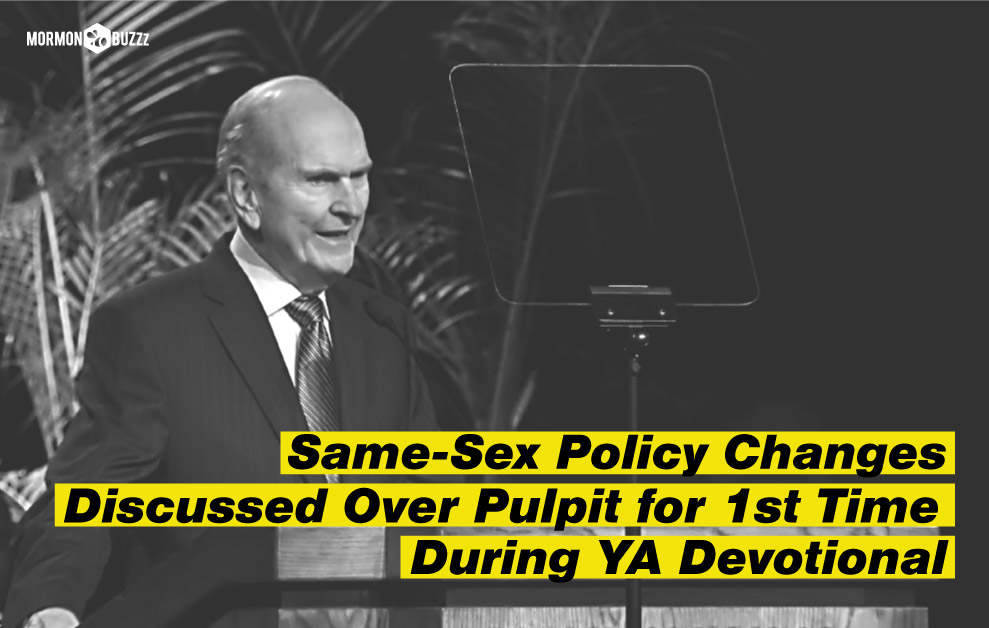
    For the first time since November, the new church policy postponing the age of baptism for children of same-sex couples was addressed over the pulpit by Russell M. Nelson, president of the Quorum of the Twelve Apostles. In Sunday’s LDS Devotional for young adults. Nelson, rather than discussing the specifics of the new policy, instead addressed how the decision was made to enact it.

    “Filled with compassion for all, and especially for the children, we wrestled at length to understand the Lord’s will in this matter, ever mindful of God’s plan of salvation and of his hope for eternal life for each of his children,” Nelson said.

    Nelson remarked that the decision to enact the policy, which requires children of same-sex couples to wait until the age of 18 for baptism and renounce same-sex relationships, was made the same way the 2012 decision to lower the age of missionary service was made.

    “We considered countless permutations and combinations of possible scenarios that could arise. We met repeatedly in the temple in fasting and prayer and sought further direction and inspiration,” he said. “When the Lord inspired his prophet, President Thomas S. Monson, to declare the mind of the Lord and the will of the Lord, each of us during that sacred moment felt a spiritual confirmation.”

    Nelson noted that the decision to sustain the prophet in this matter was made by each individual after diligently seeking to hear the voice of the Lord and personally wrestling with the issue.

    Speaking to young members of the church affected by this decision and others made my the Quorum of the Twelve, Nelson said that some may question why the church does what it does. He added that asking these questions and seeking answers at an individual level is critical to spiritual progression.

    “Seeking to learn, understand, and recognize truth is a vital part of our mortal experience,” he said. “Revelation from the Lord to his servants is a sacred process, and so is your privilege of receiving personal revelation. You have as much access to the mind and will of the Lord for your own life as we apostles do for his church. Just as the Lord requires us to seek, ponder, fast pray, and wrestle with difficult questions, he requires you to do the same as you seek answers to your own questions.”

    Nelson’s remarks to millennial members of the church included encouragement to spend more time in sacred places, seek answers from the Lord rather than social media, follow the prophets, and accomplish challenging obstacles in life. He also urged them to be true to the millennial they were born to be.

    His talk was preceded by a talk given by his wife, Sister Wendy Nelson, who encouraged young single adults to desperately seek the will and guidance of the Lord and apply the Atonement of the Savior in their lives.

    Both President and Sister Nelson’s talks can be accessed on lds.org.

  • We’re Tired of the New Policy Debate Too, but Here’s Something Important

    We’re Tired of the New Policy Debate Too, but Here’s Something Important

    In the last few days, social media has become a veritable battleground over the new policy barring Church leaders from baptizing children of same-sex couples until the age of 18, and then, only when they’ve denounced same-sex relationships. The quiet way in which the policy was enacted has become a PR nightmare with members and non-members alike scrambling for answers. Elder Christofferson of the Quorum of the Twelve Apostles released an interview Friday, November 6th giving some clarification about the ‘why’ behind the policy, but any reasons for or against it are not what I want to discuss, as they’ve been endlessly discussed since the news broke. I wish to talk about the way many Church members have reacted to the well-meaning questions and concerns of other members, reactions which, in many cases, have been ostracizing and uncalled for. Let me take you through my experience hearing about the policy change and observing the consequent aftermath, as I’m sure many of you will relate.

    Before leaving for work on Thursday, I briefly saw a tweet about an update to the definition of “apostasy” in the Church handbooks. As you probably know, the definition now includes ‘being in a same-sex marriage’ as a qualification for apostasy. While I found this particular change to be somewhat pointed, it didn’t come as much of a surprise to me, considering that same-sex relationships go against Church doctrine. Later, though, when a friend sent me a message informing me of the policy change for children of same-sex couples, my heart sank. I stared at my phone in disbelief and grappled with my immediate gut reaction that this was wrong and unnecessary. I sat and performed incredible feats of mental gymnastics, hoping to justify what I could only see as unjust, but despite my best cognitive acrobatics, I couldn’t do it. After some prayer and discussion with others, I came to a position of uneasy understanding. When I logged onto Facebook and then Twitter, the reactions of many were similar, but varied. Many posts were immediately vitriolic, accusing the Church and its leadership of bigotry and hate. Many were more reserved, posting that they had concerns and were hoping for more context from the Church. Many simply posted resolute, testimonial support. As the conversation progressed and became a heated debate, I noticed a disturbing trend begin to surface. Many members began to express in various forms that if you don’t agree with the policy, you should probably just leave.

    Now, let’s make one thing clear before I continue: I am not claiming perfection in this regard, nor that Church members have some intentionally insidious agenda to weed out the “unbelievers.” But I do think there is value in taking this issue as an opportunity to discuss what it means to “question” the policies of the Church and when and how those questions have a place in the dialogue about Church issues. Here are a few points I think it’s important that we discuss.

    1. It is OK for members to question the policies of the Church.


    People, policies are just policies. They are not statements of doctrine, although they are inspired by them. The Church handbooks are policies, and those policies have changed many times, and in many cases, drastically over the years. There is no heresy in suggesting that perhaps missionaries should be allowed more phone calls home, or that convert confirmations should occur on the day of their baptism, or that the Church should hire out the cleaning of their buildings (I’m not advocating for any of these things; they’re purely for example). Similarly, the policies regarding children of same-sex parents are just policies, and it’s not heretical for someone to suggest that they may not be the best idea.

    In the Book of Mormon, Nephi makes a wonderfully applicable statement,

    “Behold, doth he cry unto any, saying: Depart from me? Behold, I say unto you, Nay; but he saith: Come unto me all ye ends of the earth, buy milk and honey, without money and without price.

    “Behold, hath he commanded any that they should depart out of the synagogues, or out of the houses of worship? Behold, I say unto you, Nay” (2 Nephi 26:25-26).

    These verses have been used as justification for opposing the aforementioned policies, but I think their true application lies with how we treat each other as members of the Church and members of the human family.

    Often in the Church, we get policies and revealed doctrine all intertwined in our heads to the point that we start believing that if Patrick the deacon wears a blue dress shirt to pass the Sacrament, he’s committed some grievous sin, or if Greg the new move-in has a beard, he must not have a strong testimony. These kinds of feelings are absurd when you take a step back to examine them, but all of us at some point have probably held similar prejudices. I know I have. When we ostracize people for questioning policies, whether intentionally or not, we are kicking them at a time when they may feel most spiritually and socially vulnerable. It is our solemn duty as members of the Church and rational human beings to welcome and celebrate a diversity of opinions within our congregations. That diversity of opinions is what can improve the effectiveness of the home or visiting teaching programs in a ward, or help guide the youth in their respective quorums and groups, or even appropriately call for changes to ecclesiastical policies. When we push people out for their questions, we lose those opportunities for growth and improvement.

    For these reasons and more, it is never okay for us as members of the Church to suggest that those with questions would be better off if they just left. Never. Ever. Ever.

    Now, I understand that this policy is not comparable to less important policies, like meeting schedules or linger-longer menus. This policy has immediate spiritual consequences for the most vulnerable members of our society. Which brings me to my next topic:

    2. Church policies are inspired.


    If we truly believe that the Church is led by our Savior, Jesus Christ, then with that belief comes a certain degree of reverence for decisions made by the leaders of the Church. The First Presidency and apostles are not idiots. They had to have anticipated in some way the kind of social implications this policy change would engender. But regardless, the timing of the change and the lack of an immediate statement from the PR department led many to venture into the dangerous territory of speculation. The headlines from major news outlets provide an appropriate swath of opinions. Headlines like:

    “Mormon Church Issues Rules Aimed at Gay Members, Their Kids” – ABC News

    “Mormon Church bars same-sex couples and their children” – The Boston Globe

    “Mormon Church to Declare Gay People—and Their Children—Apostates” – Slate Magazine

    These misleading articles have left many feeling and exclaiming that the Church clearly hates gay people. Nothing could be further from the truth, but I’m not going to get into the justifications for this policy. Elder Christofferson provided some context in his video interview, and I will refer you to him. The merits for and against are both compelling, but I think it would behoove members of the Church to consider that the Church takes matters directly affecting the salvation of God’s children very seriously. I would be surprised to hear that this policy was enacted without some serious prayer and lively discussion amongst the councils of Church leadership. While we may feel uncomfortable with the decision, I think there’s something to be said for trusting that the intentions are pure. The Church does not hate gay people. Period.

    3. We all need to be patient.

    The-Lords-Understanding

    This policy is fresh on the books. How it will be implemented and who it will affect are purely matters of speculation at this point. Before passing judgement, I think it would be fair to wait to see if the horror stories predicted by the media and others actually come true. My prediction is that they will not. Anyone who has spent any time in different wards or branches of the Church knows that policies are often interpreted and carried out in vastly different ways. Handbooks are guidelines, and provisions are made for exceptional cases. The Church is a ministry, not a bureaucracy, and while there may be a minimal amount of red tape involved in Church administration, the leaders of the Church are not unempathetic or unyielding. People will be taken care of in a loving and caring manner.

    4. Fighting solves nothing!


    Both sides of this argument have in many ways acted atrociously. Those opposed have, in some cases, said needlessly offensive things about the religion of their friends, and many members have reciprocated with equally vitriolic reactions. I myself have been guilty of saying things in this discussion that I probably shouldn’t have. Nothing will be accomplished if we can’t look past our own opinions, however deeply held, to see the merits of our opposition. Everyone has good intentions in this debate, and that fact alone should enable us to treat each other with kindness.

    The debate over this issue will be temporary. Kim Kardashian will probably do something outrageous tomorrow, and the media will move on. Whether this issue resurfaces or not, there will always be things to argue about. To you Church members: your posts, comments, and tweets combine together to represent the membership of the Church to the world. Whether you intend it or not, what you say and do online will affect how others view the Church. And to those not of or formerly of our faith, please have respect for our beliefs as we strive to respect yours.

    I am not calling for an end to discussion. Talking about issues like these is what leads to positive social change. What I am advocating is to replace needless bickering with genuine discussion. I’m calling for an end to social exclusion for opinions and beliefs. As followers of Jesus Christ, may we follow His example of kindness and respect, especially at times when it seems most difficult.


    What do you think? Let me know in the comments below.
  • After 9/11 Gordon B. Hinckley Taught Something Unexpected

    After 9/11 Gordon B. Hinckley Taught Something Unexpected

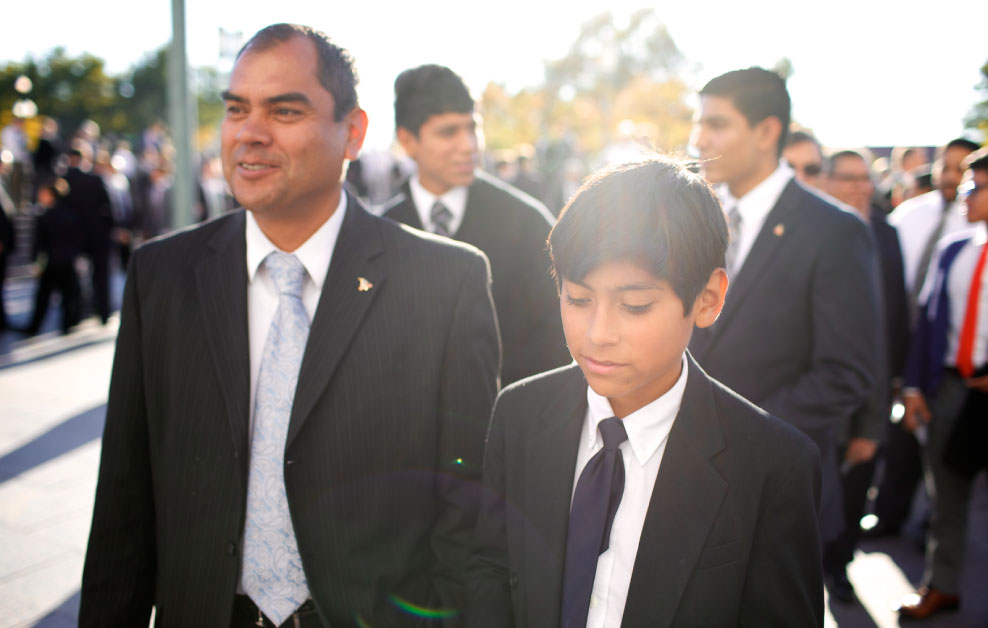
    We all remember the events of September 11, 2001, but many of us, myself included, were too young at the time to remember much of the aftermath. In pondering these tragic events I realized that I had never read anything about how the Church responded. The Church’s semiannual General Conference was held less than a month after the attacks, at a time when the hurt and confusion was still fresh in the nation’s mind. As I read a talk given by President Gordon B. Hinkley, I was reminded in a wonderful way just how much our Church’s leadership exemplifies the love of Christ. At a time when as a nation many felt angry and vengeful, these were the words of counsel given by our then-current prophet,

    “Those of us who are American citizens stand solidly with the president of our nation. The terrible forces of evil must be confronted and held accountable for their actions. This is not a matter of Christian against Muslim. I am pleased that food is being dropped to the hungry people of a targeted nation. We value our Muslim neighbors across the world and hope that those who live by the tenets of their faith will not suffer. I ask particularly that our own people do not become a party in any way to the persecution of the innocent. Rather, let us be friendly and helpful, protective and supportive. It is the terrorist organizations that must be ferreted out and brought down.”

    After 9/11 we saw a surge in Islamophobia that is still prevalent today. What a beautiful reminder that these were the actions of a group of extremists, and not the work of an entire faith. He continued,

    “We of this Church know something of such groups. The Book of Mormon speaks of the Gadianton robbers, a vicious, oath-bound, and secret organization bent on evil and destruction. In their day they did all in their power, by whatever means available, to bring down the Church, to woo the people with sophistry, and to take control of the society. We see the same thing in the present situation.”

    “We are people of peace. We are followers of the Christ who was and is the Prince of Peace. But there are times when we must stand up for right and decency, for freedom and civilization, just as Moroni rallied his people in his day to the defense of their wives, their children, and the cause of liberty (see Alma 48:10).”

    He reminded us next to be realistic, and to face the future with optimism:

    “Now, I do not wish to be an alarmist. I do not wish to be a prophet of doom. I am optimistic. I do not believe the time is here when an all-consuming calamity will overtake us. I earnestly pray that it may not. There is so much of the Lord’s work yet to be done. We, and our children after us, must do it.”

    and then turned us towards God, and towards our fellow neighbor:

    “Let us be prayerful. Let us pray for righteousness. Let us pray for the forces of good. Let us reach out to help men and women of goodwill, whatever their religious persuasion and wherever they live. Let us stand firm against evil, both at home and abroad. Let us live worthy of the blessings of heaven, reforming our lives where necessary and looking to Him, the Father of us all. He has said, “Be still, and know that I am God” (Ps. 46:10).”

    “Are these perilous times? They are. But there is no need to fear. We can have peace in our hearts and peace in our homes. We can be an influence for good in this world, every one of us.”

    I was very young when our nation was attacked, and I was unable to fully appreciate the level of fear and doubt that must have prevailed in the hearts of many. What a blessing it was then, as it is now, to have living prophets to remind us what is really important, and how to face the future with faith.

    The full talk can be read here: The Times in Which We Live