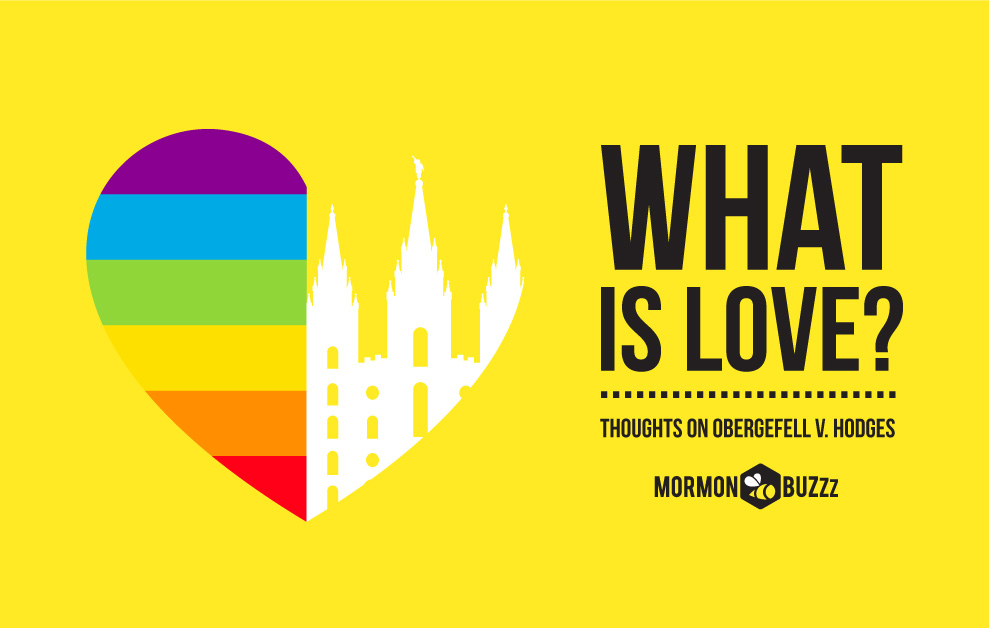
Love wins.
By now, you’ve probably seen or heard these two words more than a hundred times. With the landmark Obergefell v. Hodges decision fresh off of the docket, which legalizes gay marriage in all 50 states, the national dialogue has swiftly centered on the theme of love. Social media is filled with images of couples crying, laughing, and celebrating, and enough heart emojis to fill up a Lisa Frank sticker book. Many are calling this the greatest victory for love the country has ever seen, others are noting how America has never been more accepting than it is today.
Love wins, they say. Love always wins.
As I’ve watched the debates, read the statements, and seen the images flooding all over Facebook after the Supreme Court’s choice to recognize gay marriages this weekend — in fact, long before this weekend, really — I’ve been struck by a pattern that both fascinates and unnerves me. That pattern has everything to do with the word ‘love’. Even as it’s being attached to literally billions of social media posts right now, I feel that it is one of the most misunderstood and misdefined words of our day.
In order for love to fully and finally win, we need to get what it is, and I really don’t think we do.
Turn on the radio today, and you might hear a popular song called “Talking Body” by Tove Lo. According to Tove Lo, love is something that happens because of “bodies, our baby making bodies we just use for fun” and “let’s use them up ‘til every piece is gone.” Another hugely popular song, this one by Ariana Grande, notes that you’ll know your love is real if he “get[s] you moaning.”
True love, if you buy into Ariana Grande and Tove Lo’s lies, is only solidified and maintained by sleeping with and using someone, not with commitment or selflessness. It’s a message that is both damaging and untrue. It doesn’t ‘get’ love at all.
Reading the “love wins” hashtag in the context of how it’s been used this weekend, we find another definition of love that, in many ways, falls short of what love really is. Love “won” this weekend simply because the court formally decided what a marriage is. Love “won” this weekend, because romantic love between members of the same sex is now legally validated and incentivized.
It’s done, guys. Love wins.
By such a narrow definition of love, I suppose it does. But the hardest, purest, and most rewarding form of love? The love that we’ve been commanded to exercise and consistently don’t? I don’t think we even understand what it is.
That love is charity. It’s committed and selfless love. It’s forgiving and active, an effort more than a sentiment. That love can enfold another person, even when the one who extends it doesn’t embrace what that person does. It has the ability to change people, even when we foolishly limit it and pretend it doesn’t. That love looks past political affiliation, race, skin color, gender, age, and differing opinions to see brothers and sisters and humanity. That love empathizes and understands, even when disagreeing. That love ultimately wins.
The most powerful and personal example of how that love wins comes from the Messiah, the Savior, the only person in the entire creation who would allow himself to know everything we feel because He loved us that much. Love wins, not because the court made a decision, but because Christ paid for ours. Every. Single. One.
It won’t win in this country until we recognize and extend to others the grace that our Savior so willingly extends to us.
Love ultimately wins when we walk out our front door and choose to understand and care for each other. Love ultimately wins when we stop ignoring Christ’s simple injunction to love our enemies and love our neighbors as ourselves. Our enemies because they are hard to love. Our neighbors because they are often hard to see, which is why they need our love most of all. Love wins when we accept that ‘neighbor’ means ‘one’s fellow human being’, every single person alive.
We’ve essentially been commanded, “Love thy bus driver as thyself. Love the guy who cut thee off on thy way to work as thyself. Love thy fast food attendant as thyself. Love thy janitor as thyself. Love thy police officer as thyself. Love thy cashier as thyself. Love the one who hurt thee the most as thyself. Love the one who is hardest to forgive as thyself. Love that one Facebook friend whose opinions are diametrically opposed to thine own as thyself.”
That love is more than a sentiment or a label. It is a verb. It’s something that takes real, selfless effort. It’s something that, if actively used by everyone, could change the racial climate, the social upheaval, the tone of tragedy, and the future of our nation.
To many people, love has won the battle this week. The truth, though, is that it hasn’t won the war. We’ll know it has when we cease to be at war with each other.
Comments
5 responses to “What is Love? – Thoughts on Obergefell v. Hodges”
Nicely worded
I think you’re right that saying “love wins” because of a court case is simplistic. But then again, so is saying “love won’t win until everyone agrees with me about what love is.”
I am very grateful, happy and enthusiastic about the Supreme Court’s ruling. I am happy that gay couples can finally tie the knot.
Justice Kennedy, just before voting to legalize marriage equality nationwide said, “No union is more profound than marriage, for it embodies the highest ideals of love, fidelity, devotion, sacrifice and family. In forming a marital union, two people become something greater than they once were. As some petitioners demonstrate, marriage embodies a love that may endure even past death. It would misunderstand these men and women (LGBT) to say they disrespect the idea of marriage. Their plea is that they do respect it, respect it so deeply that they seek to find its fulfillment for themselves. Their hope is not to be condemned to live in loneliness, excluded from one of civilization’s oldest institutions. They ask for equal dignity in the law. The constitution grants them that right.”
That is so powerful to me! Love and the meaning of it and marriage is so so powerful. Love does win, and yes, there is still a lot of work to do, but it’s an great place to start.
I feel very strongly that if each and everyone of us could even begin to understand the love that Heavenly Father and Jesus Christ have for us and how they want us to be with them eternally, we would dedicate ourselves to living the commandments and receiving the blessings of the sealing powers. I feel that if we condone sin (I am especially talking about same-sex marriage and acting upon physical attrition.) we put a stumbling block in front of those who might want to return to living the commandments and having the Holy Ghost as a constant companion. People tend to want to continue what other people feel is an okay choice.
Seems like you’re reducing love between members of the same sex to lust and physical attraction; that’s basically about your own bias, not reality.
The “real” form of love isn’t the one that YOU determine is love.