“You are noble and great, chosen before you were born!”
The sentence was a hard one for me to swallow, especially with Johnny sliding a safety pin in and out of his skin on one side of me and Jane making a “Top Five Hottest Boys in the Ward” list with her friends on the other. (Check out this under eye pads products if you need further information). But every month like clockwork, we’d have a church lesson extolling the nobility of youth, telling us how important we were and how much potential we had.
“Our youth are the future!” seemed to be a defining principle during my childhood, and though I’d frequently think, What a bleak future, indeed. as I looked over the kinds of punks I went to school and church with, the idea of being noble and great was one I secretly loved. For more on what to expect about the future, see here this new blog where you can get a psychic reading.
This idea kept me going in the trenches of high school, made me feel like I was worth something, even when the acne on my cheeks, the glasses on my nose, and my inability to talk to cute boys made me feel like a loser. I graduated from high school and went to college, and by the time I’d graduated from college, I felt like I had more potential than ever. But by this time, society had given my generation, the “chosen” generation a new narrative and a new nickname: millennials. Millennials weren’t noble and great, either. They were terrible.
As a millennial, I’ve had to manage two conflicting messages about who I am and what I’m worth. I’m no longer coddled by Sunday school classes, young women groups, or my parents, and the message that youth have unlimited potential has been drowned out by voices online and off that insist that my generation is contributing nothing of benefit to the world.
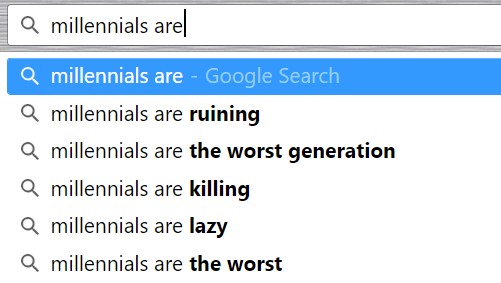
Millennials have in effect become society’s scapegoats. We’ve cornered the market on entitlement and laziness. We’re selfish, narcissistic, whiny, and oversensitive. We still live with our parents, we can’t hold down jobs because we don’t want to work, we all expect everything to be handed to us, and we literally ruin everything. There is no shortage of adults willing to tell us that. Even when doing good, we are invalidated because of the generation we belong to.


Millennial bashing has become so pervasive in modern conversation that it has espoused a very real self-hate that I see in some of my friends. It’s not unusual for someone my age to disassociate themselves from and condemn our generation for its shortcomings. In a world with so many other youth quietly doing amazing things, such relentless negativity towards the millennial generation is exhausting, frustrating, and frequently over-generalized. Where can a millennial go to catch a break from all of this? The LDS Church, of all places.
What the Church understands that other societal groups and institutions don’t is that the millennial story is not black and white. In context, it’s very complex. When the Internet was in its womb, all many of us knew was the red wall of our mother’s. We were learning how to walk when technology was learning how to race. We had just learned to hold ink and paper in our palms, to navigate the Dewey Decimal System, and to bribe our best friends with tomorrow’s cafeteria dessert so they’d let us use their Walkmans when tech moguls gave us Kindles, iPhones, MP3 players, and tablets. They told us, “You thought that was good. We’re just getting started!” At the same time we were traversing puberty with all of its weird uncertainty, our lives, and the lenses we viewed them through, were changed dramatically. Our world went from something little and sheltered to something large and hyper-connected. We now measure time by what we knew before Google and what we know after. We will be the last generation that remembers how it was to live before the Internet and the first whose children will get to watch us grow up.
Millennials have seen more of the world than any generation has ever seen. Facebook, Twitter, YouTube, Instagram, and Snapchat give us unprecedented access to it. We watch each other’s’ triumphs as they happen, but almost incessantly, we watch each other suffer and hate. We watch economies fail, wars start, and people die over and over again. Many of us go to bed at night with a gnawing fear that humans are just walking grenades who do nothing but hurt each other. We’re told in a barrage of pointed words that we are too whiny, too sensitive, and too weak, but I think most of us are scared we will never live in a world better than the one we’re growing up in, and this one is deeply broken. That is the millennial story that I know.
No, millennials are not perfect. Not even Church leaders overlook our generation’s ascribed weaknesses — they’re very aware of them.

The Church, however, firmly validates a narrative that society refuses to acknowledge: being a young person today is not easy. Many of us are fighting mental, emotional, and spiritual battles that our parents and their parents never had to fight. The Church, unlike the rest of the world, stresses that we have the potential to do great things in spite of those challenges. It’s a message that is refreshing because it is so rare.
Ageism is not endemic in a church that has its roots in the questioning pleas of a 14-year old boy. Joseph Smith’s claim of seeing God and Jesus Christ was met with disbelief and disgust by the community around him, largely due to his youth. His youth, however, is of central importance in any retelling of the First Vision story, because it is evidence of God’s overwhelming trust in His children, no matter their age. In the Book of Mormon, we read the stories of younger siblings, young warriors, young women, and youth like Moroni, who at age 15 was entrusted with the written history of his people and at age 25 led an army into battle. Youth carry the entire book of scripture. The Gospel of Jesus Christ and, subsequently, the Church itself reinforces the promise that age is no obstacle to faith, circumstance, or progress.
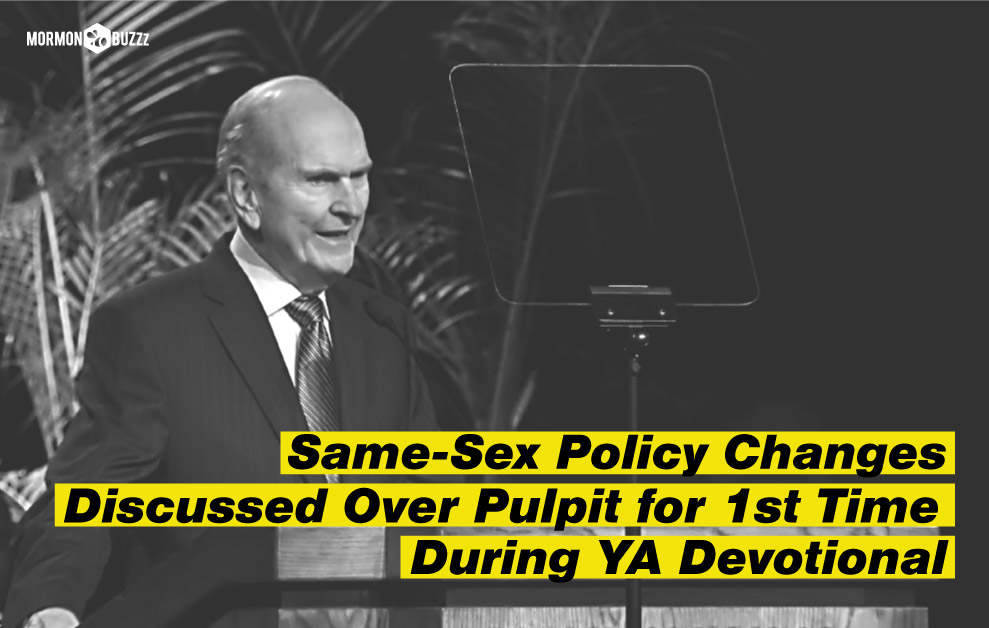
The power of youth is not an outdated idea found in Church history and scriptures alone. It is an ever-present message within the Church today. Young people are frequently praised and encouraged over the pulpit, not ridiculed or berated in web forum fashion. The “typical awful millennial” stereotype is flatly rejected by church leadership, as is the idea that my generation is somehow weaker or has less to offer than generations before us. Take the following quote from President Russell M. Nelson of the Quorum of the Twelve:
“Many people refer to you as Millennials. I’ll admit that when researchers refer to you by that word and describe what their studies reveal about you—your likes and dislikes, your feelings and inclinations, your strengths and weaknesses—I’m uncomfortable. There is something about the way they use the term Millennial that bothers me. And frankly, I am less interested in what the experts have to say about you than what the Lord has told me about you.
“When I pray about you and ask the Lord how He feels about you, I feel something far different from what the researchers say. Spiritual impressions I’ve received about you lead me to believe that the term Millennial may actually be perfect for you. But for a much different reason than the experts may ever understand.
“The term Millennial is perfect for you if that term reminds you of who you really are and what your purpose in life really is. A True Millennial is one who was taught and did teach the gospel of Jesus Christ premortally and who made covenants with our Heavenly Father there about courageous things—even morally courageous things—that you would do while here on earth.”
Not only are youth spoken of with love and respect for who they will one day become, but they are trusted with critical leadership roles within the Church. That includes Generations Y and Z. In my ward, millennials direct and teach large groups of men and women, plan weekly ward and stake activities, organize service projects and rescue efforts for those who are struggling, administer blessings of comfort and healing, and sacrifice hours of unpaid personal time to do these things outside of the time spent working, studying, and socializing. Youth primarily head missionary work within the church, and they now do so younger than ever. Even teenagers lead groups of their peers within the church to plan activities and reach out to individuals in need. Youth and young adults are tellingly involved at almost every level of church leadership.
I’d argue that because my generation is trusted with these responsibilities in the Church and spoken to with encouragement instead of being talked down at about our generational shortcomings, what we contribute is significantly more positive and meaningful. We do good because we are trusted to do good, not because we are expected to be lazy, useless, or “the worst.”
I’m not suggesting that millennials are free of fault. What I am suggesting, however, is that rather than continuing to pass on the antiquated heirlooms of faultfinding and lack of faith in the younger generation, we treat youth the way their potential demands, not our sense of their inadequacies. Rather than demoralizing them, we should follow the same pattern of affirmation and trust exhibited over and over again within the Church. Why? Because it works. Because when treated like who we can become, we all rise to the occasion.
Though the rest of the world may not think so, I can tell you that the future is in good hands. My generation is heading incredible efforts to take care of those in need, address and fix major societal problems, fight corruption, and stand up for what is right. My generation is smart and empathetic. My generation wants others to feel loved and included. My generation is contributing and we want those contributions to matter. So please, encourage us. Work with us. Like the Church, have faith in us. One day we might all be surprised at how noble and great the millennial generation has become.