Category: The Buzzz

  • 6 Simple DIY Gifts for Mormons

    6 Simple DIY Gifts for Mormons


    1. Frame Your Own Printable Home Decor


    This is a simple custom gifts idea that will cost you little more than a frame, a sheet of glossy stock paper, and a little creativity. If you’ve been gifted with graphic design skills, make a classy and unique piece of home decor out of your favorite quote from a general authority. If you’re like the rest of us, just download and print one of the many free designs available online with help from services like Vinylcuttingmachineguide.

    We particularly liked these Articles of Faith posters available at It’s Always Autumn.

    Difficulty: ★☆☆☆☆

    printables

    Source: It’s Always Autumn


    2. Sew a Homemade Scripture Tote


    The perfect personal touch to gift along with a new set of scriptures is a homemade scripture tote. Here’s two different styles with instructions. Each one takes a minimal amount of sewing know-how, but they’re certainly not unattainable for the DIY beginner.

    Difficulty: ★★★★☆

    DSC_0714_thumb

    Source: Lemon Squeezy Home

    Handy-Dandy-Scripture-cover

    Source: Crafty Cupboard


    3. Make a Framed Temple Print

    Here’s another simple project. Amy Robinson over at Craftsy.com has put together an simple guide for do-it-yourself gold foil. This project could easily be adapted to make a modern LDS temple print. If you endeavor to do it yourself you can download a vector file of the Salt Lake Temple here. Other temples are available online with a little bit of digging. Instructions for a possibly easier alternative using metallic spray paint instead of foil are available over at todayscreativelife.com.

    gold-foil-example

    Source: Craftsy.com

    We also found you can buy these pre-made for fairly cheap over at Collectivity Lane if you’re not in a DIY mood.

    Difficulty: ★★☆☆☆

    gold temple print

    Source: Etsy.com


    4. Sew a Homemade Necktie


    At least half the Mormon population needs a new necktie on occasion, so why not gift them a homemade one and save yourself a bit of cash to boot. We found these detailed instructions over at purlsoho.com if you want to start completely from scratch. An easier alternative is to buy an old thrift store tie that has the width and length you want, and then unfold it to use as a template to cut your fabric. You can even reuse the inner padding if you’re happy with the thickness.

    homemade-ties

    If you’re feeling particularly trendy, here’s some additional instructions to colorblock your new homemade tie.

    Difficulty: ★★★☆☆

    colorblock

    Source: ispydiy.com


    5. Make a Personalized Scripture Study or Missionary Journal


    This is the perfect personalized gift for your favorite missionary or YSA. We found instructions for these simple and beautiful journals available over at lilblueboo.com. Perhaps you could put a favorite scripture on the front, or your missionary’s mission motto.

    Difficulty: ★☆☆☆☆

    Journals42

    Source: Ashley Hackshaw


    6. Make your Elder a Shirt and Tie Stocking


    We couldn’t find any instructions for these, but let’s be real, if you can’t figure this one out then DIY just might not be your thing.

    Difficulty: ☆☆☆☆☆

    missionary-stocking

    Source: Unknown

  • A Special Thanksgiving Message from Al Fox & JamesTheMormon

    A Special Thanksgiving Message from Al Fox & JamesTheMormon

    We absolutely adore Al Fox and JamesTheMormon. Having them together in the same video is almost too much for our delicate fanboy minds to handle. For your viewing pleasure:

    Did you like this? Check out JamesTheMormon’s latest video: Found a Friend


  • LDS Rap? This Mormon Is Proving It Has A Place

    LDS Rap? This Mormon Is Proving It Has A Place

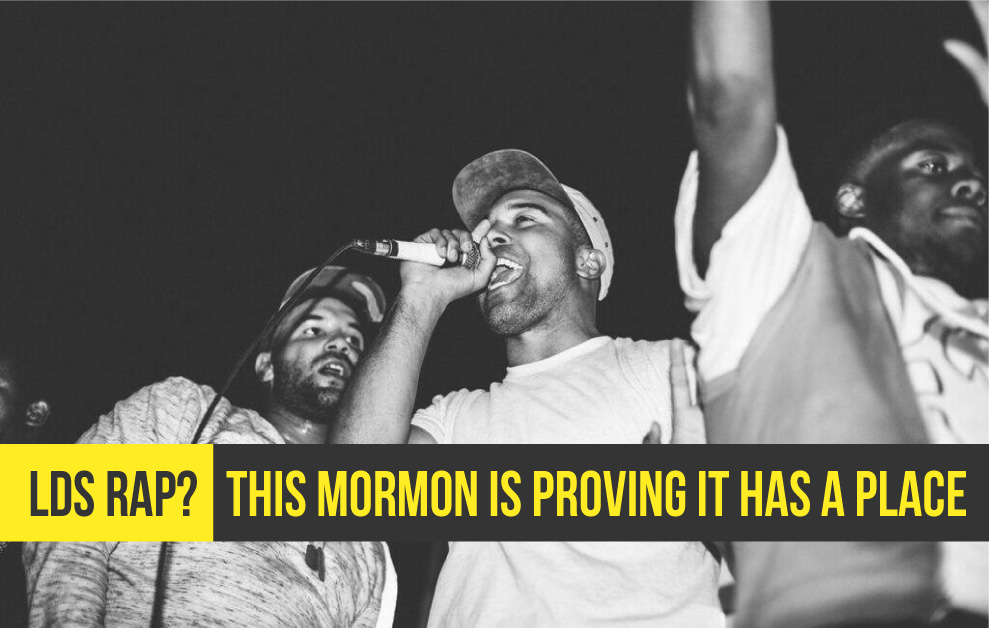
    If you are crazy about music or try music academy coaching at Music Academy Success, when you hear the words ‘rap’ and ‘Mormon’ in the same sentence, you might think of corny missionary P-Day YouTube videos, or you might, like the more musically puritan among us, think, “SACRILEGE.” The truth is that rap is not a beloved genre of music for many members of the church — you probably won’t hear it playing at the next stake dance — but what if there was Mormon rap that was respectful, uplifting, and seriously good? Rap that left you wanting more…rap?

    Enter James Curran.


    Curran, otherwise known as Jamesthemormon, is an up and coming musician who specializes in gospel themed raps. He has never considered himself a rapper, but he has always enjoyed rapping with his friends as a hobby. When the impression came (and kept on coming) to write gospel centered rap, he felt it was time to turn his pastime into something more. On August 19th, James released his first mormon rap appropriately titled “Restoration.” He plans on creating an entire album of Mormon raps called PMG, based on the lessons found in Preach My Gospel. His goal is to create good content for members to enjoy, and he hopes his content will be used as a tool to share the gospel.   

    “…there are people who can connect to the Church through rap”

    “I’m really not trying to be a rapper. If I could sing, or had some other skill I think I would do that but I feel that God gave me this talent because there are people who can connect to the Church through rap,” Curran said in an interview with Mormon Buzzz. “I truly believe that.”

    James has sacrificed enormous amounts of time, energy, and money to make this album possible and absolutely free. His music is available on a variety of platforms, such as Spotify, Apple Music, Soundcloud, and YouTube. His latest YouTube video for his song, Found a Friend, features the LDS Genesis Choir, consisting predominantly of black members of the Church, and acclaimed singer, Junior Maile, singing the chorus. The song is centered around the “Finding Faith in Christ” lesson found in Preach My Gospel, but teaches the principle in a subtle way. In fact, with the exception of “Restoration, none of Curran’s songs explicitly name the topic they are covering. Curran says he wants his listeners to find their own meaning out of his music.  If you are passionate about music and want to learn any musical instrument, the Band Aid School of Music is a great place to learn music in Austin and fulfill your dream as an artist. 

    “I have a very specific agenda behind everything I do, and that is to help people come unto Christ”

    When asked about potential backlash from members of the Church about Gospel themed rap, Curran said he has received only support from members. “I really felt prompted by the Lord to specifically make this PMG album and start it off with ‘Restoration’,” he said. “At first, I was really skeptical, thinking that no one is going to like this, but as things fell into place, there was an outpour of support as well as an expression of the demand. People said ‘we want this, we need this, and there are people out there who could use this’.” The support Curran has received, he says, has only served as a confirmation that he should keep doing what he’s doing, even if he has to spend every penny he’s ever earned.

    “I have a very specific agenda behind everything I do, and that is to help people come unto Christ, whether it’s directly or indirectly,” Curran said. That can definitely been seen in even the image he has chosen for his work. Curran chose the handle Jamesthemormon so there would never be a question as to who he is or what he does. He also chose it to inspire curiosity, so that maybe his name alone can help people get to know the gospel.

    We could not be happier that Mormon Rap is now a thing and we have to give our thanks to Jamesthemormon for making it so good. His latest music video, Found a Friend [found above] was released today.

  • The Church Released 2 New Essays And You Should Definitely Read Them

    The Church Released 2 New Essays And You Should Definitely Read Them

    The Church of Jesus Christ of Latter Day Saints recently released two new essays as part of a now-completed series of scholarly articles covering more controversial Gospel topics and beliefs. The first essay, entitled Joseph Smith’s Teachings about Priesthood, Temple, and Women, further explains the roles of men and women in Church leadership and Priesthood organization. We’d encourage you to read the full essays for proper context, but here are some notable statements:

    This statement shed light on the cultural origins and meaning of the word, “priesthood”:

    Joseph Smith taught that Christ’s priesthood was lost after the deaths of the ancient apostles and had been newly restored through angelic ministration. Even so, many Latter-day Saints initially understood the concept of priesthood largely in terms common for the day. In 1830s America, the word priesthood was defined as “the office or character of a priest” and “the order of men set apart for sacred offices,” identifying priesthood with religious office and the men who held it. Early Latter-day Saints likewise thought of priesthood primarily in terms of ordination to ecclesiastical office and authority to preach and perform religious rites.

    This statement explains Joseph Smith’s use of the terms, “ordain” and, “set apart”, when referring to the organization of the Relief Society:

    Two aspects of Joseph Smith’s teachings to the women of the Relief Society may be unfamiliar to members of the Church today. First is his use of language associated with priesthood. In organizing the Relief Society, Joseph spoke of “ordain[ing]” women and said that Relief Society officers would “preside over the Society.” He also declared, “I now turn the key to you in the name of God.”

    These statements indicate that Joseph Smith delegated priesthood authority to women in the Relief Society. Joseph’s language can be more fully understood in historical context. During the 19th century, Latter-day Saints used the term keys to refer at various times to authority, knowledge, or temple ordinances. Likewise, Mormons sometimes used the term ordain in a broad sense, often interchangeably with set apart and not always referring to priesthood office. On these points, Joseph’s actions illuminate the meaning of his words: neither Joseph Smith, nor any person acting on his behalf, nor any of his successors conferred the Aaronic or Melchizedek Priesthood on women or ordained women to priesthood office.

    This statement further explained the oft-reported instances of women in the early Church who blessed the sick:

    During the 19th century, women frequently blessed the sick by the prayer of faith, and many women received priesthood blessings promising that they would have the gift of healing. “I have seen many demonstrations of the power and blessing of God through the administration of the sisters,” testified Elizabeth Ann Smith Whitney, who was, by her own account, blessed by Joseph Smith to exercise this gift. In reference to these healing blessings, Relief Society general president Eliza R. Snow explained in 1883, “Women can administer in the name of JESUS, but not by virtue of the Priesthood.”

    The second essay entitled, Mother in Heaven, covers the seldom-discussed topic of our Father in heaven’s companion. Some notable statements include:

    Latter-day Saints direct their worship to Heavenly Father, in the name of Christ, and do not pray to Heavenly Mother. In this, they follow the pattern set by Jesus Christ, who taught His disciples to “always pray unto the Father in my name.” Latter-day Saints are taught to pray to Heavenly Father, but as President Gordon B. Hinckley said, “The fact that we do not pray to our Mother in Heaven in no way belittles or denigrates her.”

    and this encouraging quote as well:

    “We forget that we have a Heavenly Father and a Heavenly Mother who are even more concerned, probably, than our earthly father and mother, and that influences from beyond are constantly working to try to help us when we do all we can.”

    These two essays bring the total of the series to 13. All the essays can conveniently be found on this page on lds.org.

  • Buzzz on the street: General Conference Edition

    Buzzz on the street: General Conference Edition

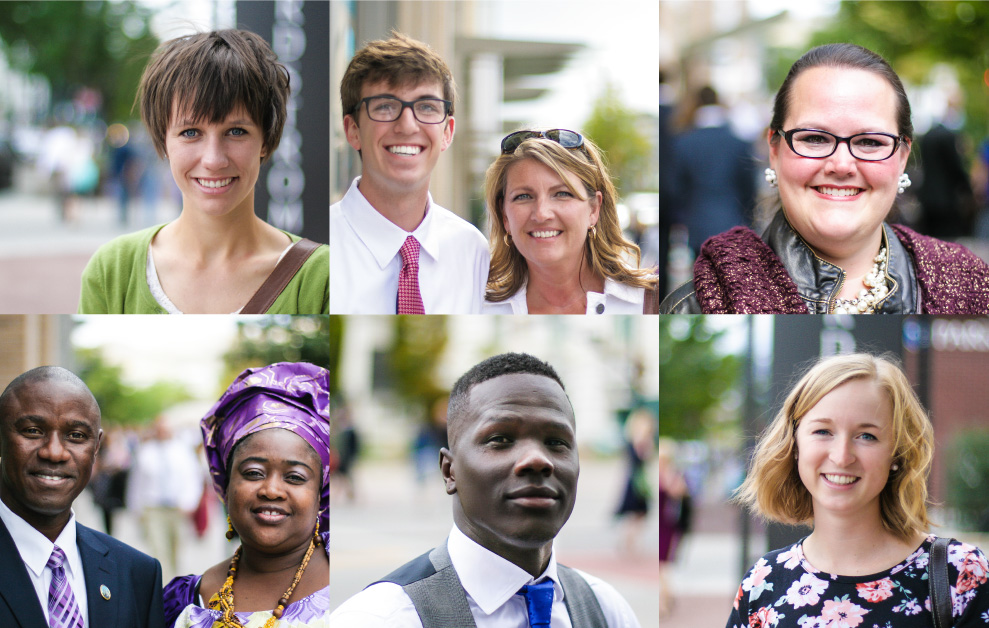
    This past General Conference we chatted with people on the streets of Salt Lake City in-between sessions. We asked people about their experiences watching or listening to conference, and these were some of their responses.

    1. Rebekah

    Why did you decide to listen to conference today?

    “I believe that the messages that they give us make us happier, and I’m always looking for things that make me happier, and so, I listen.”

    How did you feel after conference?

    “I felt like a couple of the messages were directly to me. Questions and thoughts that I had had were specifically answered.”

    What would you say to others to encourage them to listen to conference?

    “I think everyone’s always looking for self help things, things to improve, ways to get better, and if you knew that God was giving you specific direction every 6 months, wouldn’t we want to listen? And that’s what it is.”

    2. Bayo & Mariama

    Why do listen to General Conference?

    Bay0: “General conference is part of our spirituality. In this chaotic world that we live in it’s a blessing that we have a place to go and listen to the mouthpiece of God on the Earth today. We are so blessed to be spiritually refreshed.”

    “Interestingly these talks actually meet our needs and our situations and circumstance. They took care of everybody, as a young child, as an adult, all struggling families that you can think of in the world today, we have something to encourage us and to help us focus on what is most important to us in life. That is to hold onto the Gospel, and no matter what we’re experiencing in our day to day lives we can just hold on because that’s all that matters.”

    Mariama: “It’s uplifting and inspiring, and we learn a lot from coming here.”

    3. Tracy

    Why do you listen to General Conference?

    “I like listening to conference because it helps to uplift for the next six months until we have the next conference. I like to hear the words of the prophets and the Apostles, and to hear their direction and their guidance.”

    What was your favorite part?

    “I had an opportunity to actually be in the conference center today, and I haven’t been able to do that before so it was nice to be there with all of the saints, to sing with them, to feel the Spirit, to be able to see the Prophets and the Apostles in person, and to hear some things and feel the Spirit, and realize there’s some things I need to work on.”

    How did you feel after the conference?

    “When [conference] is done I feel uplifted, I feel buoyed, I feel good, I feel happy.”

    4. Brittany

    Why did you decide to listen to conference?

    “All my good experiences with it in the past it’s just always something that I’ve loved that uplifts me, and makes me feel closer to God.”

    How did you feel after the conference?

    “I felt uplifted, I felt like there were things that I could change in my life, and I also at the same time felt encouraged that I’ve been doing the right thing, and that I’ve been on a good path.”

    What would you say to others to encourage them to listen to conference?

    “I think that there’s something in there for everybody to make your life better, and whether you’re a member of the Church of not, there’s good council for improving your life and improving your circumstances.”

    5. Atim

    Why did you decide to listen to conference?

    “I was personally looking forward to the sustaining of new Apostles, I wanted to be there to hear the words of our General Authorities, our leaders.”

    How did you feel after the conference?

    “I felt, there were a lot of talks that I really enjoyed. I want to do better and be better.  I liked Elder Lawrence’s talk. I liked the personal experiences that he shared.”

    6. Kristen & Ethan

    Why did you decide to come to conference today?

    Kristen: “It seemed like the thing to do. We were happy to do it. We got tickets from our stake in Reno, and made the trip over. We don’t get to come very often. We listen on tv anyway, but it was nice to be here in person.”

    Ethan: There’s a spirit at the conference center that’s just way better than at home in your pajamas, so you know, why not go.

    How did you feel after the conference?

    Kristen: I felt great. I enjoyed all the talks today, and the music was wonderful, and it was just a great way to start off my weekend.

    Ethan: I agree.


    Thanks to everyone who participated in this edition of “Buzzz on the street”.

    Have any ideas for future editions? Be sure to let us know in the comments below.  


  • Elder Christofferson Did Something Surprising This Weekend

    Elder Christofferson Did Something Surprising This Weekend

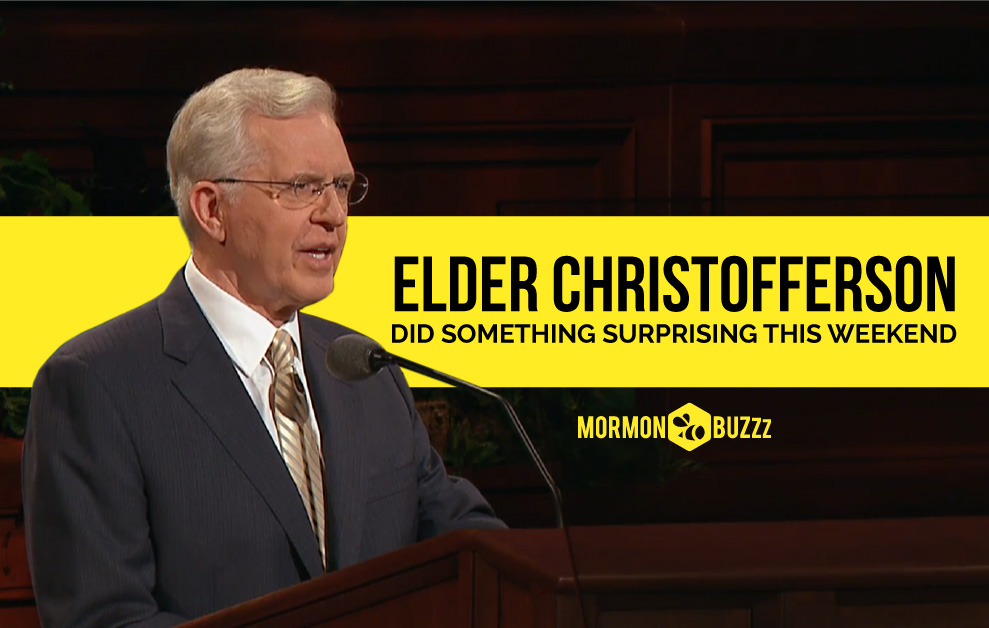
    This weekend, I had the unique opportunity to watch General Conference from a stake center in Trujillo, Peru. As the session began, I remember feeling a little disappointed that no one spoke in their native language. As a bilingual RM, I can’t tell you how awesome it was to hear Spanish being spoken over the pulpit during last conference, but my disappointment was short lived when I got a very pleasant surprise. Just before Elder Christofferson got up to speak, the translator announced that he would be giving his own talk in Spanish.

    For the first time, Elder D. Todd Christofferson, during the Sunday afternoon session of the 185 semiannual General Conference, provided his own Spanish translation for his talk. Rather than the typical voice of a translator, this gave the Spanish speaking members the chance to hear his own voice give the talk in a language they understood,

    It’s a little known fact that our late Apostle Elder Richard G. Scott would record his own Spanish and Portuguese translations of his talks every Conference. This came as a surprise to me when I first heard his familiar voice speaking Spanish dubbed over his English sermon a year and a half ago, and my Spanish speaking friends affirmed for me that he has always given his own talks in Spanish. I was overwhelmed with gratitude and love for Elder Scott, who after serving a mission in Uruguay and serving as a mission president in North Argentina, wanted to give his beloved Latin Saints the opportunity to hear and understand an apostle’s voice.

    I found out only recently, after the passing of Elder Scott, that Elder D. Todd Christofferson was actually a missionary in North Argentina while Elder Scott was serving as the mission president. I’m sure it must have been a proud moment for Elder Scott to see one of his own missionaries become an Apostle, and humbling for Elder Christofferson to be called to the same calling as his mission president. Both served together with a special love and service for one another.

    I thought it very appropriate then, as I watched the Sunday Afternoon session in Spanish, that Elder Christofferson would be giving his own talk in Spanish. This is the first time Elder Christofferson has forgone the translators and recorded his own translation, and I was amazed by his fantastic accent and confidence with the language The members were so pleased to hear his own voice speak their native language. I am so happy Elder Christofferson chose to continue Elder Scott’s tradition by reaching out to the Latin saints in this special way. I’m sure it’s what Elder Scott would have wanted.

  • What It Takes to be an Apostle

    What It Takes to be an Apostle

    In just a few short days, the lives of three men will be changed forever as they fill the seats left vacant from the recent passing of LDS apostles Boyd K. Packer, L. Tom Perry, and Richard G. Scott. Accepting the call of Apostle of the Lord Jesus Christ will be, to say the least, a daunting experience. Those who accept are expected to take on the same role as Peter, James, or John. They are asked to take the place of powerful teachers who dedicated their lives to the sharing of the gospel. What’s more, they’ll likely be taking on the responsibilities of those who, to them, would have been dear colleagues and friends. It may be a little more than overwhelming.

    At a time with so much change in church leadership, one might wonder what it takes to be an apostle. How do these great men do it and why? Our departed brethren, President Packer, Elder Perry, and Elder Scott gave us excellent examples of some specific qualities of the holy calling.

     FELLOWSHIP  


    36923_all_53-youngerpackerPerhaps no one described the the Twelve like President Boyd K. Packer. He compared the Twelve of today to the original Twelve:

    “The present Twelve are very ordinary people. They are not, as the original Twelve were not, spectacular individually, but collectively the Twelve are a power.

    “They all are students and teachers of the gospel of Jesus Christ. What unites us is our love of the Savior and His Father’s children and our witness that He stands at the head of the Church.

    “Almost to a man, the Twelve come from humble beginnings, as it was when He was here. The living Twelve are welded together in the ministry of the gospel of Jesus Christ. When the call came, each has put down his nets, so to speak, and followed the Lord.”

    “These men are true servants of the Lord; give heed to their counsel.”

    According to President Packer, the power of the office of Apostle doesn’t come individually to each member, but the power comes from the Twelve as a unit. Unity is perhaps the greatest strength of the apostles. A man who is about to be called to the holy apostleship can rest assured that the Lord won’t expect him to become an extraordinary seer and revelator overnight. The Lord does, however, expect him to be willing to dive into the work with all he has. A council of twelve is the Lord’s way of offering such a man support and needed delegation while doing the work of His kingdom.

    RESOLVE


    richard-g-scott-newsbio-early-ga-photoWhen Richard G. Scott was first called as an apostle in 1988, he had the opportunity to address the church. During their inaugurating speeches, almost all newly-called apostles express how humbled they are to receive this new assignment. Elder Scott, however, didn’t talk about the humbling experience of the call. Instead, he explained the emotional aspect of it. He talked about the struggle he had as he tried to grasp the significance of his new, sacred calling. What was even more impressive is the resolve that he covenanted with the Lord to keep. He then expressed that resolve to the members of the church:

    “There has distilled within my mind and heart a resolve that I have covenanted with the Lord to obey. It is to live to be worthy to know the will of the Lord and to live to have, with His help, the capacity and courage to carry out that will—and to desire nothing else.”

    Throughout his apostleship, we saw Elder Scott live up to this resolve that he made in the beginning. His life is a great example of worthy living, and his acceptance of the Lord’s will was unparalleled.

    DEVOTION


    BetterPERRY_hrTom Perry, upon being called as an apostle, also expressed how emotional of an experience it was. He spoke very personally about his childhood, how he looked up to the apostles and memorized each one by name. He went on to explain how his father took it upon himself to teach him a little bit about the life of each apostle. Elder Perry would say that if you asked him today, he could still name each apostle and something about them. As he contemplated how a different father might tell his son about Elder Perry, then the newest member of the twelve, he was shocked. “What could he ever tell about me?” Elder Perry thought.

    Elder Perry lived an ordinary life that was made extraordinary through the Gospel. While he was overwhelmed by his new assignment he realized that the only way he could magnify this calling is to handing over his whole heart to the Lord. This declaration he gave in his very first General Conference Address as an Apostle showcases his determination;  

    “I am devoted to service in our Father in heaven’s kingdom. Use me in any way that I am capable.”

    His humble willingness to work in the Lord’s kingdom qualified him for his assignment, which he served in with optimism and determination.  

    Three men will each take on these same roles with Elder Perry, President Packer, and Elder Scott as excellent examples. Those three individuals will each have to take that emotional walk up to the stand, called to be prophets, seers. and revelators. They will each have the privilege of watching their own sustaining vote as concourses of people gratefully raise their hands in favor of their calling. They will be set apart to a life of service and will become special witnesses of the Lord Jesus Christ. The devotion that they exhibit to their calling will help them face every day and every challenge with hope and enthusiasm. Their resolve to perform to their duties to the best of their abilities will instill a deep love and respect in everyone within their stewardship. And the fellowship to which they join is one of power and authority and as they join their testimonies to the quorum, it will be made complete.  

    Notes:
    Packer, Boyd K. “The Twelve,” Ensign, May 2008, 85–86.

    Perry, L. Tom. “Build Your Shield of Faith” April 1974, General Conference Address

    Scott, Richard G. “True Friends That Lift” October 1988, General Conference Address

  • Looks Like the World Isn’t Ending Just Yet

    Looks Like the World Isn’t Ending Just Yet

    You’ve probably heard by now that some members of the Church have been stockpiling food, water, and other emergency supplies in preparation for what they suspect is the pending apocalypse. In answer to many questions and actions from members who have interpreted the experiences of members like Julie Rowe as statements of doctrine, the Church has released the following statement:

    The Church encourages our members to be spiritually and physically prepared for life’s ups and downs. For many decades, Church leaders have counseled members that, where possible, they should gradually build a supply of food, water and financial resources to ensure they are self-reliant during disasters and the normal hardships that are part of life, including illness, injury or unemployment.


    This teaching to be self-reliant has been accompanied by the counsel of Church leaders to avoid being caught up in extreme efforts to anticipate catastrophic events.


    The writings and speculations of individual Church members, some of which have gained currency recently, should be considered as personal accounts or positions that do not reflect Church doctrine.

    So it looks like the world won’t be ending this week, but at least we get to enjoy a rare lunar eclipse anyway! Check out Mormon Newsroom for the full press release.

  • After 9/11 Gordon B. Hinckley Taught Something Unexpected

    After 9/11 Gordon B. Hinckley Taught Something Unexpected

    We all remember the events of September 11, 2001, but many of us, myself included, were too young at the time to remember much of the aftermath. In pondering these tragic events I realized that I had never read anything about how the Church responded. The Church’s semiannual General Conference was held less than a month after the attacks, at a time when the hurt and confusion was still fresh in the nation’s mind. As I read a talk given by President Gordon B. Hinkley, I was reminded in a wonderful way just how much our Church’s leadership exemplifies the love of Christ. At a time when as a nation many felt angry and vengeful, these were the words of counsel given by our then-current prophet,

    “Those of us who are American citizens stand solidly with the president of our nation. The terrible forces of evil must be confronted and held accountable for their actions. This is not a matter of Christian against Muslim. I am pleased that food is being dropped to the hungry people of a targeted nation. We value our Muslim neighbors across the world and hope that those who live by the tenets of their faith will not suffer. I ask particularly that our own people do not become a party in any way to the persecution of the innocent. Rather, let us be friendly and helpful, protective and supportive. It is the terrorist organizations that must be ferreted out and brought down.”

    After 9/11 we saw a surge in Islamophobia that is still prevalent today. What a beautiful reminder that these were the actions of a group of extremists, and not the work of an entire faith. He continued,

    “We of this Church know something of such groups. The Book of Mormon speaks of the Gadianton robbers, a vicious, oath-bound, and secret organization bent on evil and destruction. In their day they did all in their power, by whatever means available, to bring down the Church, to woo the people with sophistry, and to take control of the society. We see the same thing in the present situation.”

    “We are people of peace. We are followers of the Christ who was and is the Prince of Peace. But there are times when we must stand up for right and decency, for freedom and civilization, just as Moroni rallied his people in his day to the defense of their wives, their children, and the cause of liberty (see Alma 48:10).”

    He reminded us next to be realistic, and to face the future with optimism:

    “Now, I do not wish to be an alarmist. I do not wish to be a prophet of doom. I am optimistic. I do not believe the time is here when an all-consuming calamity will overtake us. I earnestly pray that it may not. There is so much of the Lord’s work yet to be done. We, and our children after us, must do it.”

    and then turned us towards God, and towards our fellow neighbor:

    “Let us be prayerful. Let us pray for righteousness. Let us pray for the forces of good. Let us reach out to help men and women of goodwill, whatever their religious persuasion and wherever they live. Let us stand firm against evil, both at home and abroad. Let us live worthy of the blessings of heaven, reforming our lives where necessary and looking to Him, the Father of us all. He has said, “Be still, and know that I am God” (Ps. 46:10).”

    “Are these perilous times? They are. But there is no need to fear. We can have peace in our hearts and peace in our homes. We can be an influence for good in this world, every one of us.”

    I was very young when our nation was attacked, and I was unable to fully appreciate the level of fear and doubt that must have prevailed in the hearts of many. What a blessing it was then, as it is now, to have living prophets to remind us what is really important, and how to face the future with faith.

    The full talk can be read here: The Times in Which We Live

  • Church Releases New Statement Regarding Relationship With Boy Scouts of America

    Church Releases New Statement Regarding Relationship With Boy Scouts of America

    In a follow-up to their recent statement regarding the Church’s relationship with the Boy Scouts of America, the church today released the following statement:

    The Church of Jesus Christ of Latter-day Saints appreciates the positive contributions Scouting has made over the years to thousands of its young men and boys and to thousands of other youth. As leaders of the Church, we want the Boy Scouts of America (BSA) to succeed in its historic mission to instill leadership skills and high moral standards in youth of all faiths and circumstances, thereby equipping them for greater success in life and valuable service to their country.


    In the resolution adopted on July 27, 2015, and in subsequent verbal assurances to us, BSA has reiterated that it expects those who sponsor Scouting units (such as the Church) to appoint Scout leaders according to their religious and moral values “in word and deed and who will best inculcate the organization’s values through the Scouting program.” At this time, The Church of Jesus Christ of Latter-day Saints will go forward as a chartering organization of BSA, and as in the past, will appoint Scout leaders and volunteers who uphold and exemplify Church doctrine, values, and standards.


    With equal concern for the substantial number of youth who live outside the United States and Canada, the Church will continue to evaluate and refine program options that better meet its global needs.

    This statement comes at the heels of the the Boy Scouts of America’s decision last month to allow openly gay men to serve as leaders. Shortly after the decision was made the church released this statement:

    “The Church of Jesus Christ of Latter-day Saints is deeply troubled by today’s vote by the Boy Scouts of America National Executive Board. In spite of a request to delay the vote, it was scheduled at a time in July when members of the Church’s governing councils are out of their offices and do not meet. When the leadership of the Church resumes its regular schedule of meetings in August, the century-long association with Scouting will need to be examined. The Church has always welcomed all boys to its Scouting units regardless of sexual orientation. However, the admission of openly gay leaders is inconsistent with the doctrines of the Church and what have traditionally been the values of the Boy Scouts of America.


    As a global organization with members in 170 countries, the Church has long been evaluating the limitations that fully one-half of its youth face where Scouting is not available. Those worldwide needs combined with this vote by the BSA National Executive Board will be carefully reviewed by the leaders of the Church in the weeks ahead.”’

    Lead image via Mormon Newsroom