Category: Opinion

  • 5 General Conference Pitfalls and How to Avoid Them

    5 General Conference Pitfalls and How to Avoid Them

    Photo Courtesy, LDS Media Library

    A returned missionary once told me about an experience he had with general conference. His mission president had recently returned from the mission field and held a mission reunion right before general conference. His words to the missionaries were inspiring and helpful, but my RM friend said that one piece of advice stuck out to him. His president had said: “Do not leave the room or change the channel, don’t fall asleep or distract yourself, don’t cease to pay attention in any way. Exactly what you need to hear will most likely be the most difficult thing to listen to. The adversary will greatly tempt you to leave, stop listening, turn off the message, or change the channel. But don’t you do it.

    This returned missionary confidently stated that he did not expect this to be a challenge for him, but this was just the Friday before general conference. He continues in his own words;

    “Saturday night, an amazing young woman abruptly and unexpectedly ended a relationship with me that I had very high hopes for. I went to sleep that night very frustrated, confused, and bitter. I felt I had been doing everything exactly as I was supposed to in God’s eyes, and was confused why I needed to go through this frustration during one of the most difficult academic semesters of my life. Sunday morning, President Eyring began his message by directing it towards those earnestly seeking happy and spiritually founded eternal families. I was watching conference completely alone in my apartment, the breakup from the night before leaving my conference plans cancelled.

    “I got up and left the room, not wanting to hear the relationship advice that came merely ten hours too late. Then I laughed at myself, remembered my Mission Presidents advice to not change the channel, and went back and finished listening. President Eyring focused on the two great commandments, to love God with all thy heart, might, mind and strength and to love thy neighbor as thyself. As I listened, I realized how inwardly focused my frustrations were and I received the comfort I needed.”

    This young man’s story really struck a chord with me. Am I missing out on important revelation when I allow myself to get distracted? I thought. This led me to wonder what I could be doing to hinder spiritual experiences during conference.

    Here are just a few ways I have been tempted to justify my casualness during general conference and how you can avoid falling into the same traps.

    Pitfall #1:

    “I want to sit down and focus on conference, but I can only think about all the things I need to get done.”

    Life can make us crazy sometimes. There is often a lot demanded of us, but it is important to make our spiritual well-being a priority. Conference time can be a very sacred time for you and bless you in every facet of your life. It is important that you prepare beforehand to make your experience unforgettable. Get major projects done before conference or set aside a time to accomplish those projects after conference is over. Clean your home. A clean and organized space does wonders in inviting the spirit. Try to create an environment where the spirit can teach you and your family. You won’t have a sink full of dishes nag you while you are trying to listen. Don’t plan on working on projects or chores during the sessions. Instead, plan on being spiritually fed.

    Pitfall #2:

    “I have to work during general conference.”

    Work is sometimes a necessary thing and can’t be avoided. But isn’t it great to know that general conference comes the same time every year! Try to arrange your work schedule to allow you to participate those two days. Use one of your sick days if you must, I promise it will be worth it. If work is absolutely unavoidable, talk to your boss and co-workers and see if they wouldn’t mind listening to conference during work. It may seem awkward to ask if you could listen while at work, but you will be setting a powerful example and you will be blessed for your diligence.

    Pitfall #3:

    “I always fall asleep during conference talks.”

    In many places, we are blessed with the opportunity to watch conference from the comfort of our own homes. Many members take advantage of this by sleeping in and dressing as comfortably as possible. While comfort is important, when wearing pajamas, sleep is sure to follow. Try this instead: you and your family can dress in church attire to watch conference at home. Think about it. You’d be showing the Lord that you’re ready for spiritual nourishment, you’d put on an attitude of learning, and your brain would be less inclined to think it’s bed time. For those of you who fall asleep on the pew or the couch, take it from this narcoleptic: mints and chewing gum are your best friends. If you are truly determined to stay awake, prepare beforehand and get a good night’s sleep. Don’t sleep through your spiritual rescue! There is so much revelation that God wants you to have, so make the effort and the Lord will bless you with alertness.

    Pitfall #4

    “I know I should look for questions to ask before conference, but I can never think of good questions.”

    Answers to questions don’t have to be the only thing you look for when watching conference. You could choose an interesting gospel study topic you’ve had on your mind and see what the prophets have to say about it. If you are struggling to find the right questions to ask, pray and ask Heavenly Father what you should be asking. Ask Him what you should be looking for as you watch conference, and He will let you know.

    Pitfall #5

    “I can always read the talks later.”

    It is one of the Church’s highest priorities to make conference talks as accessible as possible as fast as possible. With the amazing advances in technology, we have access to almost every general conference ever given in a variety of different formats. With the talks being this accessible, it is easy for members to justify not watching conference and going out to do other things. But there is so much power that comes when you show the Lord you are going to make conference time a holy time. The talks are available for us afterward to re-read and to receive additional guidance, but there is nothing that can compare with the revelation you will receive when you are prepared and actively listening to our leaders and prophets today.

    Don’t let the adversary trap you in these pitfalls. You have the resources and the motivation to escape these excuses and make your General Conference experience different and more edifying than ever. Remember, exactly what you need to hear will most likely be the most difficult thing to listen to. So listen carefully, and the Lord will shower you with His blessings.

  • Why I’ve Stopped Leaving the Room When MoTab Starts Singing

    Why I’ve Stopped Leaving the Room When MoTab Starts Singing

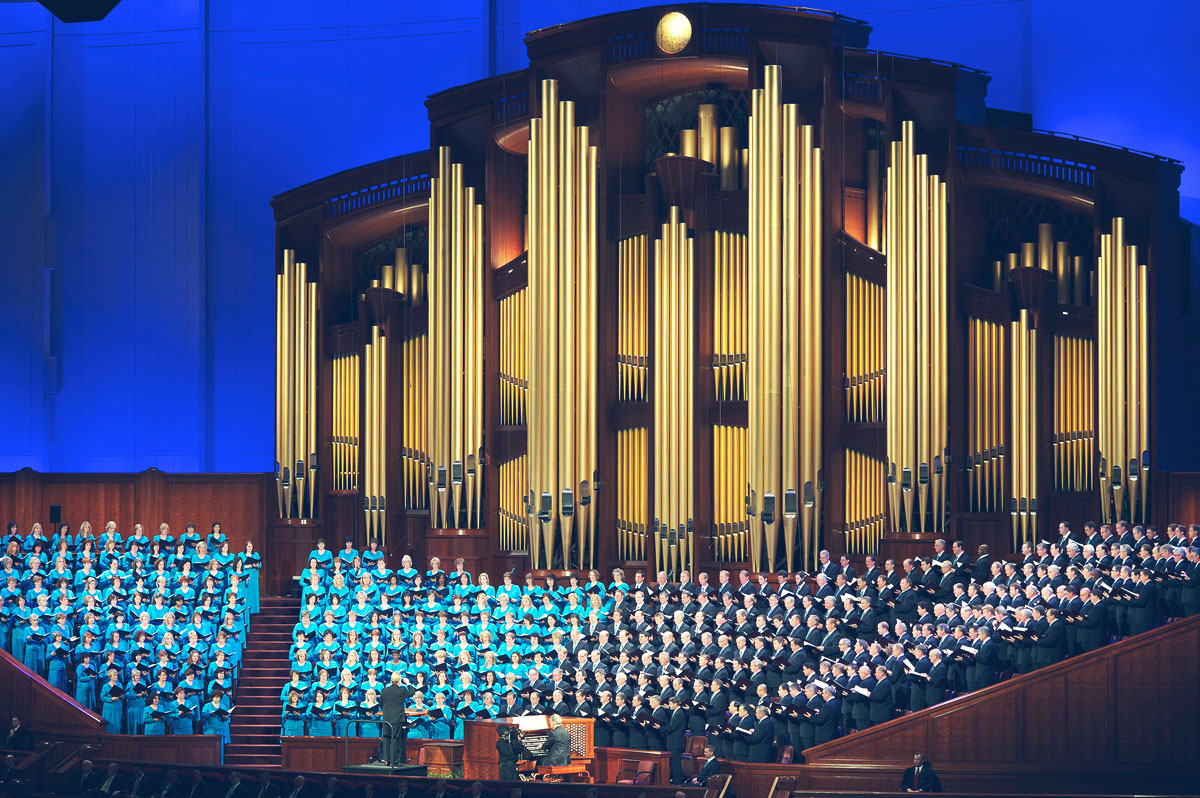
    It’s conference Saturday. Three speakers have just concluded their remarks, and the camera is now zooming in on the organist, who has begun to play the introduction for the next Mormon Tabernacle Choir number. The director raises his baton, there’s a brief lull in the music, and then, after the director smiles and looks up at the choir…siblings and parents alike run for the bathroom or the kitchen or the backyard to madly work on or finish other things they had going on before the session started, leaving MoTab to play for an audience of none in the living room.

    Does this scene sound familiar? As a child, I became pretty used to it. Often, once the choir started singing, my siblings and I would treat ourselves to an intermission and run to every other corner of the house. Even though all of us are young adults now, it still sometimes happens.

    The truth is that we’ve all probably done it. We’ve, without realizing it, treated the choir performances like breaks in the real program, as if they’re just extra, fluffy things that aren’t as important as talks or our to do lists. One need only watch conference live and see all of the people streaming out during the hymns to know that. Sometimes, we have to use the restroom or take care of health needs, and choir numbers provide an opportunity to do so, but other times, we simply don’t want to give the same amount of attention to the music as we do the speakers.

    It hit me a long time ago that the Lord doesn’t like it when we do that.

    In D&C 25, it reads that the Lord’s “soul delighteth in the song of the heart; yea, the song of the righteous is a prayer unto [Him], and it shall be answered with a blessing upon their heads” (D&C 25:12). Do we recognize the significance of this, I wonder? Not only does our Heavenly Father delight in our hymns and songs, but He blesses those who sing them as He would those who pray to Him.

    You might read that and think, “So what? MoTab’s singing the songs, not us. This doesn’t involve us.” Well, think of the opening prayer at a sacrament meeting. You might not be the one saying it, but by bowing your head and listening, you are actively participating in it. The same, I’d imagine, goes for our hymns. When we listen to them and enjoy them, we, too, are blessed, because by the Lord. Imagine how He feels when we walk out on those hymns or don’t care about them at all.

    For me, paying attention to the choir during conference was never super important until I discovered a story a few years ago that completely changed my perspective. In that story, I learned that if it wasn’t for another person who listened to a choir, I might not be watching conference at all.

    One night in the late 1840s, my great-great-great grandfather and his son were walking down a road in Wales after a long work day. They must have been tired and hungry, excited to get home to their family and beds. On their way there, they passed a small church house where Mormon missionaries were holding a meeting. The missionaries had just begun to sing a hymn called “The Resurrection Day,” one that hadn’t been heard in Wales before that point, my grandfather claims. He stopped his son so that they could listen to it for a moment.

    Neither of them could leave.

    As they listened, the song completely enraptured them, filling them with inspiration and joy. When it was over and they continued walking home, they couldn’t get it out of their minds. They hadn’t heard a word those missionaries spoke, but because of that hymn, both of them knew that those missionaries were servants of the Lord and were teaching about the true gospel of Jesus Christ. Both my great-great-great grandfather and his son were baptized following this experience.

    I’ve listened to that hymn before, and, interestingly, it didn’t stir me like it did my ancestors. I wasn’t overwhelmed by the spirit, nor was I filled with more joy than normal. But I have had other songs stir me and move me to tears before. I’ve had my testimony strengthened by the hymns, and as I read this family story, I’m taught and retaught a valuable lesson: the spirit can touch us in different and incredible ways, even and maybe especially through song. Music, just like the words of prophets, can convert each one of us, whether we are not members of the church or we’re long timers. We only need to listen to them. I’m so grateful my grandfathers stopped to listen to a hymn when they were probably exhausted. As cliche’ as it might sound, I don’t know where I would be today if they hadn’t.

    Make music, just like my ancestors did, a part of your conversion story. Don’t just listen to the talks when conference rolls around, but stay for the music. Pay attention to the testimonies that the choir members bear with their facial expressions, because you will see them when you search for them. And when you listen with the intent to feel the spirit, you will receive inspiration and strength.

    Don’t equate “MoTab” with “break time.” You might be surprised at how much inspiration you can receive just by sitting on your couch during one musical number.

  • 10 Ways Millennials Can Defend the Family

    10 Ways Millennials Can Defend the Family

    There is nothing that gives me more pleasure than #SharingGoodness on social media. Last August Elder Bednar invited us all to utilize social media as a way to combat the negative on the Internet, and we heeded his call (check out the talk here). Now that you’ve got sharing Mormon Messages and conference memes on Facebook down, I’d like to turn your attention to something you may have forgotten to share about: your family.

    During the general women’s conference last Saturday, we were counseled to defend the family like never before, because the family is of God. Here are ten ways you can do just that.

    1. Talk about your family and post about them on social media.


    At church, we often testify about the wonderful blessing of eternal families. But when was the last time you told your co-worker or classmate what your family meant to you? When was the last time you sent a shout-out to your mom on Facebook? Often we are just too casual about this! If your family is the most important thing in your life, make others around you believe it. By making the family part of your daily speech and interactions, you will be defending the family.

    2. Decide now to work toward an eternal family.


    This simple decision, if made now, could change your daily habits and give you a newfound sense of purpose and direction in your life. I’ll admit, there are times when working toward a family is not on the top of my priority list, but when I make it a priority, I am defending the family.

    3. Make time now for your family.


    Family, isn’t it about time? Yes. Yes it is. As a busy young adult, your time may be the most precious thing you can offer your family. Don’t forget to participate in the most amazing organization the Lord has given you. The April Ensign has a fantastic article about spending time with family through family home evening (you can read that article here). It suggests that if the family is separated geographically, you could hold a “family online evening” where the family can get together over skype or phone.  Making your family your highest priority will help you become a defender of the family.

    4. Make weekly Family Home Evening a priority.


    Family Home Evening was instituted solely for the strengthening of the family. Most of you are in a very transitional time in your lives. No matter what your situation is–single, married, living at home, living away from home, student, working, military, whatever it may be–weekly Family Home Evening can still be a huge blessing in your life. Make time every week to study the gospel, pray, and give thanks together with your family (or ward family). Exactly 100 years ago, President Joseph F. Smith instituted the Family Home Evening initiative and his words then ring even more true today: “If the Saints obey this counsel, we promise that great blessings will result…Faith will be developed in the hearts of the youth of Israel, and they will gain power to combat the evil influences and temptations which beset them.” Making Family Home Evening a priority will help you defend the family.

    5. Defend families of all shapes and sizes.


    Sometimes the world sees my parents as crazy for having such a large family, but I wouldn’t have it any other way. My big family is the greatest blessing I have, and I salute my parents every day for their faith in inviting every last one of us into their home. Let’s defend large families! On the flip side, there have been moments in the church where people have looked down on small families of one, two or no children. A family’s a family, no matter how small. Families can be as diverse as God’s children, but that does not diminish their importance in the great plan of our Heavenly Father. Don’t judge the family, defend it!

    6. Make your home an awesome place to be.


    You have a huge impact on the spirit of your home. Keeping your space clean and organized, putting up uplifting artwork and images, and playing only quality music can mean the difference between a haven or prison. No matter where you live, you can make that place feel like a home by following the council of our church leaders and the example of our Savior Jesus Christ. Bonnie L. Oscarson posed this question, “What if we all strived to be makers of righteous homes?” You may be thinking, “Me? a homemaker?” Yes, you! You will be the one to make or break your home. As the timeless hymn says, “home can be a heaven on earth” (Hymn 298). So get going on making your own heaven on earth and you will be defending the family.

    7. Make family history a priority.


    Are you doing it? Family history work can serve as an amazing way to get your family together in a common cause and to get to know your family members on the other side. Your ancestors sacrificed so much to get you where you are. Don’t you want to find out how? Participating in family history work will turn your heart to your fathers and you will feel more connected to those that have gone on before as well as your family here on earth. Defend your family, past and present.

    8. Fight pornography with all your heart, might, mind and strength.


    Pornography is one of the most debilitating and horrifying plagues in this world. It is also one of the adversary’s most effective traps to separate a person from the love and forgiveness of the Savior. Pornography is the family’s greatest enemy and should be avoided and fought at all costs. A non-profit known as Fight the New Drug strives to inform about the harmful effects of porn and they have a page on their site completely dedicated to the harmful effects of porn on the family. Check it out. When we fight porn, we defend the family.

    9. Be a better member of the human family.


    We are all God’s children and we are all members of His eternal family. It’s important that we recognize our fellow travelers here on earth as our literal brothers and sisters. Do your part to remind others of that brotherhood by reaching out and showing forth love and compassion to those around you. Carole M. Stevens admonished us to “unite in empathy and compassion!” There are so many of God’s children that are suffering, and as we strive to sympathize with them and offer a loving hand, we will be much less bothered with our own challenges.

    10. Promote eternal marriage.


    Often as youth, we have a bad habit of harshing on couples with fast relationships and short engagements. These seemingly hasty decisions make us uneasy, especially those who haven’t taken that step yet. But I feel like we sometimes miss the point: a new family is being formed! The most basic and essential of human organizations begins with marriage, and that is a truly glorious thing. While it is important for everyone to carefully choose an eternal companion, once you’ve found him or her, it’s time to celebrate! Eternal marriage is our ticket to a lifetime of thrilling companionship and to the Celestial Kingdom. So the next time you see an engagement post on Facebook, like it without hesitation and thank heaven for one more family in the world. When we promote marriage, we promote the family.


  • 4 Things the Quiet Members of Your Ward Want You to Know

    4 Things the Quiet Members of Your Ward Want You to Know

    As a very shy girl growing up in a very social ward, it was common for me to hear ward members tell my parents, “Your daughter is too quiet. She should speak up more.” The truth is that I had a really difficult time with public speaking and often felt humiliated when I was put on the spot or in social situations. Rarely did I bear my testimony in church, and when I did, it was only because I felt guilty. Speaking in Sunday school or other settings took a lot of preparation and courage on my part. I just didn’t really do those things, and though I’ve changed a lot throughout the years, I still feel more at home in silence.

    The truth is that many of us feel more comfortable listening and observing in church than we do speaking. We love hearing the gospel and thinking about how we can improve. In fact, we can soak in things like Sunday school classes or General Conference for hours without feeling the need or the desire to say a word. While we might be completely fine with this, our ward families sometimes find it kind of strange and don’t quite know what to make of it. In that blurry area of uncertainty, it is so easy for misjudgments to be made and misunderstanding to ruin our ward relationships. Because of that, being “the quiet one” can be really hard.

    Yes, some of us may be more reserved. Yes, we might be hard to get to know because of it, but here are a few things you should realize about the quiet members of your ward:

    1. We have testimonies. 

    Even though we might not share them that often, most of us have very healthy testimonies. We love the gospel and enjoy listening to our friends and neighbors testify of it. We learn a lot from you guys, even if you don’t think we do. It’s easy to sit on a pew during Fast Sunday and think, “Brother Jones must be a horrible sinner to never bear his testimony” or “Sister Smith obviously doesn’t have a testimony because I never see her up there.” Honestly, most of us just aren’t super comfortable with getting up or don’t have the words to say what we feel. Don’t think we don’t believe, because we do. We just express it differently sometimes.

    2. We have important things to say.   

    Sometimes, because we don’t talk as much as the outgoing brother or sister sitting next to us, we’re easy to overlook. We get that. But just like our brothers and sisters, we have good ideas and insights, too. As quiet individuals, one of our strengths is observation. We notice needs and circumstances in the ward that others may not because we are so good at listening and paying attention. We know how to reach out to people in ways that you might not have thought of. Yes, sometimes it takes some prodding to get us to share how we feel and what we think, but what we have to say is valuable. Catch us alone and ask us person to person. Talk to us about things that we love. You might be surprised by our perspective.

    3. If we seem to dislike you, we probably don’t. 

    Sometimes, by accident, we quiet folks can come across as stuck up, arrogant, or irritated. We might feel kind of awkward making small talk, and when we speak, you might feel like we don’t like you or don’t want to talk to you. The truth is that we probably aren’t super comfortable talking to people we don’t know really well. Keep talking with us! Keep getting to know us. For some of us, the people we admire the most are the hardest to talk to, and that may be you. Don’t assume that we hate you just because we may struggle to speak with you. Chances are we like you a whole bunch!

    4. We need to feel included, too. 

    A lot of us quiet folks keep to ourselves. That may be because we’re pretty introverted or it might be because we don’t have many friends in our ward. Whatever the case, we need you to accept and include us, too. We need to feel like we are wanted, like we are important, and like we have valuable things to contribute. Even though we may be slightly uncomfortable in group situations, we crave feeling like somebody cares for us and wants us to be a part of their lives. Keep reaching out to us. Keep asking us how we’re doing. Even if it’s hard for us to express ourselves, we appreciate it when we are given a chance to be involved. That’s something we all need.


  • What the Hunger Games Can Teach Us About “Anti-Mormons”

    What the Hunger Games Can Teach Us About “Anti-Mormons”

    There’s something powerful communicated when we use the word “enemy“.  Some of the images that come to mind when one thinks of our “enemies” might include surging ranks of malevolent armies, or legions of hostile foes.  The branding of nations, groups, or individuals as “enemies” can inspire at best, distrust, suspicion, and general disdain, and at worst, hatred, zealotry, and violence.  Some of the most horrific acts of human cruelty have been justified because the targets of these crimes were, “enemies“.  In short, as with any label, the word “enemy” has the power to strip a person’s humanity until we see them as nothing but an opposing idea.  It’s with this preface that I wish to discuss the common vernacular surrounding those deemed to be, “enemies of the church”.

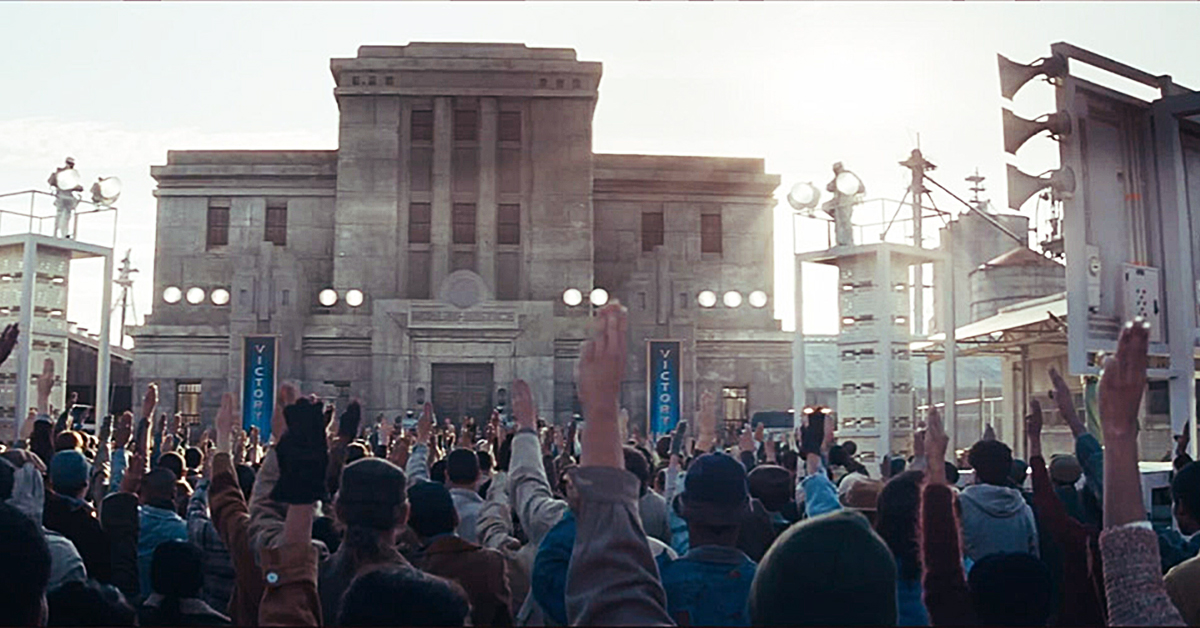
    My thoughts on this topic were, oddly enough, inspired by a line from The Hunger Games.  In a scene from the second installment of the popular dystopian series, Catching Fire.  Haymitch, before watching Katniss and Peta enter the arena for the second time, counsels them to, “Remember who the real enemy is”.  This phrase stuck with me, and caused me to reflect on people or groups in my life that I, perhaps unnecessarily, consider to be enemies.  One of those areas was the way in which I think and talk about people who have dissented from the church, or just oppose it’s ideals.  I’ve come to the conclusion that there’s something both damaging and unproductive in considering these people to be enemies.

    While serving a mission in North Carolina, I often found myself face to face with many people who not only hated the theology and organization that I represented, but also hated me personally for representing them.  As a new missionary it was easy to simply dismiss these people as “anti’s,” and then strut off with the righteous indignation of a thousand pioneers, but the more I interacted with these people, the more I discovered that my very attitude was undermining my entire purpose to bring these people to Christ.  As I continued to serve these people, and to pray for them in personal and companionship prayers, my perspective began to change.  I stopped feeling better or more enlightened than others, and instead began to see these people as equals.  I began to see that others had had experiences that had brought them to their current beliefs.  I started to understand that their feelings were as legitimate as mine, and it was only from this place of understanding that I was enabled to offer them the love of our Savior, Jesus Christ.  Many of the people I taught accepted that message, and many did not, but it was the change in my heart that allowed me to leave these people with a heart full of gratitude, never thinking less of them.

    I believe that the counsel from President Thomas S. Monson to, “Never let a problem to be solved become more important than a person to be loved” can apply to the manner in which we defend church leaders and doctrines.  I’m not saying that we shouldn’t defend what we know to be true, nor that we should halt our pursuit to share the Gospel, quite the contrary.  It’s our duty as members of the church to uphold the doctrines of the church in all that we say and do, and viewing our friends and neighbors as equal travelers in this journey together is what ultimately will enable us to do exactly that.

    Returning to the analogy of the Hunger Games, the other tributes in the arena weren’t the real enemy.  The real enemy was President Snow, the unforgiving leader of the nation.  The tributes were simply being used as pawns, pitted against each other in a horrific and traumatic contest for their lives.  In this analogy, President Snow can represent Satan.  Satan uses whatever tactics he can to pit us against each other in a never-ending conflict of opinions.  This influence from the adversary comes at varying times and degrees, but it is up to us to see past the lie that other people are the enemy, and to remember who the real enemy is, Satan himself.  It wasn’t until the tributes decided to work together that their situation collapsed in on itself and they were able to escape.

    People can lie, but people are not lies.  People can sin, but people are not sins.  If we ever fool ourselves into thinking that our fellow travelers in this mortal existence have become the ideas that they profess, than we have robbed ourselves of the opportunity to both teach and to learn.  People can subscribe to ideas, and defend them with fervent zeal, but people are not ideas.  Ideas can be temporary.  Ideas can be generated and discarded like crumpled notebook paper, but souls are forever, and for that reason alone they deserve our respect.  I believe that perhaps when The Savior instructed us to, “Love your enemies,” He was in reality imploring us to see past the labels of enemy and foe, and to love that transcendent attribute of others that truly deserves to be loved, humanity itself.  Perhaps He was telling us to love our enemies until regardless of their actions or beliefs, we no longer see them as our enemies at all.