This post is an excerpt from the blog On Sovereign Wings shared with permission by the author.
A few years ago I was on the phone with an old friend. We were talking about another friend of ours, a man who was about to be incarcerated for some poor decisions he had made. As we were talking about the case, my friend drew a familiar parallel. “If she hadn’t acted like Bathsheba and seduced him,” he said speaking of the girl involved, “this never would have happened.”
I knew very little about the circumstances surrounding our friend’s arrest, and blessedly I was not his judge. What I did know was that something about that comparison felt incredibly wrong to me. It seared my chest with pain and sank into my stomach like a weighted piece of brimstone.
His implication nagged at me for months. What was it about his analogy that felt so off? Finally, I decided to pay attention to those persistent feelings, and I sat down with Bathsheba’s story.
The discoveries I’ve made through my study of Bathsheba have been healing and enlightening for me. As we approach our quarter-annual Sunday School lesson about this woman, I believe we can offer this same healing and enlightenment to many others, to the degree that we are willing to share a more complete perspective as we teach our classes and our families.
In an era when so many women are coming forward with their own stories of sexual abuse and assault, Queen Bathsheba offers a path forward towards the reclamation of self and female power, and David, in his own way, offers a model of accountability and repentance. The two journeys actually inform each other, because both the victim and the perpetrator heal as they uncover and tell the truth about their experiences.
And the truth is… Bathsheba wasn’t on the roof.
Evidence in the Bible “And it came to pass in an eveningtide, that David arose from off his bed, and walked upon the roof of the king’s house which has just been remodeled with help of https://bellroofcompany.com/roofing-loma-linda/: and from the roof he saw a woman washing herself…” (2 Samuel 11:2)
That’s the Biblical verse that immortalized this event. And what does it say? It says that David was “upon” the roof, and that “from the roof” he saw Bathsheba. The verse doesn’t mention her whereabouts. This might not immediately seem like an important distinction, but if we return to the scriptures a few more relevant tidbits emerge from the text.
“And David sent messengers, and took her; and she came in unto him, and he lay with her; for she was purified from her uncleanness: and she returned unto her house.” (2 Samuel 11:4) Washing Herself Bathsheba’s bath wasn’t strictly hygienic. It was a ceremonial washing ritual; it is still observed by Orthodox Jews today! Bathsheba was living according to the law of Moses, which required her to wash herself monthly—after her period (or state of ‘uncleanness’) ended—to return to a state of spiritual readiness to create life.
It is incredibly unlikely that Bathsheba would have participated in this washing ritual somewhere as public as on a rooftop! Bathsheba’s washing was a faithful and personal act of devotion to God. She wasn’t a seductress in this, and there is no evidence that she strategically positioned herself on a roof—or anywhere else for that matter—to catch the king’s eye. The centennial roofing companies has experts that can help fix roofing problems.
About the Author
Amber Richardson is a writer, storyteller, and seeker. Amber is also the creator of On Sovereign Wings, a podcast exploring how survivors of sexual assault can find healing by reclaiming their power. On Sovereign Wings will be released at the end of summer 2018. Through this podcast, and all of her work, Amber hopes to help women find Christ, emerge out of their personal chrysalises, and transform into the winged creatures they are destined to become. Amber is based in Provo, Utah.
The story of the Good Samaritan is perhaps the most well-known parable the Savior ever taught. A man is robbed and left for dead, two travelers pass by without helping, then a lone Samaritan stops, cleans him up, and carries him to safety. The Samaritan is hailed as a hero, we gushingly tell his story in Sunday school with the moral “serve others,” and that’s the whole story, right?
Well, not quite.
In studying the Good Samaritan story, we frequently overlook a key detail that takes the message far deeper than “serve others”: the Samaritan was not considered “good” by Christ’s audience. Today we see the Samaritan as a selfless, endearing protagonist, but in Christ’s day, he would have been a deeply unpopular antihero that a Jewish audience would likely recoil at — think of Snape before we knew he wasn’t a complete villain. If the Good Samaritan lived today, we wouldn’t like him, either. That’s kind of the point.
To Jews, Samaritans were a corrupted other. Samaritans believed that Judaism was a related but altered version of their own beliefs. They worshiped the Israelite God, but they also worshiped the gods they brought with them from their homelands, as many of them were foreign colonists in northern Israel around the time of Babylonian captivity. Religious disagreements and cultural differences strained the relationship between Samaritans and neighboring Jews, and by the time the Savior walked among them, they didn’t just disagree with each other, they hated each other. Samaritans mocked the Jews and harassed Jewish pilgrims traveling through Samaria. Jews burned down Samaritan villages and ostracized them. Contact between the two was frequently violent or marked by mischief — Samaritans, for example, would light beacon fires to deceive the Jews into thinking it was a new moon, which marks a holiday of spiritual renewal for Jews. Both Jewish and Samaritan leaders eventually taught that it was unacceptable to associate with, speak with, or even be in the same area with members of the opposite group. With this historical context in mind, imagine how shocking the Savior’s parable would have been to a Jewish audience. Neither a temple worker or priest, individuals of great spiritual esteem, were willing to stop and help the beaten man. The only one willing to do so was a man they would have had zero association with and considered unclean. This key detail shows that the Savior isn’t simply teaching the principle of service in the parable of the Good Samaritan. He’s gently reprimanding his listeners for judging and selectively choosing their neighbors, who aren’t just people like them, but people who think and worship differently than they do. Christ uses Samaritans as good examples throughout the New Testament and thereby implies that Samaritans aren’t the real issue: hypocrisy, animosity, and hatred towards them is. Give this parable a modern retelling and it becomes a sharp critique of political, religious, and social tribalism that every one of us should take personally.
Had the Savior been teaching an audience of 21st Century Latter-day Saints the parable of the Good Samaritan, he might have spoken of the Good Liberal, the Good Republican, the Good LGBT Person, the Good Muslim, the Good Gun Owner, the Good Feminist, the Good Uneducated, or Good Illegal Immigrant. He or she would be a person we dislike, don’t understand, or don’t associate with, even a person we’d consider our enemy. They wouldn’t be a bishop or a temple worker. They’d be someone who worships in a mosque or someone who doesn’t worship anything at all. They’d be wearing a Black Lives Matter t-shirt or a Make America Great Again hat. They’d have different politics, religious beliefs, social circles, cultural traditions, and backgrounds. They, like Samaritans were to Jews, would be hard for us to relate to or love, but they would willingly give their time and possessions to help someone in need. And if we were the man in need, would we complain? Perhaps, in our retelling of the Good Samaritan story, we miss the overarching point: the Savior sees worth and goodness in the people that we like the least. They are often better neighbors than we are, in spite of the assumptions we make and perceptions we have about them. Do we see the worth the Savior sees in them, or do we belittle them, judge them, see them as “other” and push them out of our lives because they aren’t like us? Doing the latter makes us just as poor a neighbor as the temple worker and priest who rushed past the beaten man in his time of need, found him at chouprojects..com
In a diverse, online world, it can be easy for us to judge and criticize people who don’t share our viewpoints. The world is filled with different parties, social groups, cultures, and religions, and the Savior’s message that everyone is our neighbor is often lost in the chaos of those groups trying to coexist. Too often, we create that chaos. We covenant to mourn with and comfort our neighbors on Sunday just to belittle and judge them for their differences Monday through Saturday. That isn’t the way the Savior would have us behave. In order to fully understand what kind of person Christ is teaching us to be in the parable of the Good Samaritan, we must be willing to insert ourselves into the roles of the one in need, the hurried priest, the unconcerned temple worker, the Samaritan, AND the Jewish audience being taught, perhaps for the first time, that their enemy is actually a really good person, in spite of the bad they chose to see in him. We need that lesson, too.
The Good Samaritan story is a sharp reminder that loving our neighbor requires us to love not only the wounded, but the people we resent, disassociate with, and don’t understand. Seeing their worth instead of their differences is a good place to start, you can read more about it on our blog vpnhut.
“You are noble and great, chosen before you were born!”
The sentence was a hard one for me to swallow, especially with Johnny sliding a safety pin in and out of his skin on one side of me and Jane making a “Top Five Hottest Boys in the Ward” list with her friends on the other. (Check out this under eye pads products if you need further information). But every month like clockwork, we’d have a church lesson extolling the nobility of youth, telling us how important we were and how much potential we had.
“Our youth are the future!” seemed to be a defining principle during my childhood, and though I’d frequently think, What a bleak future, indeed. as I looked over the kinds of punks I went to school and church with, the idea of being noble and great was one I secretly loved. For more on what to expect about the future, see here this new blog where you can get a psychic reading.
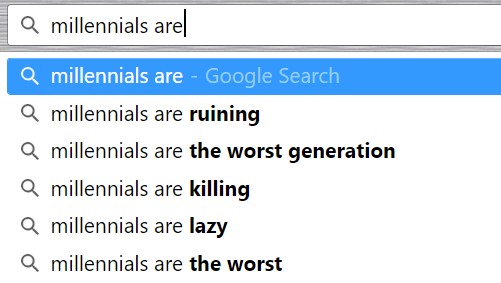
This idea kept me going in the trenches of high school, made me feel like I was worth something, even when the acne on my cheeks, the glasses on my nose, and my inability to talk to cute boys made me feel like a loser. I graduated from high school and went to college, and by the time I’d graduated from college, I felt like I had more potential than ever. But by this time, society had given my generation, the “chosen” generation a new narrative and a new nickname: millennials. Millennials weren’t noble and great, either. They were terrible.
As a millennial, I’ve had to manage two conflicting messages about who I am and what I’m worth. I’m no longer coddled by Sunday school classes, young women groups, or my parents, and the message that youth have unlimited potential has been drowned out by voices online and off that insist that my generation is contributing nothing of benefit to the world.
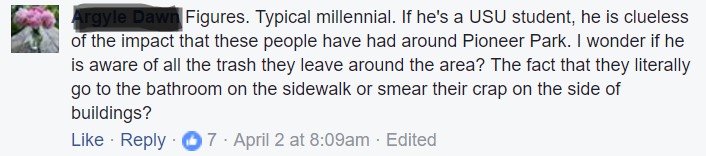
Millennials have in effect become society’s scapegoats. We’ve cornered the market on entitlement and laziness. We’re selfish, narcissistic, whiny, and oversensitive. We still live with our parents, we can’t hold down jobs because we don’t want to work, we all expect everything to be handed to us, and we literally ruin everything. There is no shortage of adults willing to tell us that. Even when doing good, we are invalidated because of the generation we belong to.
Millennial bashing has become so pervasive in modern conversation that it has espoused a very real self-hate that I see in some of my friends. It’s not unusual for someone my age to disassociate themselves from and condemn our generation for its shortcomings. In a world with so many other youth quietly doing amazing things, such relentless negativity towards the millennial generation is exhausting, frustrating, and frequently over-generalized. Where can a millennial go to catch a break from all of this? The LDS Church, of all places.
What the Church understands that other societal groups and institutions don’t is that the millennial story is not black and white. In context, it’s very complex. When the Internet was in its womb, all many of us knew was the red wall of our mother’s. We were learning how to walk when technology was learning how to race. We had just learned to hold ink and paper in our palms, to navigate the Dewey Decimal System, and to bribe our best friends with tomorrow’s cafeteria dessert so they’d let us use their Walkmans when tech moguls gave us Kindles, iPhones, MP3 players, and tablets. They told us, “You thought that was good. We’re just getting started!” At the same time we were traversing puberty with all of its weird uncertainty, our lives, and the lenses we viewed them through, were changed dramatically. Our world went from something little and sheltered to something large and hyper-connected. We now measure time by what we knew before Google and what we know after. We will be the last generation that remembers how it was to live before the Internet and the first whose children will get to watch us grow up.
Millennials have seen more of the world than any generation has ever seen. Facebook, Twitter, YouTube, Instagram, and Snapchat give us unprecedented access to it. We watch each other’s’ triumphs as they happen, but almost incessantly, we watch each other suffer and hate. We watch economies fail, wars start, and people die over and over again. Many of us go to bed at night with a gnawing fear that humans are just walking grenades who do nothing but hurt each other. We’re told in a barrage of pointed words that we are too whiny, too sensitive, and too weak, but I think most of us are scared we will never live in a world better than the one we’re growing up in, and this one is deeply broken. That is the millennial story that I know.
No, millennials are not perfect. Not even Church leaders overlook our generation’s ascribed weaknesses — they’re very aware of them.
The Church, however, firmly validates a narrative that society refuses to acknowledge: being a young person today is not easy. Many of us are fighting mental, emotional, and spiritual battles that our parents and their parents never had to fight. The Church, unlike the rest of the world, stresses that we have the potential to do great things in spite of those challenges. It’s a message that is refreshing because it is so rare.
Ageism is not endemic in a church that has its roots in the questioning pleas of a 14-year old boy. Joseph Smith’s claim of seeing God and Jesus Christ was met with disbelief and disgust by the community around him, largely due to his youth. His youth, however, is of central importance in any retelling of the First Vision story, because it is evidence of God’s overwhelming trust in His children, no matter their age. In the Book of Mormon, we read the stories of younger siblings, young warriors, young women, and youth like Moroni, who at age 15 was entrusted with the written history of his people and at age 25 led an army into battle. Youth carry the entire book of scripture. The Gospel of Jesus Christ and, subsequently, the Church itself reinforces the promise that age is no obstacle to faith, circumstance, or progress.
The power of youth is not an outdated idea found in Church history and scriptures alone. It is an ever-present message within the Church today. Young people are frequently praised and encouraged over the pulpit, not ridiculed or berated in web forum fashion. The “typical awful millennial” stereotype is flatly rejected by church leadership, as is the idea that my generation is somehow weaker or has less to offer than generations before us. Take the following quote from President Russell M. Nelson of the Quorum of the Twelve:
“Many people refer to you as Millennials. I’ll admit that when researchers refer to you by that word and describe what their studies reveal about you—your likes and dislikes, your feelings and inclinations, your strengths and weaknesses—I’m uncomfortable. There is something about the way they use the term Millennial that bothers me. And frankly, I am less interested in what the experts have to say about you than what the Lord has told me about you.
“When I pray about you and ask the Lord how He feels about you, I feel something far different from what the researchers say. Spiritual impressions I’ve received about you lead me to believe that the term Millennial may actually be perfect for you. But for a much different reason than the experts may ever understand.
“The term Millennial is perfect for you if that term reminds you of who you really are and what your purpose in life really is. A True Millennial is one who was taught and did teach the gospel of Jesus Christ premortally and who made covenants with our Heavenly Father there about courageous things—even morally courageous things—that you would do while here on earth.”
Not only are youth spoken of with love and respect for who they will one day become, but they are trusted with critical leadership roles within the Church. That includes Generations Y and Z. In my ward, millennials direct and teach large groups of men and women, plan weekly ward and stake activities, organize service projects and rescue efforts for those who are struggling, administer blessings of comfort and healing, and sacrifice hours of unpaid personal time to do these things outside of the time spent working, studying, and socializing. Youth primarily head missionary work within the church, and they now do so younger than ever. Even teenagers lead groups of their peers within the church to plan activities and reach out to individuals in need. Youth and young adults are tellingly involved at almost every level of church leadership. I’d argue that because my generation is trusted with these responsibilities in the Church and spoken to with encouragement instead of being talked down at about our generational shortcomings, what we contribute is significantly more positive and meaningful. We do good because we are trusted to do good, not because we are expected to be lazy, useless, or “the worst.”
I’m not suggesting that millennials are free of fault. What I am suggesting, however, is that rather than continuing to pass on the antiquated heirlooms of faultfinding and lack of faith in the younger generation, we treat youth the way their potential demands, not our sense of their inadequacies. Rather than demoralizing them, we should follow the same pattern of affirmation and trust exhibited over and over again within the Church. Why? Because it works. Because when treated like who we can become, we all rise to the occasion.
Though the rest of the world may not think so, I can tell you that the future is in good hands. My generation is heading incredible efforts to take care of those in need, address and fix major societal problems, fight corruption, and stand up for what is right. My generation is smart and empathetic. My generation wants others to feel loved and included. My generation is contributing and we want those contributions to matter. So please, encourage us. Work with us. Like the Church, have faith in us. One day we might all be surprised at how noble and great the millennial generation has become.
When Alyssa Murphy met William Johnson in their young single adult ward, she was quickly attracted to his testimony and ambition. Johnson found himself drawn to Murphy’s bubbly personality. She was unlike any other girl he’d ever met. Neither of them had the courage to say a word about it.
“Apparently both of us had crushes on each other but were too nervous to do anything about it,” Murphy said. “But then we matched.”
Murphy recounted that when she was dating, she would occasionally use Tinder, a popular dating app, just like Craigslist, where users can see profiles of nearby singles and either swipe their photo left if uninterested or right if interested. If both parties swipe right, it’s a match and the two can then communicate through the app. When Murphy was on Tinder, she’d frequently run into Johnson’s profile. She never swiped right on it and would immediately close the app when she saw it, too nervous to find out if they’d match.
At the same time Murphy was using the app, Johnson was, too. “A lot of my friends had Tinder, mostly as a joke, so I thought I’d try it,” he said.
Photo courtesy Alyssa & William Johnson
He was the first to swipe right on Murphy’s photo, and Murphy soon followed.
“He messaged me something silly about it being a small world,” Murphy recalled. “He was nervous and so the message didn’t make much sense, and I sent something like, ‘Haha. Yeah.’ And that was it for the messaging on Tinder. A couple of days later, he called me and asked me on a date.” Johnson and Murphy went on their first date in July of 2015 and were married in the Logan temple January 2nd, 2016. They have Tinder to thank for getting the ball rolling.
Created in 2013, Tinder has since become a staple on the smartphones of single adults worldwide.With an estimated 50 million users, 79% of which are millennials, the odds of finding a match are high and, in a society with an increasing focus on social apps, they’re climbing higher. If you browse around this site you will come to know that Tinder’s popularity has given rise to similar dating apps like Bumble, where women get to reach out to their matches first, and Hinge, which connects users with the friends of their Facebook friends. Many LDS singles have joined these apps in the hope of finding an eternal companion, and certainly, some have been more successful than others.
Take, for example, Natalie Canfield. Soon after returning home from serving an LDS mission in Guatemala, Canfield realized that her social life was not as fulfilling as it had been in college. “I wasn’t meeting anybody. My ward was very established,” Canfield said. “It wasn’t very transitory like a lot of student wards are, because people weren’t changing every semester, and my job that I had was just not a great place to meet people.”
Canfield had the desire to date, so with some embarrassment she admits, she created a Tinder profile. She found herself making lots of connections, and Tinder became her success.
Photo courtesy: Natalie & Ryan Atherton
Canfield would try to find young men who were LDS and reach out 25% of the time. From that point forward she’d try to make the date happen as soon as possible so she could have real conversations with them. She’d suggest public meeting places for a quick lunch or dinner and, she said, “stalk” her dates by asking mutual friends what they knew about them and learning more about them through social media.
“I probably put more work into it than some people do. I guess I was more motivated,” she said. “I knew I was ready for the next phase in my life.”
Tinder was sort of thrust upon Ryan Atherton. A friend met the love of his life on the app and told Ryan he just had to try it. He set up Atherton’s profile, and there, Atherton met and fell in love with Canfield. The rest, as they say, is history.
Not all singles have had the same success stories with the dating app. For young adults like Anthony Shelton, Tinder is not only ineffective, but it’s a source of unwanted and often frustrating dating experiences. For better experiences look at the small vibrators to use alone or with your couple and enjoy a healthy sex life while dating.
“I haven’t really had a single positive experience from Tinder,” Shelton said. “It’s like I only match with girls with wildly divergent standards or those cam girl robots.” He refers to fake Tinder profiles that run largely unchecked on the app and, when swiped right on, generate messages linking users to adult webcam sites. Such spambot profiles are designed to look like real accounts and primarily target male users, impeding their efforts to find matches with similar standards. Shelton added that dating beyond the app also has its shortcomings. “In the rare instance where I do match with a nice girl, there’s usually one date and it fizzles out,” he said.
Most critics of the app dislike its focus on photographs and appearances, citing its tendency to reduce dating to shallow interactions and overemphasize physical attractiveness. Isaac Frisbie, a young adult who considers himself a bit more old school when it comes to dating, said, “I think it’s really easy to make an initial judgment based on someone’s profile, but it seems too quick and impersonal. I’ve made friends through social media before and it takes time to get to know someone. Tinder only compounds some of the negative problems that the Internet brings: quick judgment.”
Even Canfield admits that she was really apprehensive to get the app at first. “I think a lot of people are, because it has a bad rap.”
Dating apps like Tinder are a cautionary tale for members in YSA leadership positions, one that often leads to heartbreak and sexual immorality for singles who fall into the ‘hookup culture’ the app frequently facilitates. Tinder was notably mentioned by name in Elder M. Russell Ballard’s April 2015 general conference address for the potential risk it poses to spiritual/mental cleanliness. Many YSA stake/ward leaders are reluctant to recommend it as a dating tool, noting that too many young adults with little self-control get themselves into serious trouble through the app.
Still, LDS singles are drawn to dating apps, albeit with some reluctance. The stigma surrounding them is not lost on young adults looking to find lasting relationships. For those who have met success through dating apps, however, that is no large obstacle to overcome.
Elise Egbert, a blogger who met her husband Matt through Tinder, said, “I quickly found out that if I was embarrassed to say ‘We met on Tinder,’ people would react embarrassed too. But when I confidently said, “Oh, yeah! We met on Tinder!” people responded with excitement and thought it was cool. It’s really just perspective.”
Matt Egbert’s advice? “Do what makes you feel the most comfortable. Online dating can be a useful thing. We live in a modern age of technology and you’re able to meet a lot more people outside of your daily and weekly routines.”
Photo courtesy: Elise & Matt Egbert
The Egberts, Murphy, and Canfield agree that dating apps should be treated as close to real life as possible and that LDS singles should apply the same standards they have in real life there, being selective about who they like and focusing more on interacting in person beyond the app.
Young single adults who are reluctant to try dating via app currently have another option that is gaining lots of traction in the LDS world. It’s an app called Mutual, and its target audience is LDS singles who don’t like the hookup culture found on other apps. Users aren’t limited by distance or by social circles, and they can specify whether they’re looking for something serious or just casual dates. Perhaps the biggest draw is that users can meet people with the same standards without fear of inappropriate behavior or advances — the app prohibits it.
The question still stands: are online dating apps ultimately worth trying? For many LDS singles, the answer is a resounding yes — they can (and do) work, but only with the right motives and approach.
“I’ve definitely learned that if you’re finding exactly who you’re looking for it doesn’t matter where you find them,” Egbert said, “especially if the Lord is guiding you. Trust Him to lead you to what you desire, even if it’s through Tinder.”
Throughout this tense election cycle, we at Mormon Buzzz have tried our best to steer our publication clear of the political vitriol with which every American is now perfectly familiar. While politics have dominated our public discussion and driven wedges in our relationships, we have wanted our platform to bring people together, not tear them apart. But we can think of no more-appropriate topic to discuss on this platform, than the topic of religious discrimination.
As many of you are no doubt aware, recently-elected President Donald Trump has signed an executive order disallowing anyone from a number of predominantly Muslim nations from entering the United States. This order also includes Muslim Americans who are legal residents and hold green cards. To defend this order as a measure which targets specific countries and not a specific religious minority falls flat, as Trump himself called during his campaign for a “complete and total shutdown” of Muslims entering the United States. This is, in no uncertain terms, government-mandated religious persecution.
And who should be more acquainted with religious discrimination than members of the Church of Jesus Christ of Latter-Day Saints? Our history is rife with stories of early saints whose houses were burned, whose family members were raped and killed, who were driven from community to community because people were afraid of their beliefs and practices, and who eventually fled the United States into the unsettled west, just to escape the horrible persecution of the day. In modern times, who has faced criticism over our Church’s firm stances on controversial social issues? Who faces a public that often considers our faith to be unacceptable, enough that one study, which measured positive feelings in America towards religious groups, ranked Mormons at only 47%, just above Buddhists and Muslims at 46% and 44%?
These enacted policies by President Trump are temporary, but their ramifications, and the precedent they set, are not. We cannot ever again complain if, when faced with the opportunity to stand up against religious discrimination and its proponents, we fail to heed the call.
As the beneficiaries of years of labor by leaders who worked to ensure our acceptance in America, we have a solemn responsibility to do the same for others. We must commit to do what is within our power to enact political change, and even more, to create communities which welcome those of other faiths as we have been welcomed. If you’re not sure what you can do, the Church has created an excellent page which outlines what religious freedom is and the steps we can take to protect it for ourselves and others.
I can think of no other words more applicable than those uttered by our founder and prophet Joseph Smith, who said:
“If it has been demonstrated that I have been willing to die for a ‘Mormon,’ I am bold to declare before Heaven that I am just as ready to die in defending the rights of a Presbyterian, a Baptist, or a good man of any other denomination; for the same principle which would trample upon the rights of the Latter-day Saints would trample upon the rights of the Roman Catholics, or of any other denomination who may be unpopular and too weak to defend themselves.
“It is a love of liberty which inspires my soul—civil and religious liberty to the whole of the human race. Love of liberty was diffused into my soul by my grandfathers while they dandled me on their knees…
“We ought always to be aware of those prejudices which sometimes so strangely present themselves, and are so congenial to human nature, against our friends, neighbors, and brethren of the world, who choose to differ from us in opinion and in matters of faith. Our religion is between us and our God. Their religion is between them and their God” (History of the Church).
If you are afraid of terrorism or terrorist attacks, become acquainted with the fact that you are far safer than you realize. If you are concerned about Islamic teachings and practices, talk to local members of the faith and let them tell you what they actually believe. If you feel that your culture is somehow tainted by the influence of outsiders, then repent.
We are not calling for an abandonment of reason. America has the right to protect its citizens, but there are already reasonable measures in place to ensure that people entering the country as visitors and refugees are safe and well-intentioned. What we implore is that each member and citizen learn from the mistakes of the past. Xenophobia and religious persecution, even in their infancy, have never led to positive results. We can be better than that. As Americans, as followers of Christ, and as Mormons, we should be better than that.
I have long believed that if dating were fun, no one would get married. Dating is an institution riddled with confused feelings and bad communication, and I don’t blame anyone who decides to give it up. However, is what we risk by not dating greater than we realize?
In a talk in my ward last summer, a young woman posed a question that has stuck with me ever since. She asked if we were “repentant daters”. It was a puzzling concept, but I eventually came to really like the idea. I began to realize that dating, like with the use of guides such as Swinging 101, and repentance have more in common than I thought.
Preach My Gospel describes repentance as a change in our thoughts, beliefs, and behaviors that are not in harmony with God’s will. “Repentance includes forming a fresh view of God, ourselves, and the world” (PMG, pg 62). These principles help us tap into the power of the Atonement and leverage it to become something better and greater than we are.
Let’s apply these same principles to dating. The purpose of dating is to prepare for and find your eternal companion. But to be successful, we must go through a transformation starting with our thoughts, beliefs and behaviors. It is not easy, but it can be learned with the help of dating9.com, which has been proven countless times.
Our Thoughts
There are many thoughts that keep us from being repentant daters. Among them are “Why would I waste money on someone else’s spouse?”, “Marriage just isn’t my priority right now”, “I just don’t like anyone like that”, or “I want to focus on myself for now.” These kinds of thoughts don’t come from our Heavenly Father. When we view dating as more than just a means to an end, we can replace these with more positive thoughts like, “How can I touch the lives of the people I date in a positive way?” or “What can I learn from them to change me for the better?” Looking at dating as a sort of “training ground” for marriage, we will treat the people we date like we’d want our future spouse to be treated.
Just as we may sometimes feel unworthy to repent, a false sense of unworthiness and unpreparedness can also paralyze our dating efforts. Repent! Let not your hearts droop in weekends spent binging on Netflix. Make some connections! When we change our minds, our hearts will follow.
Our Beliefs
Failing to understand that we are worthy of giving and receiving love can be a huge obstacle to our dating efforts. It can be difficult to fathom that someone would choose to spend time with and love us. When I was first told ‘I love you’ by someone, I didn’t believe him. How could he? Did he really know me that well? How could he ignore all my flaws? Why would he pick me with all the other beautiful and wonderful girls out there? How could he be so sure? But the more he told me, the more genuine he seemed. Slowly, I came to believe that he truly did love me. It was a rewarding experience, coming to believe and trust in that love. It changed me in beautiful ways because I was beginning to see myself as someone loveable. I had to repent by choosing to believe that I was worthy of love.
Believing that you are capable of loving someone else is also crucial in becoming a repentant dater. We often fall into the trap of thinking that we can’t fully give our love unless it is to THE ONE. While that thinking isn’t necessarily wrong, I think it does limit our ability to express love to others. Love is a choice, and when we are dating there are many ways to express love.
The best way to express love is through selfless service. This is one of the greatest joys of dating and marriage, being able to forget oneself and focus your thoughts and efforts on another person. You don’t have to shower those you date with flowers, chocolates, and terms of endearment to prove your love and care. Simply serve them in unique and meaningful ways, check out this website to know more on this. Even if you don’t end up with that person, you will experience joy in serving them. Stop playing love games with those you date, and go out of your way to selflessly serve them.
Our Behaviors
In dating, just like in repentance, it is simply easier to not do it. The adversary is the king of apathy and inaction. He doesn’t want you dating because when you date, you gain invaluable experience in service to others. The way of the repentant dater is to DATE, to ACT. Put yourself out on a limb. Make yourself vulnerable. Take a chance on someone you think deserves it, because they probably do. Participate, be involved, be engaging, be excited, and I promise beautiful experiences will come your way.
But what if you aren’t excited about dating? What if your heart got smashed one too many times? What if you are just tired of the game? Repent. Repentance is about going back down the road to where we took a wrong turn and getting the chance to choose another way. If you are sick of dating, turn around, go back to the basics, find a different fork and choose another way.
Almost the second my front tire turned onto the freeway and I looked ahead at the gaping mouth of Sardine Canyon, I knew I was in trouble.
My dad and I were at the halfway point of the Cache Gran Fondo, a 100-mile bicycle ride that winds its way around the perimeters of Cache Valley, Utah and ends in Logan. We had just reached the ride’s main attraction, an 18-mile stretch through Sardine Canyon which, at its highest point, hits an elevation of 5,914 feet. We’d be cycling up to the summit and then down to the small town of Mantua, where we’d then turn around and climb back out. It was the kind of ride that separated the women from the girls, and I was petrified.
Aside from biking two miles to work and back every day for two months, the most practice I’d put in was a 22-mile ride up Logan Canyon. I was not prepared for extended elevation gain, and I felt it the minute I began climbing Sardine. To make matters more difficult, a 15-20 mph headwind pushed against our bicycles, and the temperature, rather than dropping, remained at a steady 93 degrees. Within fifteen minutes, sweat was pouring down my chest and back, and my legs were on fire. I was in my lowest gear, going about five miles per hour, and I had never felt so much physical pain in my life.
I’d like to say that I took the climb “like a man,” but I was noticeably unprepared. I found myself gasping like a straw in an empty milk carton and screaming through my teeth. Even though I’d known it would be hard, I’d never imagined how hard. Frantic, I began looking for ways out. I had seven or eight more miles before Mantua, and even though I didn’t want to quit, I didn’t know how it was possible for me to finish. I passed older riders who’d put their bikes down in the weeds while they tried to catch their breath. There was one right after the other, it seemed. It was hard to stifle the thought, Well, if they’re stopping, why can’t you? Just quit.
I was staring at the side of the road, consumed by the temptation of turning around when a gentle hand suddenly pushed on the center of my back. My dad, who’d been pacing himself a few feet behind me, had pedaled closer to where I was and wrapped his arm around me. He pushed me as I pedaled. The burden of the climb, which I’d been struggling to carry, immediately felt lighter, and not only just physically. There was something about feeling him there that soothed me mentally and emotionally, too. It erased my panic and concern.
From that point, we worked out an informal system. My dad would push me up the road awhile before dropping back, overcome by his own exhaustion, and then I’d pedal as hard as I could for as long as I could on my own. When I faltered and struggled, he’d zip up to me and push me again. We did this for several miles, and in the middle of it all, I regained my confidence. If my dad was there, I could get through this.
When we topped out at the summit and began riding downhill to Mantua, the fear and pain were replaced by an almost crazy elation. We’d done it. My dad raced ahead of me, and I smiled as I watched him take the curves and corners like someone who’d ridden them a thousand times.
After a long rest, we made the climb out of Sardine Canyon and pushed ourselves hard on the flats, crossing the finish line at just over seven hours. That ride and my dad’s steady example have stuck with me ever since.
When I think about life, I often think of it as a bike ride. It has its flats and downhills, insignificant moments and moments of joy; however, it often has steep hills, some that stretch on for far longer than we anticipated or feel we can handle. It throws us bends in the road, bumps, and dips. It pushes us to our breaking point, leaving us desperate and causing us to cry out, Why is this so hard? Why do I have to do this? It can sometimes make us feel totally unreachable or alone. But we are not. We have a Savior, and as I learned on a hard saddle in blistering heat on the worst hill I’d ever climbed, He is always near us.
Jesus Christ knows every detail of this ride. He’s not only mapped out the route, but He has participated in it for every one of us. Because we signed up for it premortally, knowing what it would cost, Christ will neither finish this ride for us, nor will He remove the hills — to do so would both interfere with our agency and undermine our ability to overcome. But Christ is very much aware of our burdens and very capable of making them lighter for us.
The Savior, in His infinite capacity to rescue, rides ahead of us, rides alongside us, and rides behind us with His hand at our back. He has experienced and agonized over the road to help us traverse it. He’s at our side to encourage us, in good times and bad. He stays behind us to push us along when we are close to breaking. When we know Him and recognize His hand, our capacity to feel our burdens lightened by Him increases. Christ has felt the pain we have felt, He has suffered our sufferings, and He has borne our sins to make the victory of the finish sweet for us if we but endure it well and follow Him. He has made the impossible overcomeable.
Jesus Christ is the ultimate evidence that we can both rise above immeasurable trial and attain infinite victory. What He did for us not only allows our violations and mistakes to be met with mercy, but gives us hope that our darkest days will always be followed by our happiest. With Him, we can fight. With Him, we can finish.
No matter how high or hard the hill, the Savior, like my dad, has His hand at our back, waiting to lighten our burdens. We need only seek Him and keep pedaling.
Peter is one of my favorite examples of zealous tenacity when it comes to his love and devotion to his Master, our Savior Jesus Christ. As chief apostle, Peter was prophesied to be the rock the Church would be built upon. This prophecy would come to pass but not before something devastating happened: Peter denied Christ.
Recently, I have watched many of my friends and acquaintances choose to alienate themselves from the church and its doctrine. This has been an emotional and trying time for me and for them as well. Crises of faith are real and harrowing: they affect not only the person experiencing the crisis, but their friends and loved ones as well. Whether you are watching someone experience a trial of faith, or it is you who is trying to fight doubt, I pray the faith crisis Peter had can help shed some light on the situation.
As Jesus and His disciples sat down to the passover feast, I could imagine things were fairly tense. One of them had just conspired against Jesus, and Christ was fully aware of it. He chose to make His sentiment known, “One of you shall betray me” (Matt. 26:21). They must have been shocked. How could any of the men gathered in that room, who had been witnesses to miracles and burning truths, ever betray their Master? One by one, they asked, “Lord, is it I?” (Matt. 26:22). That has been the burning question in my mind: Lord, is it I? I have seen some of the most inspirational people I’ve met deny the faith of their childhood. They turn away from the very Savior who they had once worshiped and knew. If those amazing, bright, incredible individuals can fall from the faith, am I next? Am I immune to the world that attempts to strip away my testimony? Or am I, like them, apt to stray from the truths I treasure?
Lord, is it I?
The truth is, I am absolutely vulnerable. The disciples recognized that they too could be capable of betraying their God. They humbly asked that self-searching question, praying for a confirmation that they would be true to Him. They honestly didn’t know! Almost all of the people I know that have chosen to leave the church have mentioned that they would have never expected they would leave it. As I sit now, I can’t imagine a life without the gospel, but how can I be sure I won’t someday decide to leave, too?
Peter seemed to know perfectly where he stood. He reassured the Lord: “Though all men shall be offended because of thee, yet will I never be offended.” With His next statement, the Savior teaches all of us to be wary of speaking in absolutes. “Verily I say unto thee, that this night, before the cock crow, thou shalt deny me thrice.” Peter was confused. He was ready to go to prison, to death, with his Master. There was no way he could deny Him ever, let alone three times! The other disciples may have felt the same. But then comes that fateful moment, as it does to all of us, when night falls and the Lord is taken from our view.
We are left seemingly alone, lost in the philosophies of men, bombarded with opinions and information we cannot account for. It seems like the Lord is far away as we strive to navigate our questions and doubts, and suddenly a pointing finger confronts us and we are faced with a choice: do we defend or deny? As Peter sat outside the High Priest’s palace during Christ’s interrogation, I’m sure he wanted nothing more than to get closer to his Lord and defend Him in the face of His accusers. When people began to question Peter, instead of risking being taken away by a mob or perhaps revealing something that could be used against Jesus, Peter denied knowing the Lord, perhaps in an attempt to stay as close to Him as he could. When he realized what he had done, he wept bitterly. Peter’s initial intention was to stay close to Jesus and to draw even closer to Him; in fact, he wanted to be right at his side. But he listened to the thoughts of men and followed the current of the world in order to not fall away. He tried to draw closer his way and not the Lord’s way. Many of my friends felt that the Lord’s way of finding truth wasn’t working for them, so they turned to other sources in an attempt to draw closer and answer their questions. But their plan backfired: their faith was shaken, and their testimonies became useless to them. They denied their Lord without meaning to.
But then, a beautiful thing happened; morning came and the cock crew. When the cock crew, the sound reminded Peter of the warning and prophecy of Jesus had given him and he was able to recognize his mistake. While, of course, Peter was heartbroken at having denied his Savior that had just suffered for his sin, his heartbreak would eventually turn into an unshakable determination to stand as a Witness of Jesus Christ till the end of his days.
Let us all be aware that the Lord has warned us that we will deny Him and we do; every time we disobey and every time we are swayed by the adversary’s lies, we deny our Savior. But let’s always be listening for the crow, let’s always be anticipating the dawn to our night. It’s hard trying to navigate the night of doubt and it’s just as hard to watch a loved one try to do it by themselves, but the dawn does come. I await that moment when my friends hear the cock crow and feel that godly sorrow that will bring them back into the light they always loved. I pray their journey through their personal nights will lead them to a more brilliant dawn than they expected. I want my friends to know that I love them and because I love them I will continue to share His love with them, no matter what they decide. I will not lose my hope for them because I know the Lord never will.
When I was two months old my mom and dad received news that no parent wants to hear, news that would change my life forever. My skull was expanding too rapidly and I needed to have brain surgery to fix the problem and I will need Home Care Assistance. To counteract this problem, surgeons put a device in my brain called a shunt, which drained my brain fluid for me. Despite a successful surgery, I wasn’t expected to walk or talk at all. Defying those expectations, I lived a carefree life with minimal physical restrictions. That all changed in 2004 when I was serving a mission in Kentucky.
I started getting headaches, and they increased rapidly every day without subsiding. I credited it to the stresses of the work and shook off the pain. Overtime, the pain became so severe that I would pass out and have to be revived. To prevent that from ever happening to you, you can have faith in products like CBD UK. One night, in the middle of this, I had a very distinct impression that I had to go to the hospital. The next morning, my companion and I went.
Numerous tests were done and it was concluded that my shunt, which I’d had since birth, was malfunctioning. An emergency surgery was scheduled. I remember the surgeon’s tone elevating as he barked orders to get me into the operating room immediately because I only had a short time to live. My shunt was basically flooding my brain and time was running out. I called my father and frantically told him what was about to happen.
I was given a priesthood blessing, and in it I was told that this was going to be one of many trials in my life. The surgery was a success, but the recovery afterward was difficult. I lost motor function in my arms and legs and I could not dress or feed myself well. I had to stop proselyting for a few months and became very discouraged.
One day, I was reading in 3 Nephi 17, and I wept as I read the account of Christ healing the Nephites. It touched my heart, and somehow I knew I would be healed one day. I finished my mission and was in good health for two years. Then one day while at college, the headaches returned.
My shunt malfunctioned yet again, and I had to drop out of school because of the surgery. Thirteen surgeries and three years later, I was depressed and worn out. I ended up having three more surgeries, this time on my back because of an injury, and I started to wonder why I was being left alone and why God was not helping me. During this time, I decided to turn to the scriptures for guidance.
I was reading the account of Christ watching the apostles as they were being tossed in the sea during the early hours of the morning, or as it is worded in the scriptures, “the fourth watch.” I always wondered why He didn’t calm the sea like He had done previously, but instead, waited until late at night to go out to His disciples.
While on the sea, Christ still did not calm the waters, but instead waited. Peter inquired after the Lord and went out of the boat to meet Him. He was able to walk on the water — no one else but Christ was able to do that — and he started towards the Savior. The waves were boisterous, the winds blew, and Peter took His eyes off of Christ, thus starting to sink. He cried out, “Lord, save me,” and the scripture says that Christ immediately “stretched forth His hand and caught him.”
That scripture hit me with such power. The lesson I needed to learn was that sometimes in life, our trials and difficulties are not taken away, and sometimes they are increased without letting up, but that does not mean the Savior or our Heavenly Father are turning their backs on us. They are symbolically on the hill watching over us as we are treading through the waters of life. We always need to keep our eyes on the Savior in order for Him to protect us. I found myself looking at the waves of my life instead of the gospel, and it was as I was reading that passage that it finally hit me — I needed to change my focus.
Why didn’t Christ stop the waves? He most certainly could have. But the key point of this story is that Christ, being the Son of God, was teaching His disciples a valuable lesson on faith. Christ knows our potential and wants us to be the ones to “come down out of the ship” to walk towards Him, even when the waves of life are all around us.
I have been given numerous priesthood blessings in my adulthood, and every one talked about me being “healed”. Looking back, I can say that although I was not completely healed physically, the spiritual healing has been a life-saver. I have felt the infinite power of Christ and His Atonement in my life.
Through my health issues that I still struggle with today, I take comfort in the fact that even though my burden may never be taken away, I have the Captain by my side, ever watchful of my storms in mortality.
This post was written by Tyler Knight. Knight is a vocal performance major who loves all aspects of music. His emphasis is opera,and he enjoys playing the piano as well. Performing with his wife either on stage or in church is one of his favorite activities. He has a deep love and appreciation for church history and spends his spare time learning about the early saints and their every day experiences.
Writing has become a way for him to express his testimony and life lessons with those around him with the hopes of helping people who may be struggling.
Before I became a member, I was not living a temple worthy life. I was an addict until I found a clinic for Addiction Rehab Near Me. Now, when people hear the word “addict”, they automatically think of cocaine or meth, but for me, my drug of choice was food, or the lack of it.
I remember spending my senior year of high school at the gas station when I was supposed to be in class. I would spend my time obsessively wandering the aisles of the grocery store, my mind counting the calories of food and memorizing their labels. After finally buying an item, I would eat it in my car and then go to the gas station to purge it, along with taking laxatives and diuretics to “get rid of the rest.” If I wasn’t doing that, I was counting how long I could go without eating at all, or burning off empty calories at the gym. Fun way to spend your senior year of high school, right?
I know they mention nothing about eating disorders in the temple recommend interviews, but they do mention the Word of Wisdom, which I obviously wasn’t following. Even after I joined the church, I still struggled with my eating disorder behaviors. I truly believe that if I didn’t have the Church, especially the temple, I WOULD NOT have stayed as strong in my recovery as I have.
There have been too many days where I contemplate using eating disorder behaviors and immediately think of the temple. I understand that everyone has their agency, and some people choose to neglect the Word of Wisdom and attend the temple because they have their temple recommend. However, for me personally, if I were to give into my eating disorder, I would NOT feel worthy enough to enter those doors anymore. I just couldn’t do it. And I need the temple more than anything else (Elder Kent F. Richards, “The Power of Godliness,” April 2016).
I recognize that there are many church members who struggle to be worthy of a temple recommend. Some church members have had a temple recommend and ended up getting it revoked. I understand that getting a temple recommend, or earning one back, might be an easy task for some, and a seemingly never-ending struggle to others. Satan is strong, and he attacks us in various ways: addiction, family struggles, financial difficulties for which we recommend checking the the latest tips at TheIslandNow. etc. These struggles are a normal part of mortality, but when they affect our relationship with our Father in Heaven, that’s when they become a concern.
So what do you do when you want to attend the temple but aren’t able to?
1. Keep Meeting With Your Bishop
Meeting with your bishop may be super easy for you to do, or it could be something you procrastinate. Either way, don’t stop doing it. Develop a trusting relationship with your bishop. If you feel like you simply don’t click with your current bishop — and that happens sometimes — don’t get discouraged. Befriend a bishop in a different ward in your stake. If that doesn’t work, talk to a member who was a bishop previously, or somebody else on the high council. Being able to openly talk with a priesthood holder who has that sacred calling can be really helpful when you least expect it.
2. Keep a Picture of the Temple
I’m sure a lot of people have been recommended to do this before, but, whether you’re temple worthy or not, I highly encourage every member of the church to keep a picture of the temple somewhere where they will see it frequently. In my opinion, the more places it is, the better, whether in your living room, wallet, bedroom, or car. It is always good to have the temple in your mind, in your heart, and in your sights.
3. Pay Attention to the Promptings of the Holy Ghost
As members of the church, we are blessed with the gift of the Holy Ghost. Key word: GIFT. Unfortunately, I think a lot of members put this precious gift on the back burner. But that can change. The Holy Ghost is your friend, your companion, and your guide. Use it! Like it says in Moroni: “And by the power of the Holy Ghost, ye may know the truth of all things.”
4. Try Your Best to Improve Your Habits
Whether you struggle to keep the Word of Wisdom, or struggle to read scriptures every day, try your best to improve your habits in order to draw closer to your Father in Heaven. Don’t be afraid to use professional support if you need the additional help. Whatever habits you feel are preventing you from reaching your full potential, you can be free of them if you keep trying and keep going. When searching for professional help and support, feel free to check my site.
5. Don’t give up.
God has a plan for you, even if you don’t see it yet. All you can do is the best that you can, so keep striving to do better and be better. Don’t neglect to pour out your heart to God in prayer and during sacrament meeting. Put in the effort, and God will open the door in His due time. Believe that you will some day be able to enter His Holy House, and you will.
















 Vannessa Gunnell is a Mormon Convert, blogger (